
Saline (medicine)
Sterile aqueous solutions of sodium chloride used in medicine for infusion, irrigation and inhalation. Variants (isotonic, hypertonic, hypotonic) differ by salt concentration and clinical purpose.
Overview
In clinical settings, saline denotes a sterile solution of salt dissolved in water that is intended for application to the body by injection, infusion or topical irrigation. The salt used is almost always sodium chloride and the most common formulation in hospitals is 0.9% sodium chloride, often described as "normal saline." For a general introduction, see medical saline.
Image gallery
4 Images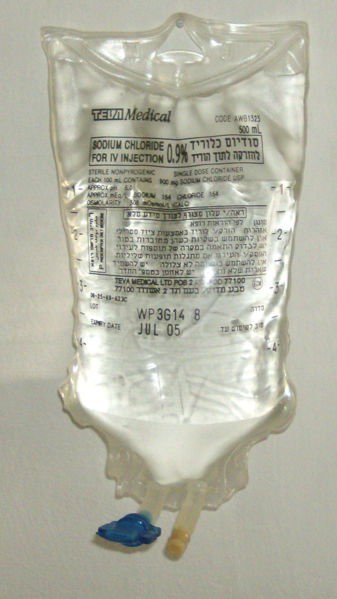


Composition and physical characteristics
Saline solutions are simply mixtures of sodium chloride and water, but small changes in concentration produce important physiological differences. The principal components are sodium chloride and water. A 0.9% solution is approximately isotonic with human plasma; higher concentrations are hypertonic and lower concentrations are hypotonic. The term "salt water" is sometimes used informally in patient-facing materials: salt water.
Types and examples
- Isotonic saline (0.9% NaCl): used for intravascular volume replacement and medication delivery.
- Hypertonic saline (e.g., 3% NaCl): used in controlled settings to reduce cerebral edema or to mobilize airway secretions when nebulized.
- Hypotonic saline (e.g., 0.45% NaCl): used in selected situations when free water replacement is required.
Products intended for internal use are produced under sterile conditions to minimize infection risk; packaging and labeling typically indicate sterility status and intended route of administration, often described as sterile.
Preparation and administration
Medical saline is manufactured under strict quality-control standards and is available in single-use bags, bottles and prefilled syringes. It is administered by infusion through peripheral or central lines, or by direct injection in certain procedures. When used topically it may be supplied in sealed bottles for irrigation.
Clinical uses and importance
Saline has broad use across medicine: intravenous resuscitation, maintenance fluids, diluent for drugs, wound cleansing and eye irrigation. Nebulized hypertonic saline is used in respiratory care to loosen mucus. Its simplicity, predictable effects and wide availability make saline a foundational component of modern clinical practice.
Safety, distinctions and notable facts
Despite its widespread use, saline is not physiologically identical to plasma because it lacks other electrolytes and buffers. Alternatives such as balanced crystalloids (e.g., Ringer's lactate) contain additional ions and may be preferred in some contexts. Potential complications of inappropriate use include fluid overload, worsening sodium disorders and local vein irritation; clinicians choose concentration and rate to minimize these risks.
Related articles
Author
AlegsaOnline.com Saline (medicine) Leandro Alegsa
URL: https://en.alegsaonline.com/art/86471