
Salivary gland neoplasm
Encyclopedic overview of neoplasms of major and minor salivary glands: anatomy, common benign and malignant types, clinical features, evaluation, treatment and follow-up.
Overview
A salivary gland neoplasm is any abnormal growth arising from salivary gland tissue and includes both benign and malignant tumors. Clinicians often reserve the term salivary gland cancer for malignant forms and use "salivary gland neoplasm" to encompass all neoplastic lesions. These tumours are uncommon among head and neck neoplasms and most frequently occur in the largest gland, the parotid.
Image gallery
8 Images


Anatomy and locations
The salivary glands are classified as major and minor. The major glands are the parotid, the submandibular and the sublingual. Hundreds of minor salivary glands are scattered throughout the mucosa of the oral cavity and upper aerodigestive tract, including the hard and soft palate and regions near the nasal cavity. Tumour site influences clinical presentation, surgical approach and the likelihood that a lesion is malignant.
Types and pathology
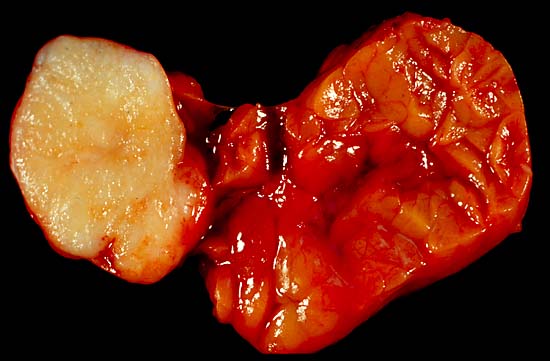
Histologic subtypes are diverse. Common benign tumours include pleomorphic adenoma and Warthin tumour. Frequent malignant types include mucoepidermoid carcinoma and adenoid cystic carcinoma, but many other rarer subtypes exist. Tumours vary from well-circumscribed, slow-growing lesions to infiltrative cancers notable for perineural invasion, lymphatic spread or distant metastasis. Histologic grade and stage are key determinants of prognosis.
Epidemiology and risk factors
Salivary gland neoplasms are rare compared with other head and neck tumours. A higher proportion of tumours arising in major glands, particularly the parotid, are benign, while minor gland tumours have a greater likelihood of malignancy. Recognized risk factors include prior therapeutic radiation to the head and neck and certain occupational exposures; many cases occur without an identifiable cause.
Clinical presentation and diagnosis
Patients typically present with a palpable mass in the affected gland. Pain, rapid growth, facial weakness or numbness suggest malignancy or nerve involvement. Minor gland tumours may appear as mucosal lumps or ulcerations on the palate or oral mucosa. Evaluation usually combines clinical examination, imaging (ultrasound, MRI or CT) to assess extent and relation to neurovascular structures, and tissue diagnosis obtained by fine-needle aspiration or core biopsy.
Staging, treatment and prognosis
Treatment is guided by histology, grade and stage. Surgery is the cornerstone: procedures range from local excision of minor-gland lesions to superficial or total parotidectomy with preservation of the facial nerve when possible. Adjuvant radiotherapy is frequently recommended for high-grade, advanced or recurrent tumours. Chemotherapy has a limited and selective role, typically reserved for metastatic or unresectable disease. Prognosis depends on subtype and stage; many benign tumours are cured by excision, while some malignant types require long-term surveillance for late recurrence or spread.
Follow-up and multidisciplinary care
Long-term follow-up is important because certain salivary malignancies can recur years after initial treatment. Management often requires a multidisciplinary team including head and neck surgeons, radiation oncologists, pathologists and radiologists. Reconstruction, rehabilitation and attention to functional outcomes, including facial nerve function and salivary flow, are essential aspects of care.
Further resources
- Clinical overviews and consensus statements: salivary gland cancer overview.
- Anatomic descriptions and surgical approaches: references for the minor salivary glands, the submandibular region and the sublingual gland.
- Sites and mucosal minor glands such as the palate and areas near the nasal cavity.
- Epidemiology noting the predominance of tumours in the parotid gland.
For patients and clinicians, reliable specialty resources and multidisciplinary guidelines provide the most current recommendations for diagnosis, staging and management; primary literature and institutional protocols inform decisions in uncommon or complex cases.
Questions and answers
Q: What is salivary gland cancer?
A: Salivary gland cancer is a type of cancer that forms in the tissues of the salivary glands.
Q: What are the major salivary glands?
A: The major salivary glands are the parotid, submandibular, and sublingual glands.
Q: What are the minor salivary glands?
A: The minor salivary glands are small mucus-secreting glands located throughout the palate, nasal, and oral cavity.
Q: How rare is salivary gland cancer?
A: Salivary gland cancer is rare, with only 2% of head and neck tumors forming in the salivary glands.
Q: Which salivary gland is most affected by cancer?
A: The majority of salivary gland cancers occur in the parotid gland.
Q: What are some symptoms of salivary gland cancer?
A: Symptoms of salivary gland cancer may include a lump or swelling in the face, mouth, or neck, numbness in the face, or trouble swallowing or opening the mouth.
Q: How is salivary gland cancer treated?
A: Treatment for salivary gland cancer may include surgery, radiation therapy, and chemotherapy, depending on the stage and location of the cancer.
Related articles
Author
AlegsaOnline.com Salivary gland neoplasm Leandro Alegsa
URL: https://en.alegsaonline.com/art/86486