
Ballade (instrumental musical form)
Instrumental ballades are 19th-century piano and orchestral pieces that suggest narrative mood. This article covers characteristics, history, key composers, form and legacy.
Overview
A ballade in the 19th-century instrumental sense is a single-movement composition, most often for solo piano, that evokes a narrative or dramatic mood without words. Unlike a song, the instrumental ballade does not present explicit text, but its sequence of contrasting sections and memorable themes encourages listeners to imagine a story or emotional progression. For a contrast with the medieval poem-song type, see the medieval ballade. For a general definition, see music.
Image gallery
1 Image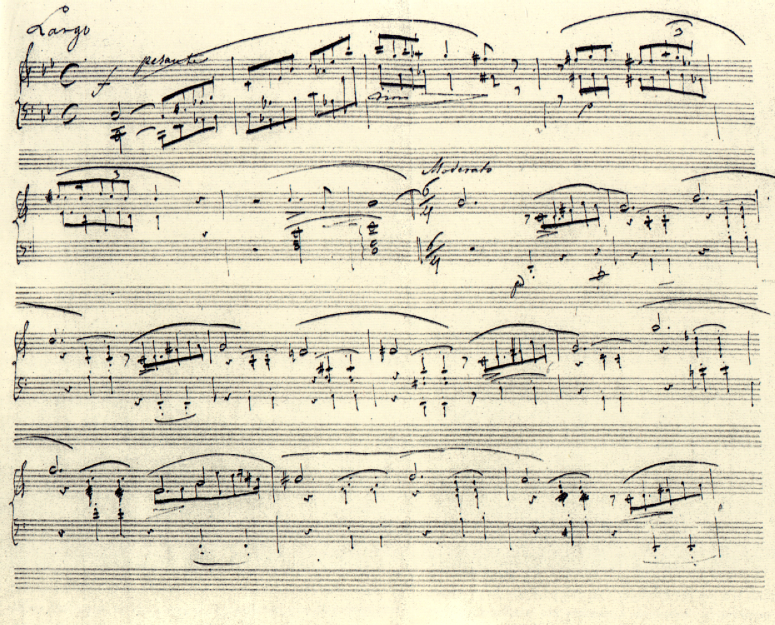
Characteristics and typical forces
Ballades frequently appear as piano works and exploit the instrument's range and expressive possibilities; see a basic reference on the piano. They often contain multiple themes, dramatic climaxes, and episodic transitions that create a sense of narrative drive or storytelling (storytelling). Although free in form, ballades tend to balance lyrical passages with virtuosic or turbulent sections, yielding a compact, self-contained arc.
History and development
The instrumental ballade emerged in the Romantic era as composers adapted the idea of a "ballad"—a storytelling song in earlier traditions—into an abstract musical form. Its origins can be linked conceptually to the medieval and folk medieval and song traditions, but the Romantic ballade is an instrumental innovation rather than a vocal one.
Notable composers and representative works
- Composers who explored the form include: Frédéric Chopin, often credited with defining the piano ballade; Franz Liszt, who expanded its virtuoso scope; César Franck, who treated it symphonically; Johannes Brahms, who wrote ballades with song-like qualities; and Edvard Grieg, who drew on folk material.
- Chopin wrote four piano ballades that remain central to the repertoire and exemplify the balance of lyricism and dramatic tension.
- Gabriel Fauré created a ballade for piano and orchestra, blending chamber intimacy with orchestral color.
- Some composers produced orchestral pieces labeled "ballade," which can resemble short tone poems or symphonic poems.
Form, interpretation and differences
The ballade resists a fixed, codified structure. Analysts often describe its layout in terms of contrasting themes, transformation of motives, and a culminating recapitulation that resolves the musical "story." Performers therefore make interpretive choices about pacing, rubato and dynamic shaping to convey narrative coherence. When ballades draw on folk tunes, as in the work of Grieg or other nationalist composers, they also function as settings of cultural material (Norwegian or regional sources).
Legacy and listening guide
Although the ballade is most strongly associated with Chopin and the piano, its influence spread to many later composers who used the title to signal a dramatic, story-like instrumental piece. When exploring ballades, listeners can compare solo piano examples, piano-and-orchestra works and orchestral "ballades" to hear how the narrative impulse is realized across forces. For further reading on individual composers and works consult specialized entries on Chopin, Liszt, Franck, Brahms, Grieg and Fauré.
Quick notes: The instrumental ballade is distinct from the medieval poetic ballade, favors evocative narrative structure over strict formal rules, and played a notable role in Romantic-era expression and piano literature.
Questions and answers
Q: What is a ballade?
A: A ballade is a piece of music, usually for piano, that has several tunes and tells a story.
Q: Who was the first composer to use the title "ballade" for his piano pieces?
A: Frédéric Chopin was the first composer to use the title "ballade" for his piano pieces.
Q: How many ballades did Chopin write?
A: Chopin wrote four ballades.
Q: Are Chopin's ballades rigid in form?
A: Chopin's ballades are quite free in form.
Q: Who are some other composers who wrote ballades?
A: Other composers who wrote ballades include César Franck, Franz Liszt, Johannes Brahms, Edvard Grieg, and Gabriel Fauré.
Q: How are Brahms' ballades similar to songs?
A: Brahms' ballades for piano are quite like songs in their form.
Q: Are there ballades for orchestra?
A: Yes, there are ballades for orchestra, but they are really like short symphonic poems.
Related articles
Author
AlegsaOnline.com Ballade (instrumental musical form) Leandro Alegsa
URL: https://en.alegsaonline.com/art/8519