
César Franck: composer, organist, and influential teacher
Belgian-born César Franck (1822–1890) was a composer, organist and pedagogue who worked in Paris and shaped late 19th‑century French music through teaching and innovative compositions.
César Franck was born in Liège on 10 December 1822 and died in Paris on 8 November 1890. He is remembered as an important composer, a virtuoso organist and an influential teacher. Of Belgian background and German family roots, Franck spent most of his adult life in France, where his creative late works helped to renew French instrumental and sacred music.
Image gallery
10 Images


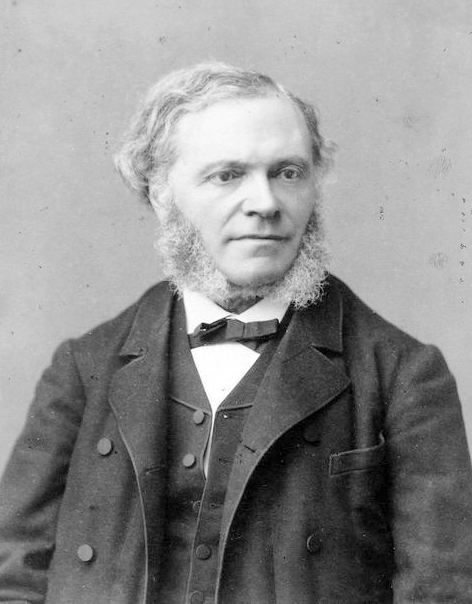


Musical profile and characteristics
Franck's music is often noted for its rich harmonic language, chromatic warmth and strong structural unity. He frequently used cyclic techniques, in which themes recur and transform across movements to give a work a single, organic architecture. His organ writing combined liturgical function with symphonic scope, and his chamber and orchestral pieces balance rigorous counterpoint with expressive melodies.
Career and teaching
After establishing himself as a church organist, Franck served for more than three decades at Sainte-Clotilde in Paris, where he built a reputation for improvisation and for advocating the organ as a vehicle for large-scale composition. In parallel he taught composition and harmony; among his best-known pupils were Vincent d'Indy and Ernest Chausson. Through his teaching and friendships he played a central role in the formation of a French school of composition in the late 19th century.
Notable works and genres
- Grande Pièce Symphonique (organ) — an early example of organ music written with symphonic aspirations.
- Prélude, Choral et Fugue (organ) and other substantial organ pieces used in concert and liturgy.
- Violin Sonata in A major — a staple of the chamber repertoire admired for its lyrical intensity and formal cohesion.
- Symphony in D minor — a late orchestral work that contributed to the revival of symphonic writing in France.
- Numerous smaller sacred works and songs, including pieces from his Mass and motets.
Legacy and influence
Franck's synthesis of Germanic counterpoint and French lyricism, together with his emphasis on thematic transformation, left a lasting mark on composers who followed. He bridged conservative and progressive tendencies in European music of his day and inspired a generation of composers in Belgium and Germany as well as in France. Modern performers and scholars continue to explore his output, and many of his works are central to organists, chamber ensembles and orchestras worldwide.
For further reading and resources, see introductory biographies and catalogs of his compositions that provide chronologies, scores and recordings. Additional information is available from specialist music libraries and online collections that document 19th‑century French musical life.
Questions and answers
Q: Who was César Franck?
A: César Franck was a composer, organist and music teacher of Belgian and German origin who lived in France.
Q: When and where was César Franck born?
A: César Franck was born in Liège, Belgium on 10 December, 1822.
Q: When and where did César Franck die?
A: César Franck died in Paris, France on November 8, 1890.
Q: What was César Franck's occupation?
A: César Franck was a composer, organist and music teacher.
Q: At which church was César Franck an organist for over 30 years?
A: César Franck was an organist at the church of Sainte Clotilde in Paris for more than 30 years.
Q: What is César Franck famous for?
A: César Franck is famous for his music, most of which was composed when he was already quite old.
Q: Who did César Franck teach?
A: César Franck taught many talented young musicians.
Related articles
Author
AlegsaOnline.com César Franck: composer, organist, and influential teacher Leandro Alegsa
URL: https://en.alegsaonline.com/art/115817