
Franz Liszt: Hungarian Pianist, Composer and Musical Innovator
Concise encyclopedia entry on Franz Liszt (1811–1886): life, tours, innovations in piano technique, major works, role as teacher and promoter of other composers, and lasting musical influence.
Overview
Franz Liszt (born Raiding, October 22, 1811; died Bayreuth, July 31, 1886) was a prominent Hungarian composer and pianist whose virtuoso career and imaginative compositions made him one of the central figures in 19th‑century Western music. Celebrated during his life for sensational public appearances, Liszt combined a career as a touring performer with significant creative work for piano and orchestra and a long engagement as a teacher and musical advocate.
Image gallery
10 Images


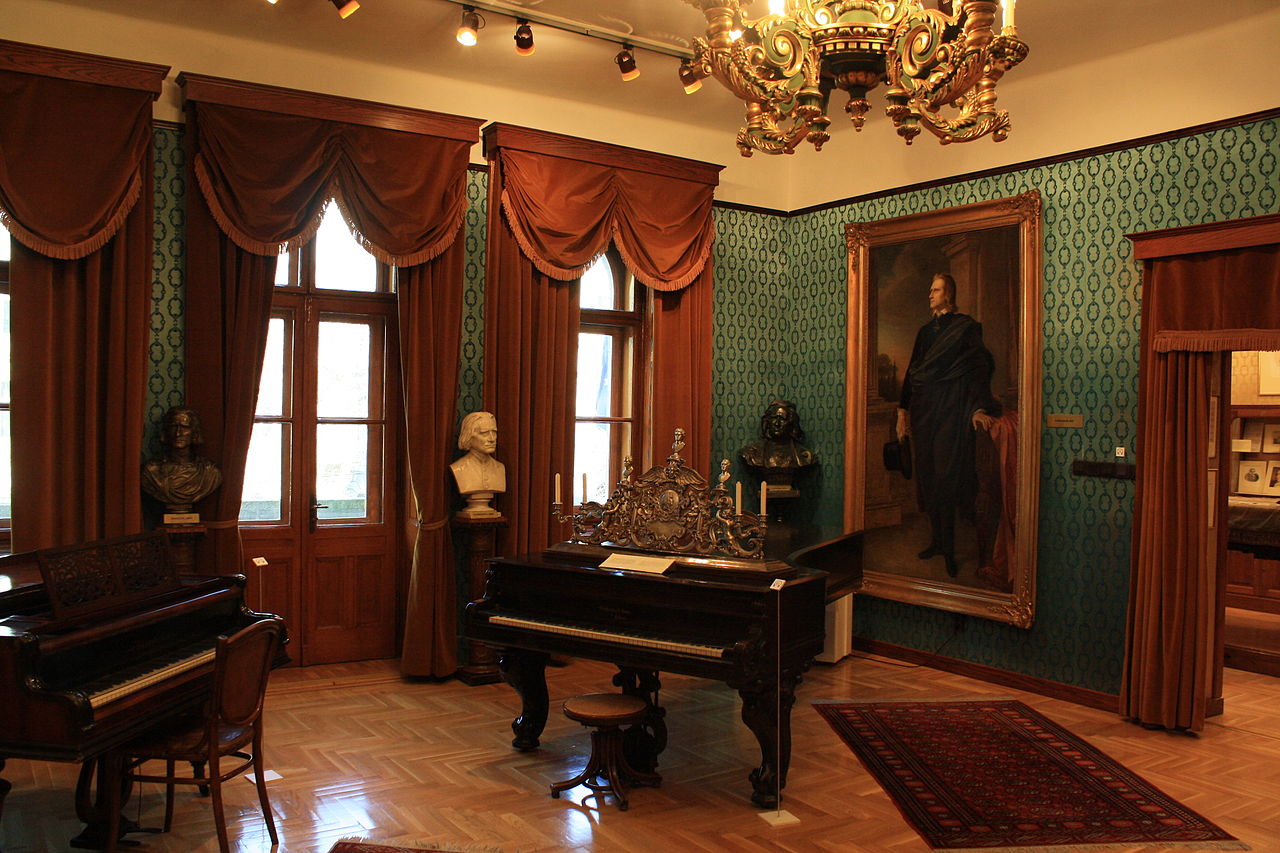


Early life and training
Liszt was born in a small town then in the Habsburg lands and showed exceptional musical ability as a child. He received rigorous training and early encouragement that prepared him for a public career. His early studies and contacts introduced him to other leading musicians of the era and to the repertory of the time.
Career, touring and public reception
As a young adult Liszt undertook extensive concert tours throughout Europe. Those tours — often described under the term "Lisztomania" — established a new model of public celebrity for an instrumental performer. His extensive European tours brought him into contact with audiences and artistic circles from Paris to St. Petersburg, and changed expectations about recital programming and the role of the soloist.
Technique and innovations
Liszt expanded the technical and expressive vocabulary available to pianists. He developed new approaches to hand position, pedal use and large-span figurations, and many later teachers and students trace modern piano technique in part to his playing and pedagogical examples. He also explored compositional devices such as thematic transformation, which allowed themes to reappear transformed across a single work or a cycle, an idea that influenced later composers' approaches to musical form.
Compositional output
Liszt wrote extensively for solo piano (including sets of études, character pieces and large single‑movement works), produced transcriptions and arrangements of operatic and orchestral repertoire, and composed orchestral works such as the symphonic poem — a form he helped to popularize in which instrumental music is explicitly linked to a literary, pictorial or programmatic idea. Among his best known piano pieces are the Hungarian Rhapsodies, the Transcendental Études, the piano Sonata in B minor and the cycles Années de pèlerinage. He also wrote works for voice, chorus and organ and pieces combining piano and orchestra, such as Totentanz.
Teacher, mentor and advocate
Liszt maintained an active role as a teacher and mentor, and many pianists of the next generation received direct or indirect influence from him. He used his position to advocate for other composers, promoting new music by conducting, performing transcriptions and organizing performances. Notable figures whose reputations he supported included contemporaries like Richard Wagner and Hector Berlioz, and his encouragement helped bring attention to several emerging artists.
Later life and personal matters
In his later years Liszt settled more frequently in central Europe, holding important musical posts and devoting time to sacred music, editing, and private teaching. He took minor ecclesiastical orders and is sometimes referred to in sources by a clerical title. His family life intersected with the musical world — for example, his daughter Cosima became associated with Richard Wagner. Liszt continued revising and composing late into his life, and he died in Bayreuth in 1886.
Legacy
- Performance practice: Liszt set new standards for piano virtuosity and helped define the modern solo recital.
- Repertoire: his transcriptions made orchestral and operatic music widely accessible to domestic and salon audiences.
- Composition: his experiments with form, harmony and programmatic writing anticipated later developments in the late Romantic and early modern periods.
- Cultural impact: the public enthusiasm for Liszt marked a turning point in how instrumental performers were perceived by mass audiences.
For general orientation and further reading consult standard musical histories and dedicated biographies. For focused topics use library catalogues, critical editions and archival collections: Bayreuth resources, Hungarian musical heritage, composers' catalogues, performers' studies, musicians, European tours and materials on piano technique.
Questions and answers
Q: Who was Franz Liszt?
A: Franz Liszt was a Hungarian composer and pianist who lived in the 19th century.
Q: What was Liszt famous for?
A: Liszt was famous for being the greatest pianist of his time and for his contribution to the development of piano playing techniques.
Q: What kind of music did Liszt write?
A: Liszt wrote a lot of music for piano and often used new ideas which sounded very modern in his time.
Q: Did Liszt help other composers?
A: Yes, Liszt was very helpful to other composers who lived at that time. He helped them to become better known by conducting their works and playing some of their orchestral pieces on the piano.
Q: What kind of tours did Liszt go on?
A: Liszt went on lots of tours through Europe where everyone filled the concert halls to hear him play the piano.
Q: Were Liszt's piano pieces easy to play?
A: No, many of Liszt's piano pieces were harder to play than anything that had been written before.
Q: When did Liszt live and when did he die?
A: Liszt was born on October 22, 1811, in Raiding and died on July 31, 1886, in Bayreuth.
Related articles
Author
AlegsaOnline.com Franz Liszt: Hungarian Pianist, Composer and Musical Innovator Leandro Alegsa
URL: https://en.alegsaonline.com/art/119196
Sources
- nndb.com : nndb.com