
Johannes Brahms
Comprehensive overview of Johannes Brahms (1833–1897): life, musical style, major works, compositional habits, and his legacy in Romantic-era music.
Johannes Brahms (7 May 1833 – 3 April 1897) was a German composer and influential musical figure whose work bridged Classical forms and Romantic expression. Born in Hamburg, he began his professional life as a performing pianist, and his career combined concert activity with composition and teaching. Brahms was famously self-critical: he destroyed many sketches and early works that he judged unfit, and he took unusual care over large projects, revising them repeatedly until he felt they met his standards.
Image gallery
10 Images


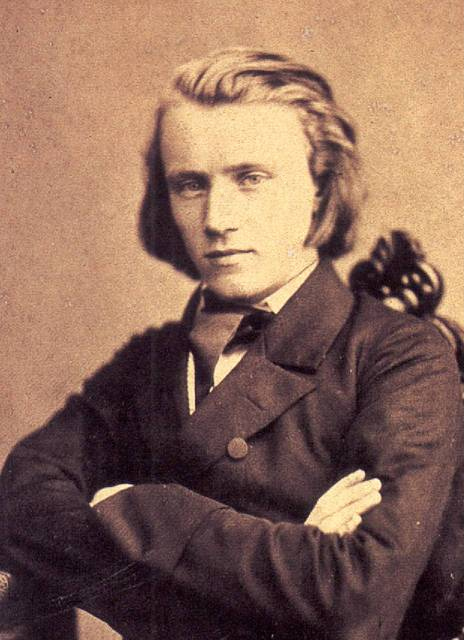
Early life and development
Brahms's early training in Hamburg prepared him for a life as both performer and composer. He supported his family through playing and teaching, later touring as an accompanist and soloist. Important friendships and patronage, above all the encouragement of Robert and Clara Schumann, brought his music to wider attention. Brahms absorbed a wide range of influences, from the Baroque mastery of counterpoint to the Classical clarity of form, while responding to the expressive priorities of his Romantic contemporaries.
Musical style and technique
Brahms is often described as a conservative innovator: he worked within established models such as sonata form and variation technique, yet extended harmonic language, motivic development, and orchestral color. He admired earlier masters and accepted the burden of comparison with figures like Beethoven, a comparison that contributed to the long gestation of his First Symphony. His use of developing variation — the continuous transformation of small motivic cells — gives his large works a sense of organic unity, while his piano writing retains a performer's practicality and expressive depth.
Major works and genres
Brahms's output spans virtually every genre of his time. He wrote four mature symphonies, concertos for piano and orchestra including three major piano concertos, a celebrated violin concerto and a cello concerto, and an important body of chamber music that includes sonatas, string quartets and a piano quintet. His contribution to the piano repertoire is substantial, with notable piano works such as intermezzi and variations. Vocal music was central as well: Brahms composed hundreds of Lieder (German art songs) and large-scale sacred pieces, notably the German Requiem. One of his most familiar melodies is the Wiegenlied (Brahms' Lullaby), widely known beyond concert repertory.
Creative habits and revisions
Brahms's compositional process combined rigorous craft with emotional restraint. He often worked slowly, setting high standards for himself and sometimes destroying material he found inadequate. The meticulous shaping of themes and attention to counterpoint and texture are hallmarks of his mature style. While he preferred absolute music over explicit programmatic narratives, he nonetheless created works of deep human feeling and architectural clarity.
Reception, teaching and legacy
During his lifetime Brahms enjoyed considerable success and critical debate. He was a central figure in late 19th-century musical life, admired by many for structural mastery and melodic invention and debated by others who favored more programmatic or experimental directions. His influence extended into the 20th century: composers and performers studied his techniques of motivic development and formal balance. Today his symphonies, concertos, chamber works, piano pieces and songs remain core repertoire and continue to be performed and recorded widely.
Exploring Brahms
- Listen to one example from each genre—symphony, concerto, chamber, piano and song—to appreciate his range.
- Compare his approach to form and counterpoint with earlier masters and with more programmatic contemporaries.
- Study editions, critical commentaries and reliable recordings to understand performance choices and historical context.
For further reading and resources consult specialist biographies, critical studies, and annotated scores. Recordings, concert programs and scholarly editions help illuminate Brahms's craft and the reasons his music remains both challenging and rewarding for performers and listeners alike.
Questions and answers
Q: Who was Johannes Brahms?
A: Johannes Brahms was a famous German composer who started his career as a pianist.
Q: What did he think of his own compositions?
A: He was very self-critical and destroyed any composition he thought was not really good.
Q: How did this affect the way he composed music?
A: He felt that people were expecting him to be the “next Beethoven”, so he spent many years on his first symphony before allowing it to be performed.
Q: What kind of works did Brahms compose?
A: He wrote four symphonies, four concertos, choral works including a requiem, chamber music, piano music and German art songs or Lieder.
Q: What is one of his best known songs?
A: One of his best known songs is Wiegenlied ("cradle song"), often called "Brahms' Lullaby," which is often heard in music boxes.
Q: When was Johannes Brahms born and when did he die?
A: Johannes Brahms was born on 7 May 1833 and died on 3 April 1897.
Related articles
Author
AlegsaOnline.com Johannes Brahms Leandro Alegsa
URL: https://en.alegsaonline.com/art/50518