
Rove beetle (Staphylinidae)
Rove beetles (family Staphylinidae) are a vast, ancient group of beetles recognized by short elytra and exposed, flexible abdomens. They occupy diverse habitats and play important ecological roles as predators and scavengers.
Overview
Rove beetles belong to the family Staphylinidae, the largest family of beetles by described species. With well over 63,000 named species and many more yet undescribed, they are highly varied in form and ecology. Most are elongated, agile beetles often found in soil, leaf litter, under stones and in decaying organic matter.
Image gallery
7 Images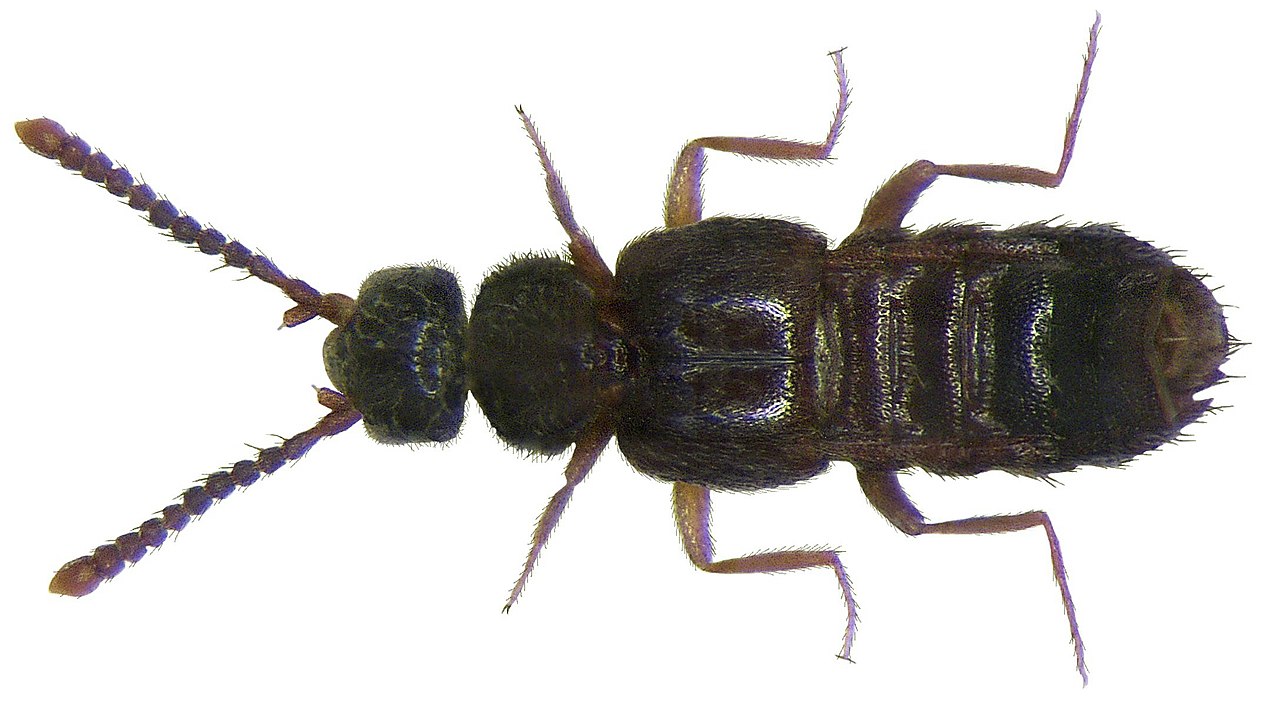



Key characteristics
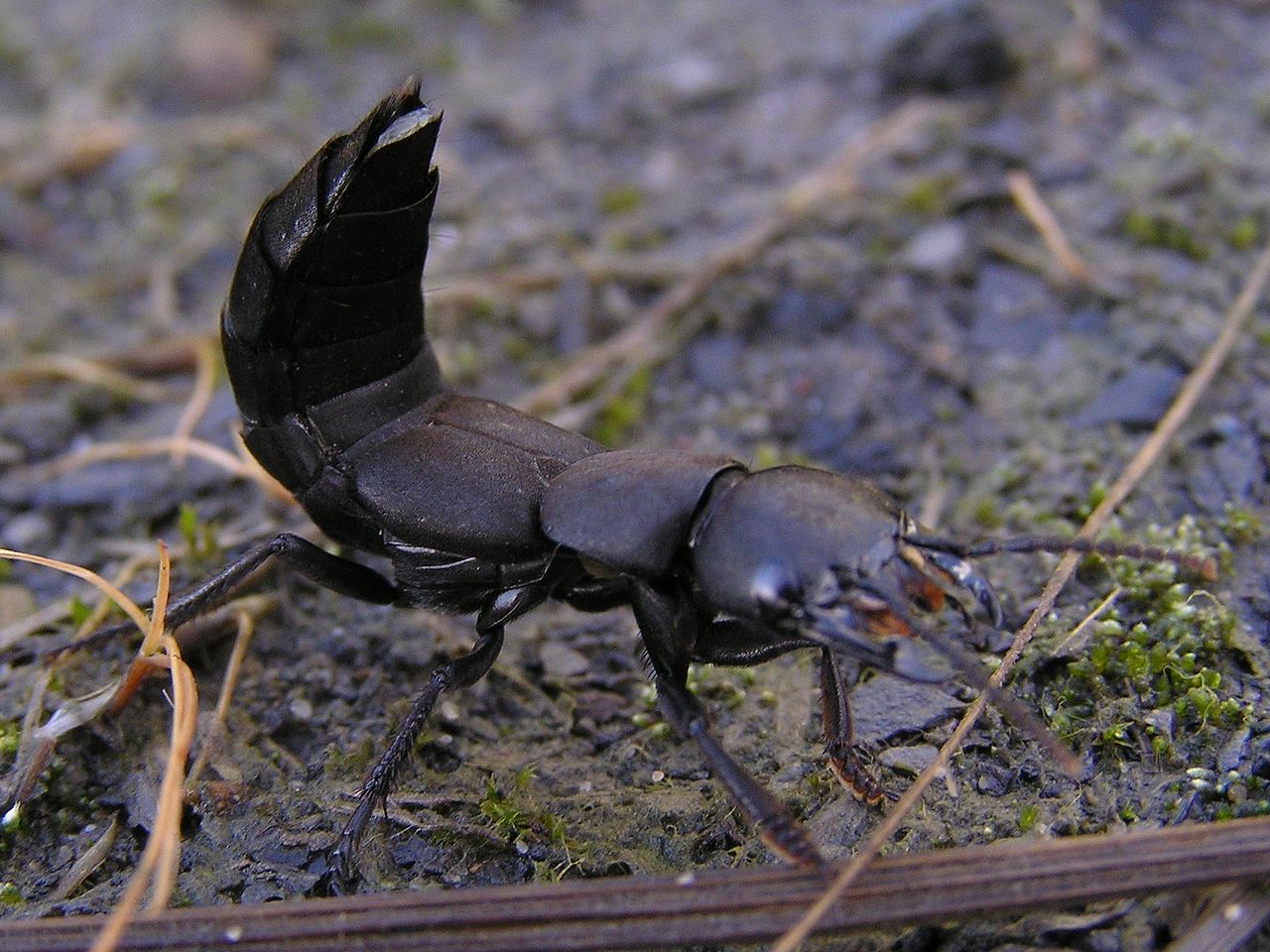
They are typically identified by their short elytra (wing covers) that usually leave much of the abdomen exposed; see elytra. The exposed abdomen is flexible and can be raised or curled, giving rove beetles a characteristic posture. Adults and larvae undergo complete metamorphosis and most are capable flyers.
Ecology and behavior
Rove beetles occupy a wide range of niches. Many species are predators of other small invertebrates, helping control pests. Others are scavengers, feeding on decaying plant or animal material, or are associated with fungi and dung. Several species live in close association with ants or termites (myrmecophily and termitophily), mimicking their hosts or exploiting nest resources.
Fossil record and diversity
Fossils assigned to rove beetles extend deep into the past; specimens attributed to Staphylinidae have been found in deposits dating to the Triassic, about 200 million years ago, indicating a long evolutionary history. The family’s diversity reflects extensive adaptive radiation into terrestrial microhabitats worldwide.
Importance and human relevance
By preying on pests and aiding decomposition, rove beetles contribute to nutrient cycling and biological control. Some species are used in ecological surveys as indicators of habitat quality. Certain carrion-associated species are also noted in studies of decomposition and forensic entomology, where their presence can inform timelines of decay.
Notable facts and distinctions
- They are the largest beetle family in terms of described species (Staphylinidae).
- Short elytra that expose the abdomen distinguish them from many other beetle families; compare the exposed segments near the abdomen.
- Defensive secretions and chemical defenses are common; some species also display rapid running and flight.
- Fossil discoveries and taxonomic revisions continue to expand knowledge of their evolution (fossil record, research links elytra).
For further taxonomic or regional information consult specialist resources and identification guides available through entomological databases and field keys (abdomen reference, Triassic context).
Related articles
Author
AlegsaOnline.com Rove beetle (Staphylinidae) Leandro Alegsa
URL: https://en.alegsaonline.com/art/84376
Sources
- doi.org : 10.1206/3761.2