
Rose hip — the fruit of the rose plant
Rose hips are the fleshy accessory fruits of many roses, valued for vitamin C, culinary uses, traditional remedies and skincare; they require careful processing because of irritating seed hairs.
Overview
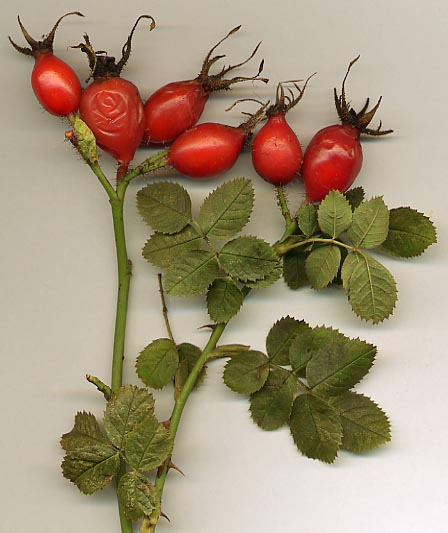
Rose hips are the fleshy accessory fruits that develop on many rose plants after flowering. They range in color from bright orange and red to deep purple or almost black in some varieties and climates. Typically harvested in late summer and autumn, hips are collected both from wild stands and cultivated roses for food, herbal preparations and cosmetic extracts.
Image gallery
6 Images


Botany and structure
Botanically, the hip is an accessory fruit that surrounds the true seeds (achenes). The outer flesh contains sugars, organic acids and pigments; inside are the achenes and many fine, barbed hairs that can irritate skin and mucous membranes if not removed. Proper processing includes halving the hip and removing the inner hairs and seeds before consumption or extraction.
Nutritional composition
Rose hips are noted for their content of water‑soluble vitamins, especially vitamin C, and contain smaller amounts of carotenoids, flavonoids and pectins. Their exact nutrient profile varies by species, ripeness and processing. Because vitamin levels decline with heat and storage, methods such as gentle drying or freezing are commonly used to preserve nutrients.
Culinary, medicinal and cosmetic uses
Common culinary uses include making jams, jellies, syrups and sauces; they are also steeped as an herbal tea. In traditional medicine and modern supplements, rose hip preparations have been used for their antioxidant components and as a dietary source of vitamin C. Cosmetic products may use rose hip oil or extracts for their fatty acids and antioxidant content. When preparing foods or teas, careful sieving or use of filtered infusions prevents transfer of irritant hairs to the final product.
Cultivation and harvesting
Some species and cultivars are favored for large, flavourful hips, notably wild species such as Rosa canina and Rosa rugosa. Hips are often collected after the first light frost, which can improve sweetness, or harvested earlier for higher acidity. Garden care and pruning practices influence hip production; guidance on plant care helps promote healthy yields.
Preparation and safety
- Always remove inner hairs and seeds before eating; wear gloves when processing large quantities.
- Heat can reduce some vitamins, so choose preservation methods with that in mind.
- Accurate identification of species is important before consumption; consult resources on fruit biology and rose species.
Further reading
For practical recipes and safe processing techniques see resources on tea and infusion preparation, guides to color and ripening, information on ripening stages and descriptions of dark‑fruited types. Contemporary studies also explore preservation methods, detailed nutrient analysis and potential health effects of rose hip extracts.
Note: Always cross‑check plant identification and follow safe processing to avoid irritation from seed hairs and to preserve desired nutrients and flavours.
Related articles
Author
AlegsaOnline.com Rose hip — the fruit of the rose plant Leandro Alegsa
URL: https://en.alegsaonline.com/art/84144