
Saccharin: history, properties, uses and safety
Saccharin (E954) is the oldest artificial sweetener, discovered in 1878. A non‑caloric sugar substitute with high sweetening power, used in foods and products and evaluated by regulators worldwide.
Saccharin is a synthetic, non‑nutritive sweetener commonly identified by the food additive code E954. First discovered in 1878 by Constantin Fahlberg, it is widely regarded as the oldest commercially used artificial sweetener. Saccharin is used in place of table sugar when a sweet taste is desired without added calories.
Saccharin is much sweeter than sucrose, so only small amounts are needed to achieve a sweetening effect. Typical characteristics include:
- Very high sweetening potency (commonly described as several hundred times that of sucrose).
- No caloric contribution and essentially no nutritive value when consumed at customary levels.
- Good stability under heat and in many food processing conditions, which makes it suitable for baked or processed goods.
- A distinctive aftertaste or slight metallic/bitter note at higher concentrations; manufacturers sometimes blend saccharin with other sweeteners to balance flavor.
- Often formulated as one of its salt forms (for example, the sodium salt) to improve solubility and handling.
Image gallery
6 Images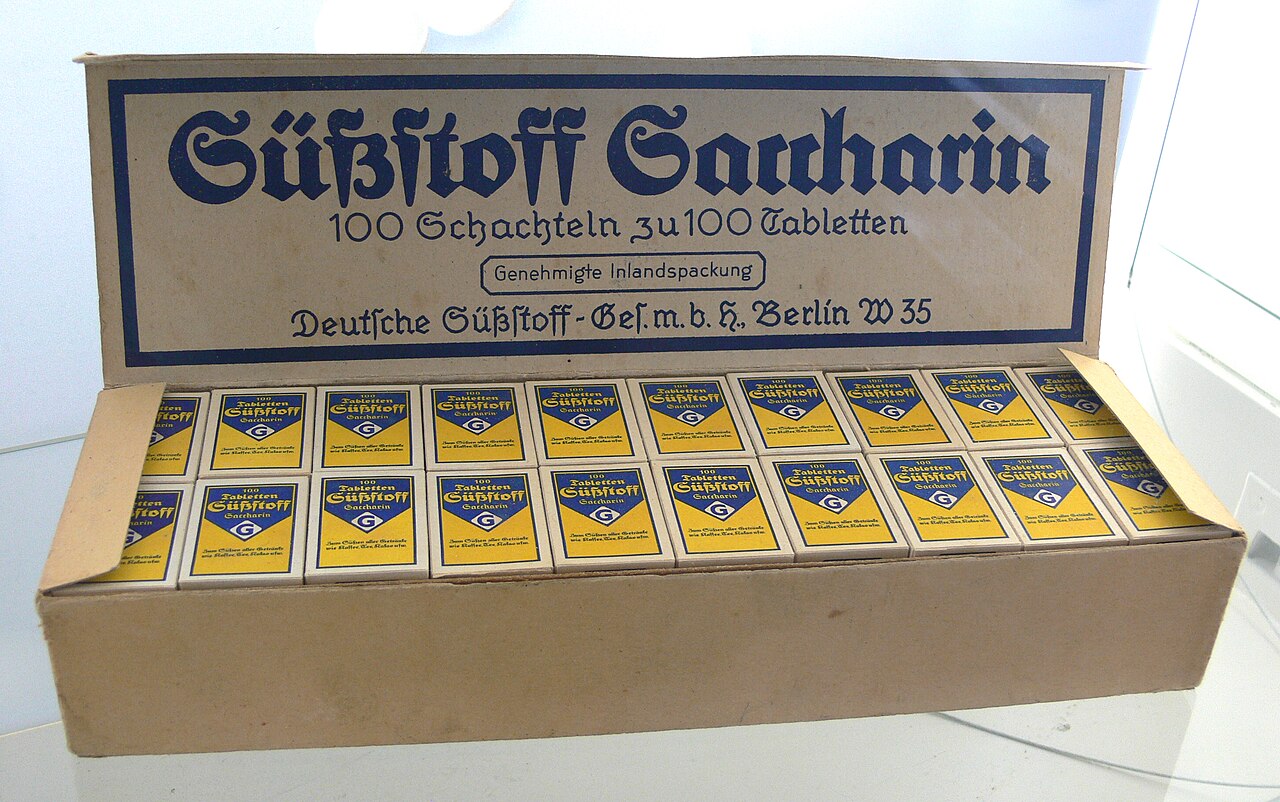


History and development
The compound was identified by chance in the late 19th century and soon entered commercial use. Over the following decades saccharin became an economical way to provide sweet flavor without sugar, especially during times when sugar supply was restricted or for populations seeking reduced‑calorie diets. Its long history means it is well established in many product categories and as an ingredient listed on food labels as E954.
Safety, regulation and public perception
Saccharin has been the subject of scientific and regulatory review. In the mid‑20th century and into the 1970s concerns were raised after animal studies suggested a possible link to bladder tumors in laboratory rodents. Those findings prompted further research and regulatory scrutiny. Subsequent evaluations by major health authorities concluded that the evidence did not demonstrate a clear cancer risk to humans when saccharin is consumed at normal dietary levels. As a result, many jurisdictions set acceptable daily intake guidelines and permitted its use subject to labeling or other requirements.
Today saccharin remains an approved sweetener in many countries. It is frequently used in tabletop sweeteners, diet soft drinks, chewing gum, toothpaste and pharmaceutical syrups. Because it is non‑caloric and does not affect blood glucose, it is often recommended as an option for people who need to limit sugar intake, including some individuals with diabetes; patients should, however, follow professional nutritional advice.
Compared with newer high‑intensity sweeteners and natural low‑calorie alternatives, saccharin has a long track record and specific sensory properties that make it useful in blends. For more general context about sweeteners, see resources on artificial sweeteners and comparisons with conventional sugar.
Related articles
Author
AlegsaOnline.com Saccharin: history, properties, uses and safety Leandro Alegsa
URL: https://en.alegsaonline.com/art/85126