
Rip current
A rip current is a narrow, strong seaward flow of water in the surf zone. This article explains how rip currents form, how they behave, how to recognize them, and how to stay safe.
Overview
A rip current is a concentrated, fast-moving surface flow of water that moves away from the shoreline through the surf zone. Often shortened to "rip," it is responsible for many beach rescues worldwide. Rip currents are driven by wave and surf conditions; they are not the same as an undertow or a tidal channel flow, though the terms "rip tide" and "riptide" are commonly used in casual speech.
Image gallery
7 Images




How rip currents form
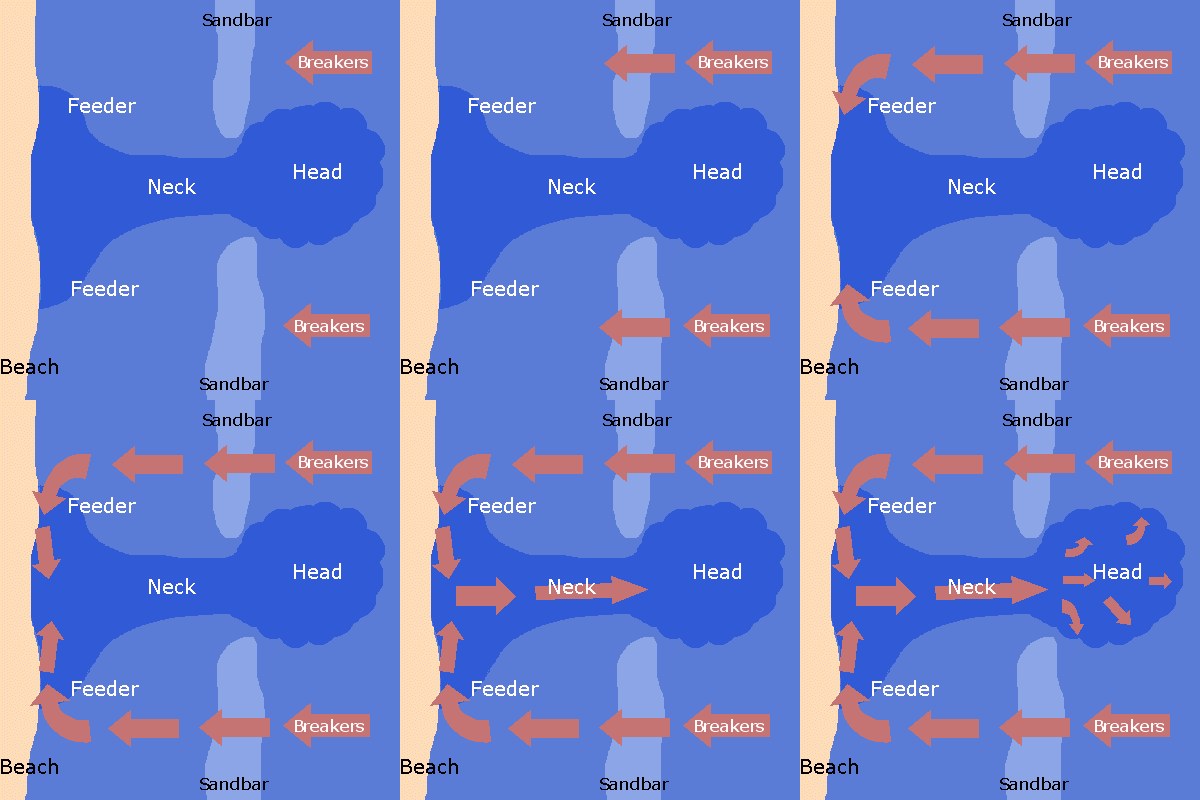
Rip currents typically develop where breaking waves pile water against the shore and that water needs to return seaward. The return flow becomes concentrated in narrow channels between sandbars, around piers or jetties, or through depressions in the nearshore bottom. Variations in wave height, wave direction, and the shape of the seabed (bathymetry) influence when and where rips appear. Although tides do not create rip currents, tidal stage can strengthen or weaken an existing rip and affect how far it reaches offshore.
Characteristics and typical behavior
Rip currents are often a few meters to tens of meters wide but can extend hundreds of meters offshore. Typical surface speeds are on the order of 0.5 meters per second (about 1–2 feet per second), though stronger rips can reach speeds of 2.5 meters per second (around 8 feet per second) or more. Rips are dynamic: they can shift position along a beach, develop, decay, or merge with nearby currents. They are usually identifiable as a relatively narrow, calm-looking channel within breaking waves, often carrying foam, seaweed, or other floating debris offshore.
Hazards and safety
Rip currents are a major drowning hazard because swimmers caught in one can be pulled away from the shore quickly and may panic if they try to swim directly back against the flow. The safest response is to remain calm and conserve energy: float or tread water if necessary and signal for help. If able to swim, do not try to fight the current; instead, swim parallel to the shore to leave the narrow rip channel, then make for the beach when out of the flow. If you cannot swim parallel, keep face up and float until the rip weakens, then swim diagonally toward shore. Follow local beach flags and lifeguard instructions, and avoid entering the surf in unfamiliar or rough conditions.
Differences, terminology and detection
Common confusions include:
- Rip current: a seaward surface flow in the surf zone caused by returning wave-driven water.
- Rip tide / riptide: often used incorrectly for rip currents; technically refers to tidal flows in restricted channels.
- Undertow: a subsurface return flow beneath incoming waves; generally weaker and not the same concentrated offshore jet that characterizes a rip.
Signs of a rip include a gap in the breaking waves, a line of foam or debris moving seaward, discolored or choppy water, and a narrow, calm-looking corridor between breaking waves. Lifeguards and beach services use visual observation, flags, and sometimes instruments to assess rip risk.
Importance, examples and resources
Rip currents occur on ocean beaches, seas, and large lakes with sufficient wave action; they have been documented on coastlines worldwide, including the Great Lakes. They account for numerous rescues and drownings each year, which has led to public education campaigns and improved beach safety protocols. Research into rip mechanics, predictive models, and real-time detection continues to improve warnings and reduce accidents.
Further reading and links
- Technical overview of rip currents
- Surf zone dynamics and coastal processes
- Tidal influences on surf hazards
- Typical rip current speeds and measurements
- Rip occurrence at beach types
- Rip currents on ocean coasts
- Rip phenomena in enclosed seas
- Rip currents on large lakes
- Great Lakes rip current safety
- Canadian coastal safety and rip awareness
- U.S. beach safety guidance and rip education
Author
AlegsaOnline.com Rip current Leandro Alegsa
URL: https://en.alegsaonline.com/art/83024