
Rhine Falls (Rheinfall) — Europe's largest waterfall
The Rhine Falls (Rheinfall) are among Europe's largest waterfalls on the High Rhine near Schaffhausen, Switzerland. Summary of physical features, geology, ecology, history and visitor information.
Overview
The Rhine Falls, known in German as the Rheinfall, are often described as the largest waterfall in Europe. They lie on the High Rhine between the Swiss municipalities of Neuhausen am Rheinfall and Laufen-Uhwiesen, close to the city of Schaffhausen and near the border with Germany. The falls are a well‑known natural landmark in Switzerland and a popular day‑visit destination; consolidated visitor information can be found at general sites such as Rhine Falls information and in lists of European waterfalls.
Image gallery
7 Images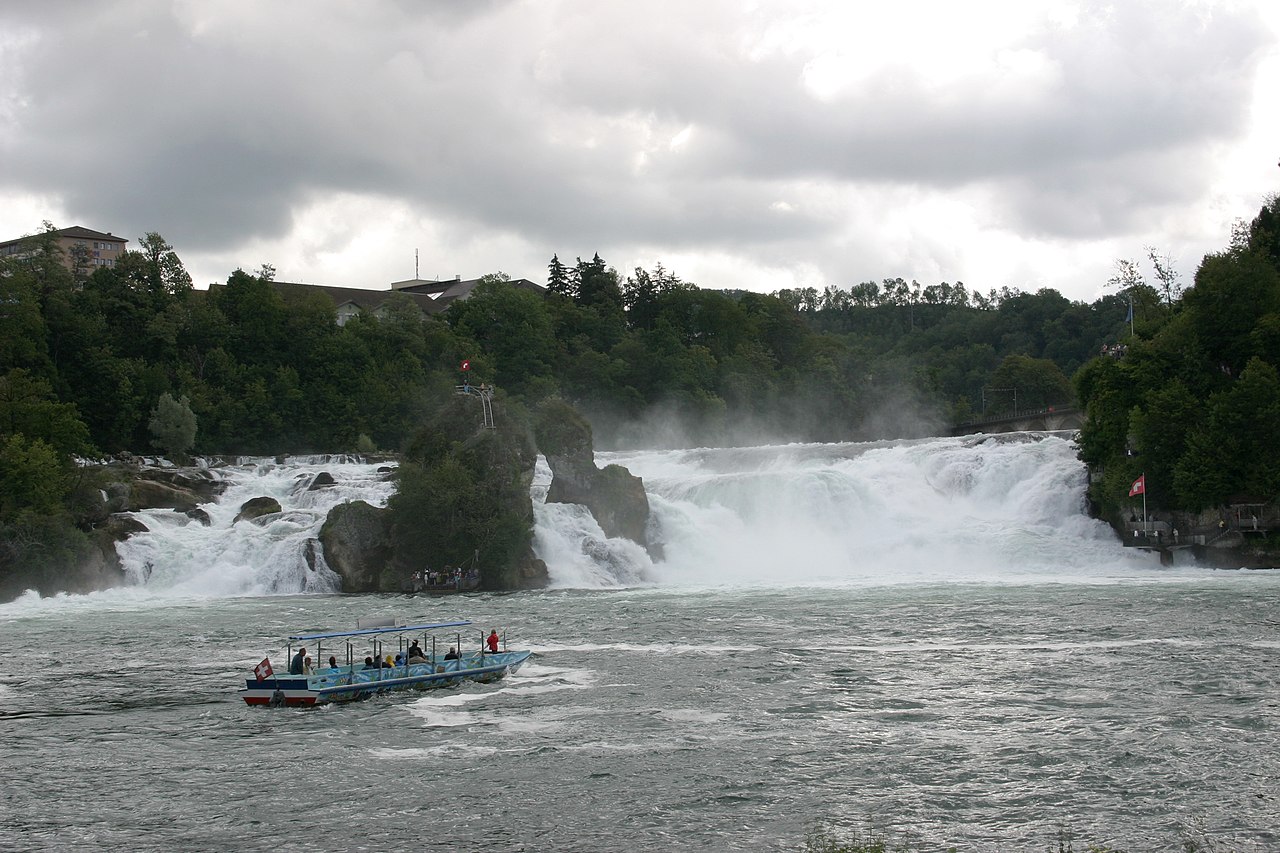



Physical characteristics
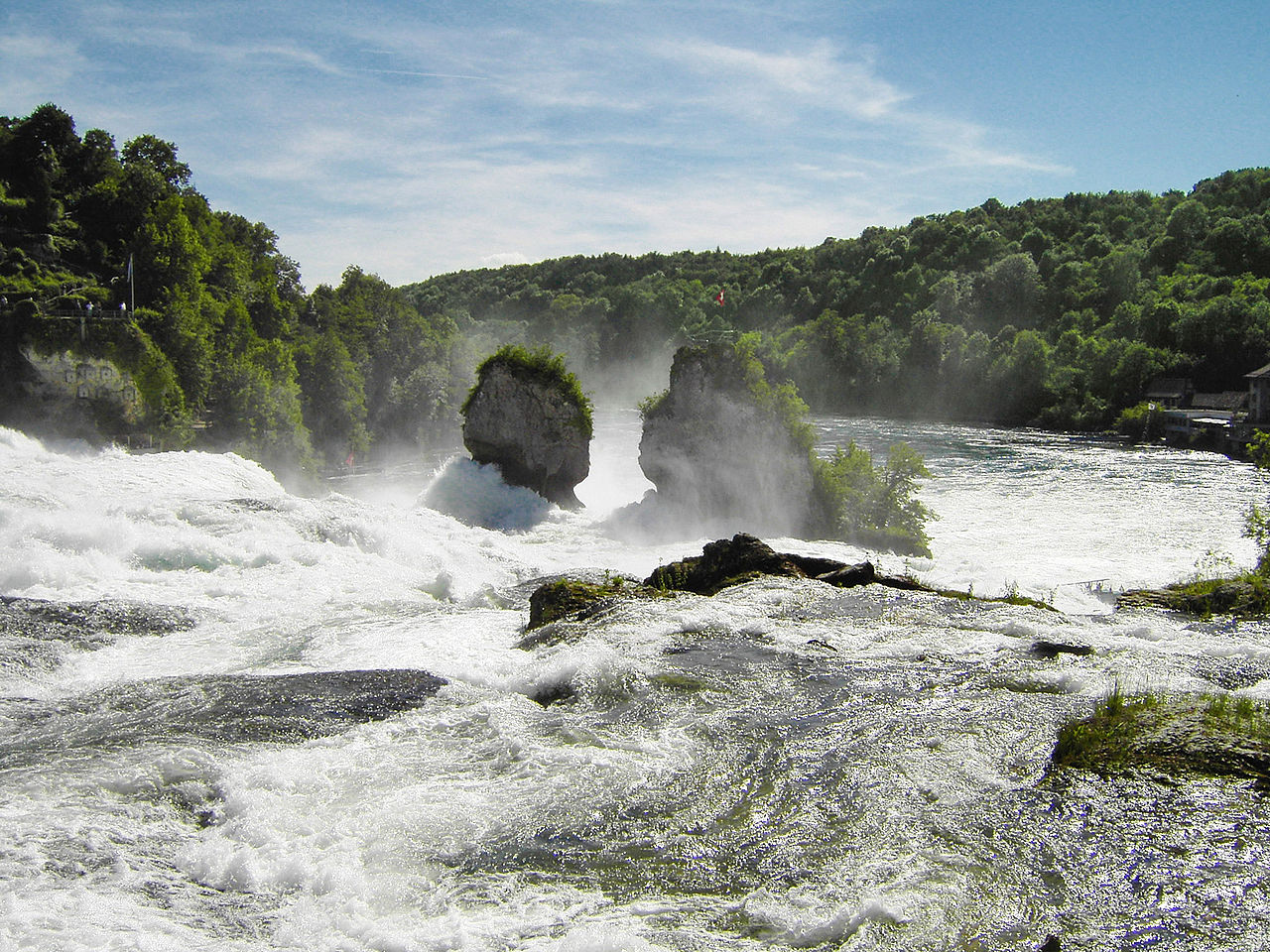
The waterfall is roughly 150 metres wide and drops about 23 metres, creating a powerful curtain of water and continuous spray. Flow varies seasonally, with higher discharge during spring snowmelt and after heavy rain. The falls are set where the Rhine flows over resistant bedrock, producing steep drops and turbulent channels. Several viewing platforms and paths give different perspectives on the crest and the downstream torrent.
Formation and geological history
Geologists date the Rhine Falls to the end of the last glacial period, approximately 14,000–17,000 years ago. Glacial retreat and shifting river courses left the Rhine running over hard sedimentary rock layers; differential erosion led to the formation of the steep step that now forms the falls. Over long timescales the position of the falls has migrated upstream by gradual incision and rock collapse, a common process at large waterfalls.
Ecology and conservation
Despite heavy visitation, the Rhine Falls and its immediate surroundings support riparian plants and aquatic species adapted to fast currents. Conservation efforts aim to balance tourism, historic use and habitat protection. Local authorities monitor water quality and manage visitor infrastructure to reduce ecological impact while maintaining public access.
Human use and history
The falls have long influenced human activity: they provided power for mills in earlier centuries and later stimulated industrial and small hydro developments in the region. Fortified positions and riverside buildings reflect the strategic and economic importance of the site through history.
Visiting the falls
Access is available by road and rail, with regular public transport links to nearby towns. Seasonal boat trips operate from several landing points to take visitors close to the rapids and a small island at the crest; safe viewing platforms on both banks offer panoramic views. Practical advice: check seasonal timetables, wear grippy footwear on wet paths, and follow posted safety signs.
- Location: High Rhine, near Schaffhausen, Switzerland.
- Width and height: about 150 m wide and 23 m high.
- Age: formed after the last Ice Age (~14,000–17,000 years ago).
Related articles
Author
AlegsaOnline.com Rhine Falls (Rheinfall) — Europe's largest waterfall Leandro Alegsa
URL: https://en.alegsaonline.com/art/82503