
Rafael Sánchez Ferlosio
Spanish novelist and essayist (1927–2019), author of El Jarama and winner of the Premio Cervantes; influential in post‑Civil War Spanish literature for his realist style and later critical essays.
Overview
Rafael Sánchez Ferlosio (4 December 1927 – 1 April 2019) was a Spanish novelist, essayist and literary thinker whose work helped reshape Spanish letters in the decades after the Civil War. Born to a Spanish father and an Italian mother in Rome, Lazio, Italy, he belonged to a generation of writers who returned attention to everyday language and social observation. His father, Rafael Sánchez Mazas, was a well‑known nationalist writer and a leading figure in the Falange; Sánchez Ferlosio married the writer Carmen Martín Gaite and died in Madrid in 2019.
Image gallery
1 Image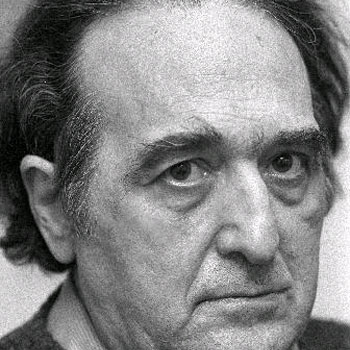
Literary contributions and style
Sánchez Ferlosio first drew wide critical notice with his novel El Jarama (1955), a work famous for its naturalistic dialogue, circumscribed setting and patient depiction of a single day by the Jarama river. The novel won the Premio Nadal and became a landmark of postwar Spanish realism: rather than dramatic plot twists, it foregrounded speech, social detail and the ordinary lives of young people. Along with contemporaries such as Juan Goytisolo and Ana María Matute, Sánchez Ferlosio helped make literature a venue for sober reflection after the upheavals of the Spanish Civil War.
Hiatus, later writings and recognition
After an intense early period of publication he largely withdrew from fiction for roughly two decades. He gave few public explanations for this pause; some critics and commentators have linked the silence to his private attitude toward the Spanish military and the dictatorship of Francisco Franco, while others emphasize personal and intellectual reasons. When he returned to publishing he concentrated increasingly on essays that examined language, culture and human behavior, expanding his reputation as a thoughtful, sometimes polemical, essayist. In recognition of his career he received Spain's highest literary honor, the Premio Cervantes, awarded for lifetime contribution to the Spanish language.
Works, themes and forms
Although Sánchez Ferlosio is best known for El Jarama, his oeuvre crosses genres: novels, short prose, essays and cultural criticism. Common themes include language and its limits, the social realities of postwar Spain, and reflections on human habit and perception. His prose is frequently praised for its precision, ear for dialogue and capacity to render communal life without resorting to melodrama.
Selected facts and legacy
- Breakthrough work: El Jarama (1955), winner of the Premio Nadal.
- Major honor: Awarded the Premio Cervantes for lifetime achievement, a prize associated with excellence in the Spanish language.
- Contemporary circle: Part of a postwar renewal alongside authors such as Juan Goytisolo and Ana María Matute.
- Personal background: Born in Rome, Lazio, Italy; son of Rafael Sánchez Mazas; married to Carmen Martín Gaite; died in Madrid.
Rafael Sánchez Ferlosio remains an important figure for readers and scholars interested in mid‑20th‑century Spanish literature, linguistic experimentation within narrative and the moral complexities of writing under and after authoritarian conditions. Debates about his long silence and his later intellectual trajectory continue to invite study, while El Jarama persists as a touchstone of realist narrative in Spanish letters.
Related articles
Author
AlegsaOnline.com Rafael Sánchez Ferlosio Leandro Alegsa
URL: https://en.alegsaonline.com/art/80816
Sources
- portal-local.com : "Biografías Premios Cervantes" · web.archive.org
- elespanol.com : "Muere el escritor Rafael Sánchez Ferlosio a los 91 años"