
Juan Goytisolo — Spanish novelist, essayist and cultural critic
Spanish novelist, essayist and poet Juan Goytisolo (1931–2017) was an influential exile writer whose experimental fiction and essays challenged Spanish nationalism, colonialism and sexual norms; he won the 2014 Cervantes Prize.
Juan Goytisolo (5 January 1931 – 4 June 2017) was a Spanish poet, essayist and novelist known for formally adventurous prose and sustained critique of Spanish national myths. He worked across genres and is often associated with experimental narrative techniques that mix fragmentation, montage and intertextuality. He first gained recognition as a poet and younger novelist and later became a prominent intellectual voice in exile; his early reputation as a poet remained one thread of a varied literary career.
Image gallery
1 Image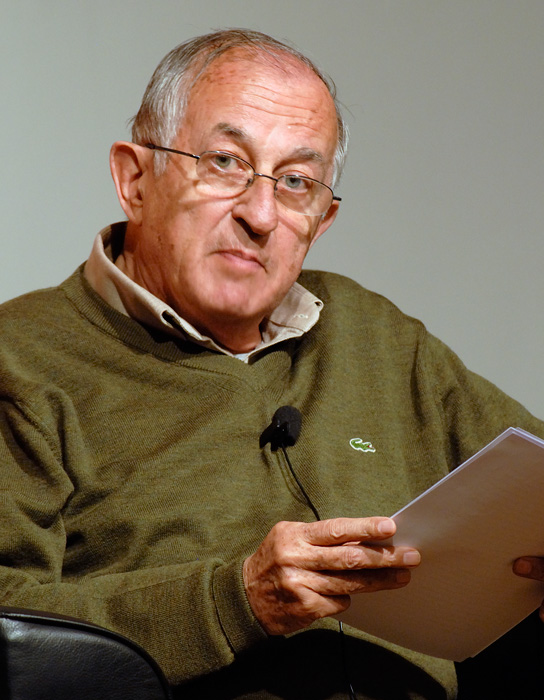
Early life and exile
Born in Barcelona into a conservative, well-to-do family, Goytisolo's development as a writer was shaped by the aftermath of the Spanish Civil War and by the culture of Francoist Spain. He left Spain in the 1950s and spent many years living in Paris and elsewhere in Europe and North Africa. His expatriation informed both the themes and the tone of his work: questions of belonging, memory, and identity recur in his fiction and essays.
Literary career and style
Goytisolo's prose is widely described as polemical and experimental. He challenged realist conventions and employed techniques drawn from modernist and postmodernist practices: layered narratives, shifting points of view, linguistic play and a collage-like use of cultural references. His writing often confronted the Roman Catholic Church, Spanish nationalism and patriarchal social orders, while also drawing on Islamic and North African cultural forms encountered during his years in Morocco and elsewhere.
Major works and themes
Across novels, essays and poetry Goytisolo explored exile, sexuality, colonialism and historical memory. Among his best-known books are Señas de identidad, which examines personal and national identity through a fragmented narrative, and Reivindicación del Conde don Julián, a controversial reworking of Spanish history and myth that interrogates national conscience. His essays on culture and politics expand on similar concerns and place him in a broader European and Mediterranean intellectual conversation.
Awards, reception and influence
Critical appraisal of Goytisolo ranged from admiration for his formal daring to debate about his polemical stances. In 2014 he received the Miguel de Cervantes Prize, the most prestigious recognition in Spanish-language letters, an award that reaffirmed his status among major contemporary Spanish writers and that is discussed in prize materials and critical overviews Miguel de Cervantes Prize.
Personal life
Goytisolo's private life intersected with his public persona. He was married to French writer and screenwriter Monique Lange until her death in 1996, and his bisexuality informed aspects of his work and its exploration of desire and transgression. His younger brother Luis Goytisolo was also a novelist and suffered political persecution during the Franco era.
Later years and legacy
From the late 1990s Goytisolo settled in Marrakech, where he lived until his death on 4 June 2017 at the age of 86. His long residence in Morocco deepened his engagement with Arab and Berber cultures and contributed to the distinctive Mediterranean and transnational orientation of his later writing. Goytisolo's legacy endures in studies of exile literature, postwar Spanish culture and debates about the links between form and political critique. Readers seeking introductions and critical bibliographies may consult general literary resources and prize-related archives, and regional cultural portals that document his life and work; many of these note his longtime residence in Morocco and his death at his Marrakech home.
Selected topics for further reading
- Exile and identity in postwar Spanish literature
- Formal innovation and montage techniques in late 20th-century fiction
- Relations between Spanish and North African cultures in contemporary writing
Related articles
Author
AlegsaOnline.com Juan Goytisolo — Spanish novelist, essayist and cultural critic Leandro Alegsa
URL: https://en.alegsaonline.com/art/51367
Sources
- elpais.com : El País
- cultura.elpais.com : Muere el escritor Juan Goytisolo en Marrakech
- elpais.com : "Obituary: Monique Lange"