
Quetzal: colorful trogon birds of the Americas
Quetzals are brightly colored trogon birds of humid forests in the Americas, famed for iridescent plumage, long tail streamers, cultural importance in Mesoamerica, and sensitivity to habitat change.
Overview
The term "quetzal" refers to a small group of brightly colored birds within the trogon family. These birds are best known for gleaming green or metallic plumage and, in several species, exceptionally long tail feathers. Quetzals live primarily in humid upland forests and cloud forests across parts of Mexico, Central America and northern South America. The resplendent quetzal, one of the most famous species, has played an important role in human culture and symbolism in Mesoamerica.
Image gallery
2 Images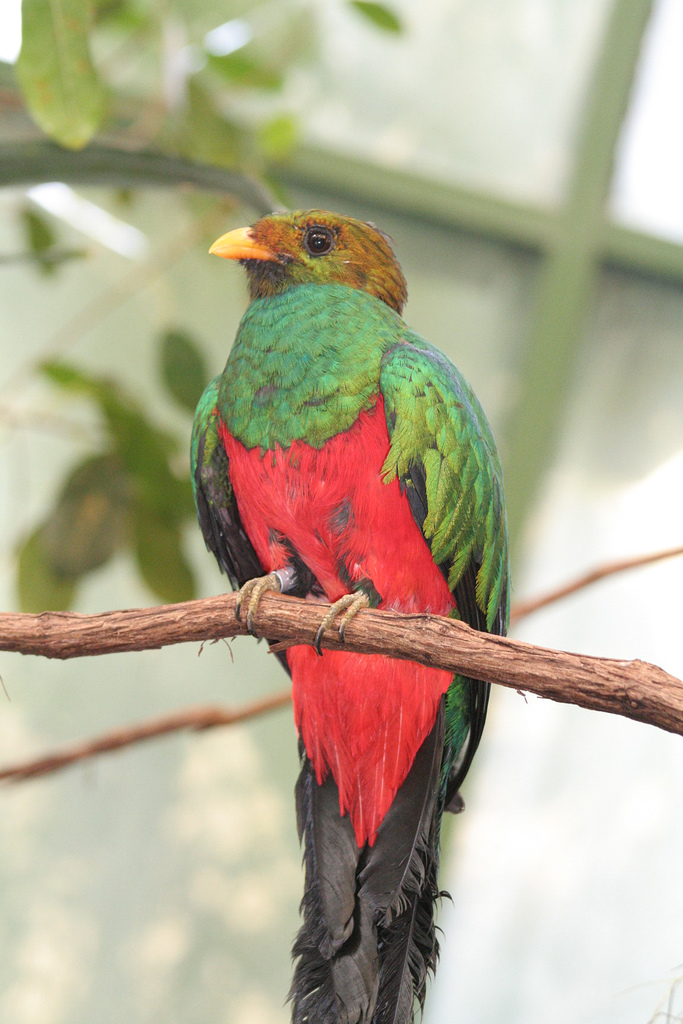

Appearance and behavior
Quetzals display striking sexual differences: males tend to be more vividly colored, while females have duller, often brownish tones. Common characteristics include a compact body, short neck, and a large head with a stout bill. The resplendent quetzal and a few related species show very long central tail feathers in adult males, which can extend far beyond the body and are used in display.
- Plumage: iridescent greens and reds are typical; green tones often appear metallic in sunlight.
- Size: small to medium for forest passerines; proportions vary by species.
- Sexual dimorphism: males brighter, females more cryptic for nesting.
Diet, nesting and vocalizations
Quetzals are largely frugivorous but also take insects, other arthropods and small vertebrates such as frogs. They commonly forage in the forest mid-storey, plucking fruit from branches or sallying after insects. These birds nest in tree cavities, either natural holes or abandoned woodpecker excavations, where the female lays a small clutch and both parents may participate in feeding chicks. Their calls are usually soft, hollow or cooing notes rather than loud song.
Distribution and habitat
Quetzals inhabit humid forests and woodlands—especially cloud forests and montane rainforests—where dense canopy and abundant fruiting trees support their diet. Range varies by species: some are restricted to narrow elevational belts in Central American highlands, while others occur along Andean slopes. For general context on their broader family relationships see trogon family and for geographic scope see the Americas. The best-known species, the resplendent quetzal, is associated with resplendent quetzal accounts and habitats in Central America.
Cultural significance and human use
Quetzals have long been valued by human societies. In pre-Columbian Mesoamerica, their iridescent feathers were prized for ceremonial dress and ritual use; they were associated with principal deities and concepts of wealth and freedom. The resplendent quetzal is a national symbol and cultural emblem in some countries; for example, it appears in national iconography and names, notably of Guatemala. Although feathers were highly prized historically, modern protection and changing attitudes have curtailed commercial use.
Conservation and notable facts
Because quetzals depend on intact montane forests, they are vulnerable to habitat loss, fragmentation and the effects of climate change. Some local populations have declined where forests are cleared for agriculture or development. Conservation efforts focus on preserving cloud forest habitat, maintaining ecological corridors, and protecting nesting sites. For general information on sexual differences among birds see sexual dimorphism.
Notable points: quetzals can be surprisingly elusive despite their bright colors, because their forest habitat provides dense cover; many species are solitary or seen in pairs rather than flocks. Their combination of ecological specialization and cultural prominence makes them both important subjects for conservation and enduring symbols across their range.
Related articles
Author
AlegsaOnline.com Quetzal: colorful trogon birds of the Americas Leandro Alegsa
URL: https://en.alegsaonline.com/art/80520