
Quoll (genus Dasyurus)
Quolls are carnivorous marsupials native to Australia and New Guinea, recognised by spotted coats and long tails. Several species face threats from invasive predators, habitat loss and toxic cane toads.
Overview: Quolls are medium-sized, meat-eating marsupials in the genus Dasyurus. Native to Australia and Papua New Guinea, they are nocturnal predators that occupy a range of habitats from forests to rocky outcrops. Quolls are often described generally as carnivorous marsupials with spotted fur and long, furry tails: adults range in body length and can be roughly the size of a cat in larger species.
Image gallery
10 Images


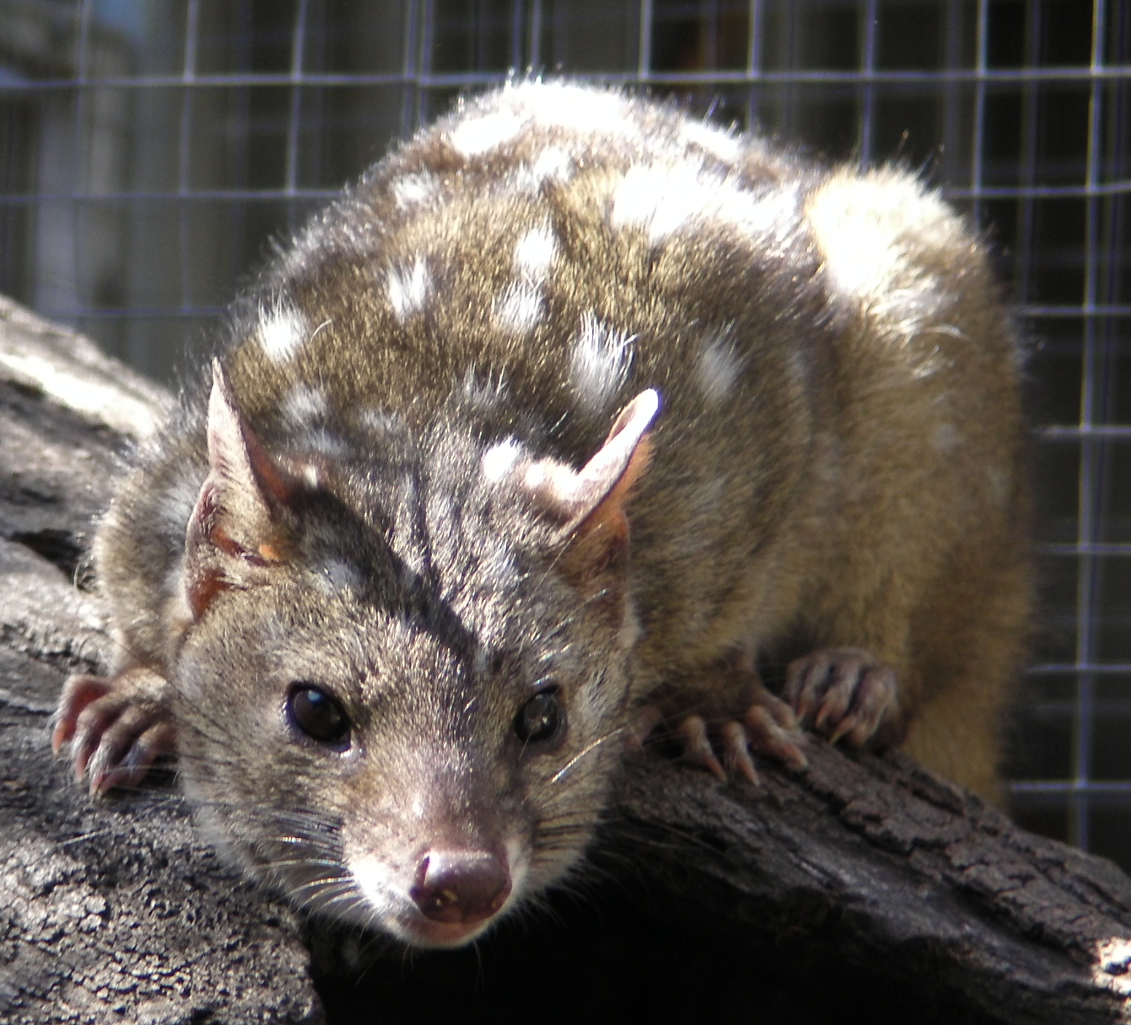
Physical characteristics and behaviour
Quolls have slender bodies, pointed snouts, sharp teeth and non-prehensile tails that help with balance. Their pelage usually bears white spots on a brown, reddish or black background; the degree of spotting and size varies by species. They are mostly solitary and mainly active at night, hunting small mammals, birds, reptiles, insects and carrion. Female quolls possess a pouch where they carry and nurse their young.
Species, range and taxonomy
The genus includes several distinct species, including the tiger or spotted-tail quoll, the northern quoll, the eastern quoll and the western quoll (chuditch). Some species are confined to Tasmania or limited parts of the mainland, while others extend into New Guinea. Quolls belong to the broader family of carnivorous marsupials that also contains animals like the Tasmanian devil, antechinuses and mulgaras.
Reproduction and life cycle
Breeding is seasonal for many quoll species; females give birth to tiny, underdeveloped young that crawl into the pouch to continue development attached to teats. Litter size and juvenile survival depend on species, food availability and predation pressure. Juveniles eventually disperse to establish their own territories.
Threats and conservation
Quolls face a combination of threats: habitat loss and fragmentation, road mortality, predation and competition from introduced carnivores (feral cats and foxes), and poisoning from invasive species. In particular, many quolls are vulnerable to the toxin of invasive cane toads, which has caused local declines. Conservation responses include captive breeding, translocations, habitat protection, predator control and targeted research.
- Innovative interventions such as learned taste-aversion training have been trialled to reduce mortalities from cane toads; a notable example is a University of Sydney project that teaches quolls to avoid toads.
- Monitoring, community engagement and legal protection help support recovery for the most threatened populations.
Importance and distinctions: As mesopredators, quolls help control rodents and insects and contribute to ecological balance. They differ from larger dasyurid carnivores in size and social behaviour and are an unmistakable element of Australasian wildlife, valued by scientists, land managers and many Indigenous cultures.
Questions and answers
Q: What is a quoll?
A: A quoll is a meat-eating marsupial native to Australia and Papua New Guinea.
Q: What does the name dasyurus mean?
A: The name dasyurus means "hairy tail."
Q: How long are adult quolls?
A: Adult quolls are between 25 and 75 cm long.
Q: How long are quoll tails?
A: Quoll tails are about 20-35 cm long, about the size of a cat.
Q: Do female quolls have pouches to carry their babies?
A: Yes, female quolls have pouches to carry their babies.
Q: What are quolls threatened by?
A: Quolls are threatened by eating toxic cane toads.
Q: What other animals are in the same family as quolls?
A: Other animals in the same family as quolls include the Tasmanian devil, antechinuses, the kowari, and mulgaras.
Related articles
Author
AlegsaOnline.com Quoll (genus Dasyurus) Leandro Alegsa
URL: https://en.alegsaonline.com/art/80610
Sources
- species.wikimedia.org : Dasyurus
- bucknell.edu : Mammal Species of the World
- australiangeographic.com.au : "Taste training for northern quolls"
- sfgate.com : "Hope for Tasmanian devils, a decimated species"
- helsinki.fi : helsinki.fi/~mhaaramo/metazoa/deuterostoma/chordata/synapsida/metatheria/notometatheria/d…