
Quake (1996 video game)
Quake is a landmark 1996 first-person shooter by id Software, notable for its full 3D engine, fast multiplayer over the internet, moddability and a dark industrial/fantasy aesthetic.
Overview
Quake is a seminal video game released by id Software on July 22, 1996. Presented from a first-person perspective, Quake combines gothic, industrial and science‑fantasy themes as the player battles a variety of creatures, including demons and zombies. The title — a word also used as a short-form for earthquake — quickly became important for both single‑player design and competitive multiplayer play.
Image gallery
7 Images



Gameplay and technical advances
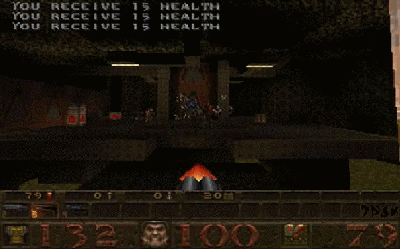
Quake expanded the first-person shooter template established by earlier id Software titles such as Doom and Doom II, but introduced a fundamentally new game engine that rendered fully 3D environments and models. This allowed for true verticality, free looking (up and down), jumping and more complex level geometry. The engine also supported real-time lighting, texture mapping and a modifiable scripting layer that encouraged player-created content.
Development, music and release
Developed by a small team at id Software, Quake was notable for its darker, more atmospheric tone and its collaboration with musicians outside the traditional game industry. The game's industrial soundtrack and many sound effects were created in partnership with Trent Reznor of Nine Inch Nails, lending a distinct audio identity that matched the game's bleak environments. Upon release, the game was distributed on CD and quickly adopted by players interested in both the single‑player campaign and the new possibilities for online competition.
Multiplayer, community and modding
Quake played a major role in popularizing online multiplayer gaming. It offered more robust networking than earlier shooters and supported competitive matches over the internet. Third‑party utilities such as QuakeWorld, as well as match‑finding programs and services, helped players connect. The game's flexible architecture encouraged modders and led to a vibrant scene of custom maps, gameplay modifications and total conversions. Many influential multiplayer modes and community projects began as Quake mods, helping establish a culture of user‑generated content that persists in gaming.
Key features and legacy
- First‑person shooter with fully 3D levels and models (a step beyond sprite‑based engines).
- Support for looking up/down and jumping, changing level design and combat tactics.
- Strong emphasis on multiplayer with early internet play and matchmaking tools.
- Extensible modding tools and scripting, which fostered a lasting community of custom content.
- Distinctive soundscape created in collaboration with established musicians.
Distinctive facts and influence
Quake's combination of a new engine, fast networked play and community tools made it a touchstone for future shooters. It influenced level design, competitive play and the commercial importance of modding. While drawing clear lineage from earlier id titles such as Doom and Doom II, Quake marked a technical and cultural shift for the studio and the genre. Discussions of the game's mechanics, engine innovations and community projects remain frequent in histories of video games.
Further reading and resources
- Contemporary reviews and retrospectives exploring Quake's impact on multiplayer and engine technology (multiplayer resources).
- Design documents and interviews with the developers about building the engine and crafting the single‑player campaign.
- Community archives hosting mods, maps and tools that show Quake's ongoing influence on modding culture (3D graphics, internet play).
For concise introductions to the game's genre and terminology, see material on first‑person shooters and general video game history, or explore interviews with the composer credited alongside the project (Trent Reznor and Nine Inch Nails). Quake's place in gaming history stems from its technical leaps, the popularity of its multiplayer, and the lively community that kept the game evolving long after release.
Additional notable names and topics connected to Quake include services and tools that helped organize competitive play (multiplayer), as well as commentary on the series' broader development across subsequent sequels and spin‑offs.
Related articles
Author
AlegsaOnline.com Quake (1996 video game) Leandro Alegsa
URL: https://en.alegsaonline.com/art/80365