
First-person shooter (FPS)
A video game genre in which players view the action through a character's eyes and engage in combat, exploration, and objectives using ranged weapons; includes single-player and multiplayer forms.
Overview
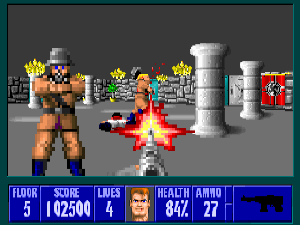
A first-person shooter (FPS) is a video game genre in which the player experiences the game world from the visual perspective of a protagonist. The viewpoint is located at or near the character's eye level so that the player sees hands, weapons and the immediate environment as if looking through the character's eyes. FPS games emphasize aiming, movement and combat against opponents or obstacles and may include narrative objectives, exploration and puzzle elements. For an introductory summary see further reading.
Image gallery
8 Images






Key characteristics
Core features that define many FPS titles include a first-person camera, a heads-up display (HUD) showing health, ammo or objectives, and a variety of ranged weapons. Level design can be linear or open, and enemies range from scripted opponents to reactive artificial-intelligence agents. Multiplayer modes commonly add team play, deathmatch and cooperative options.
- Perspective: single-camera eye view, often with visible weapon models.
- Interaction: shooting, movement (running, jumping, crouching), and object use.
- Interface: HUD elements, crosshairs, minimaps or objective markers.
- Progression: levels, campaigns, unlockable gear and custom loadouts.
History and technical development
FPS games grew out of early experimentation with first-person perspectives and 3D-like environments in the late 1980s and early 1990s. Advances in real-time rendering, level editors and networking helped the genre expand to both single-player narrative experiences and competitive online play. Improvements in graphics, input devices and networking have continually reshaped FPS design and accessibility; technical aspects such as 3D rendering engines and multiplayer frameworks remain central to development discussions (see technical overview).
Subgenres and notable forms
- Tactical shooters: slower, teamwork-focused gameplay with realistic weapon behavior.
- Arena shooters: fast, movement-oriented combat in compact maps.
- Story-driven FPS: single-player campaigns with narrative emphasis.
- Battle royale and hybrid forms: large-scale last-player-standing matches blending FPS mechanics with survival elements.
Cultural impact and considerations
FPS games are among the most commercially successful and technically ambitious video games. They have driven innovations in graphics, audio design and online infrastructure, and they form a major portion of competitive esports and streaming content. The genre has also been central to public debates about depictions of violence in games, leading to research, rating systems and parental guidance frameworks. Beyond controversy, FPS titles serve diverse roles—from storytelling and simulation to competitive sport and social play.
Author
AlegsaOnline.com First-person shooter (FPS) Leandro Alegsa
URL: https://en.alegsaonline.com/art/34586