
Queen Forever (compilation album)
Queen Forever is a 2014 compilation of love songs and rarities by the British rock band Queen, featuring three newly finished tracks built around archival Freddie Mercury performances.
Overview
Queen Forever is a compilation album by the British rock band Queen released in 2014. Rather than a standard greatest-hits package, it was presented as a collection of ballads and love-themed songs gathered and sequenced by the remaining band members. The release attracted attention because it includes three tracks described by the band as "new": previously unreleased or reworked performances built around archival vocals by Freddie Mercury and contributions that include the retired bassist John Deacon.
Image gallery
1 Image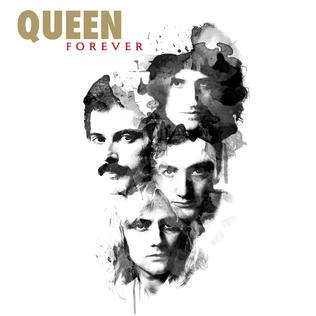
Contents and notable tracks
The compilation mixes familiar Queen ballads with rarities and studio reconstructions. The three newly presented tracks are:
- "Let Me In Your Heart Again" — a Brian May composition originally recorded during the sessions for the mid-1980s album The Works, finished for this release.
- "Love Kills - The Ballad" — a reworked, slower take on Freddie Mercury's 1984 disco-influenced solo song, altered here to emphasize a ballad arrangement.
- "There Must Be More to Life Than This (William Orbit Mix)" — based on an early-1980s duet demo involving Freddie Mercury and Michael Jackson, later reworked by producer William Orbit with new instrumental parts to frame Mercury's vocal.
Origins and production
Selections for the album were curated by guitarist Brian May and drummer Roger Taylor, who also oversaw the work needed to complete and update the archival recordings. The newly finished material mixes vintage vocals and song ideas with contemporary production choices: added guitar, bass and drums were employed to make the tracks sound cohesive with the catalogue. The William Orbit mix is an example of bringing a well-known external producer to reinterpret a historical recording for modern release.
Track selection and themes
The remainder of the album comprises celebrated Queen songs chosen to fit the romantic and reflective theme. Among these are classics such as "Somebody to Love," "You're My Best Friend," "Love of My Life," "Crazy Little Thing Called Love," "It's a Hard Life," "These Are the Days of Our Lives" and "Who Wants to Live Forever." The sequence emphasizes the band's softer, more melodic side rather than their harder rock or arena anthems.
Reception and significance
When released, the compilation sparked interest for the way it handled archival material: some listeners welcomed access to previously unheard Freddie Mercury performances, while others debated whether studio reconstruction and remixing should be applied to legacy recordings. Critics gave mixed responses, noting the emotional power of Mercury's voice alongside questions about production choices. For fans, the album is significant as one of the few posthumous releases to present Freddie Mercury in newly framed recordings and as a document that recalls John Deacon's limited later involvement after his retirement from public life.
Notable facts and distinctions
- Although billed as containing "new" songs, those tracks were assembled from earlier sessions rather than created entirely after Mercury's death; they were finished by surviving members and collaborators.
- The project illustrates a broader trend in rock catalog management: curating themed compilations and using modern production to complete or refresh archival material for contemporary audiences.
- Interest in the Mercury/Michael Jackson duet has long been part of Queen lore; the William Orbit mix is one of several attempts to present that collaboration in a publicly releasable form.
For further context on the band's history and catalog, readers can consult official band resources and archives curated by Queen’s members and estates. See also materials by Brian May and Roger Taylor for background on the compilation process and the choices involved in bringing old recordings to a modern release format. Freddie Mercury remains central to the album’s appeal, and additional commentary and interviews are available that discuss the album's conception and assembly. John Deacon's association with these tracks is notable because he largely stepped away from public work after the 1990s; this set therefore stands out in the band's later discography.
Band overview and archival materials can provide expanded track listings, session notes and credits for listeners who wish to explore the recording history behind the collection. For production details on the remixing and finishing work, see interviews with Brian May and the producers involved. Queen's catalog contains numerous compilations and reissues—Queen Forever is distinctive in its focus on love songs and in presenting reworked archival performances alongside well-known hits.
Related articles
Author
AlegsaOnline.com Queen Forever (compilation album) Leandro Alegsa
URL: https://en.alegsaonline.com/art/80456