
Qingzang Railway (Qinghai–Tibet Railway)
High‑altitude railway linking Xining to Lhasa, notable for engineering across permafrost and the world's highest rail sections, with social, economic and environmental significance.
Overview
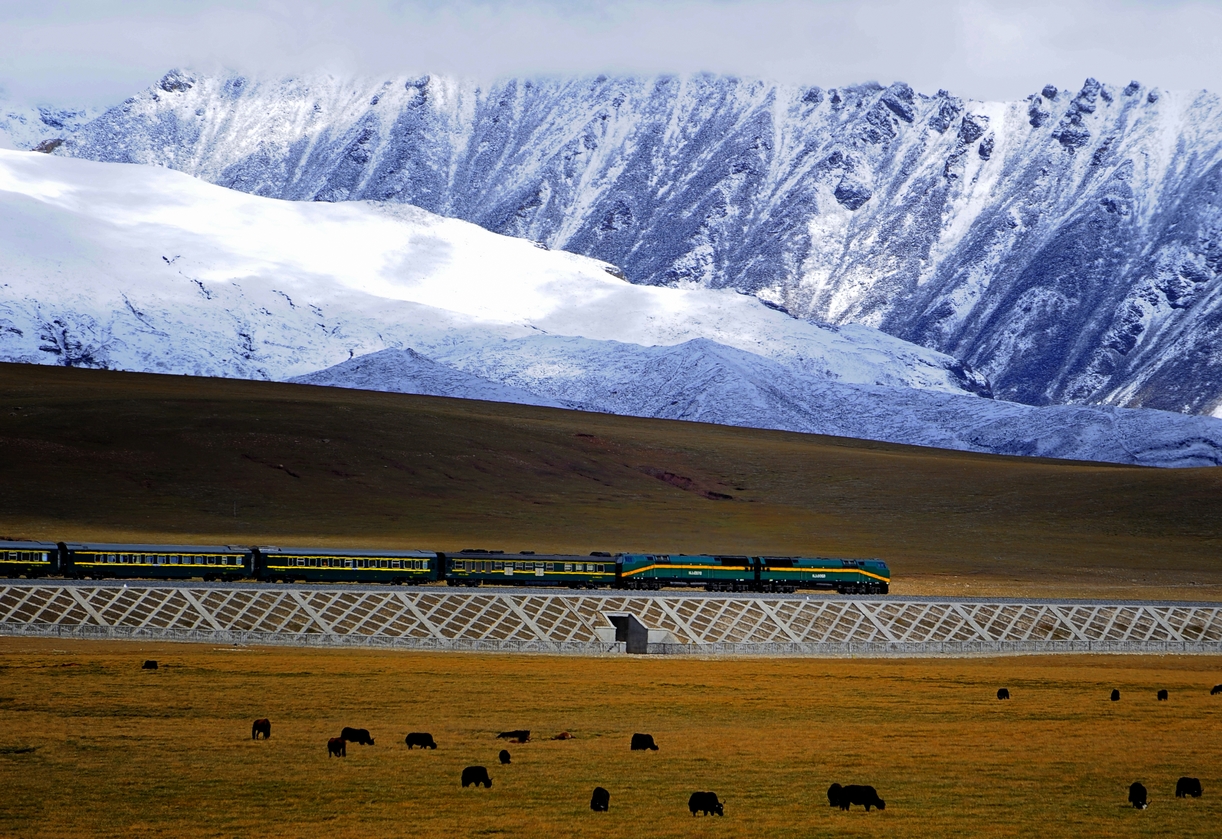
The Qingzang Railway, commonly called the Qinghai–Tibet or Qinghai–Xizang railway, connects Xining in Qinghai Province to Lhasa in Tibet. The line was completed and opened to Lhasa in 2006 and spans much of the high Tibetan Plateau. It is best known for carrying tracks, trains and passengers across some of the world’s highest and most remote terrain, and for introducing engineering techniques intended to cope with permafrost, thin air and extreme weather.
Image gallery
10 Images


Route and notable features
The railway rises from Xining, traverses expansive grasslands and mountain ranges, and reaches the Tanggula Pass at 5,072 m above sea level — the highest point on any conventional railway. Tanggula Railway Station, near that pass, is the world’s highest railway station. Several tunnels and long bridges are key features: the Fenghuoshan tunnel (1,338 m long) sits at about 4,905 m above sea level and is the world’s highest rail tunnel, while the Yangbajing tunnel (3,345 m long) lies at roughly 4,264 m and is the longest tunnel on the line. More than 960 km of the Golmud–Lhasa segment lies above 4,000 m. The line includes some 675 bridges totalling about 159.88 km, and more than half of the track is built on permafrost ground.
Engineering and operations
Building and maintaining a functioning railway at these elevations required several specialised measures. Trackbeds are raised on insulated embankments, piles or columns in places where permafrost must be protected; thermosyphon systems and other cooling techniques are used to keep frozen ground stable. Rolling stock on passenger trains is modified with oxygen-supply systems and cabins that reduce altitude effects for travellers. Locomotives, braking systems and maintenance regimes have also been adapted to the thinner air and colder temperatures encountered along the route.
History and opening
The project was planned and built in the early 21st century, with the alpine section to Lhasa completed and inaugurated in 2006. Construction brought together large numbers of engineers and labourers and required detailed environmental and geological surveys. The line shortened travel times between Tibet and major Chinese cities and provided a year‑round ground link where previously long, seasonal or difficult journeys dominated.
Uses, impacts and controversies
The railway has increased tourism, freight capacity and passenger travel to and from Lhasa; for example, rail journeys from Lhasa to coastal megacities can take multiple days — the route to cities such as Guangzhou or Shanghai is commonly a multi‑day trip. Proponents cite improved access to medical services, supplies and economic opportunity. Critics raise concerns about environmental disturbance to fragile plateau ecosystems, the risk to permafrost from climate change and infrastructure, and social and cultural effects in Tibet. Debate continues over the balance of economic benefits, ecological protection and local rights.
Further reading and references
- Xining — regional overview
- Lhasa — city and rail terminus
- Tibet — regional context
- Tanggula Pass details
- Tanggula Railway Station
- Fenghuoshan tunnel information
- Yangbajing tunnel and local geography
- Permafrost and engineering responses
- Travel connections — Guangzhou
- Travel connections — Shanghai
The Qingzang Railway remains a prominent example of high‑altitude railway engineering and of the broader tradeoffs that large transportation projects can entail in fragile environments and culturally distinct regions.
Related articles
Author
AlegsaOnline.com Qingzang Railway (Qinghai–Tibet Railway) Leandro Alegsa
URL: https://en.alegsaonline.com/art/80335
Sources
- mikes.railhistory.railfan.net : Tanggula
- savetibet.org : Tracking the Steel Dragon: How China's economic policies and the railroad are transforming Tibet