
Rail gauge: definition, types, history and operational impacts
Rail gauge is the distance between the inner faces of the two rails. This article explains measurement, common gauges (including standard and metre), historical causes, and how railways manage breaks of gauge.
Overview
Rail gauge is the transverse distance between the inside faces of the two running rails of a railway track. It is a primary dimension that constrains wheelset spacing, vehicle design and many aspects of track engineering. The internationally most common dimension is the standard gauge, 1,435 mm (4 ft 8 1/2 in), but many networks use broader or narrower gauges for historical, geographic or economic reasons.
Image gallery
10 Images




Measurement and conventions
Gauge is normally specified as the distance between the inner faces of the rails. In practice, nominal gauge and actual measured gauge can differ slightly because of rail wear, fastening type and maintenance tolerances. Gauge must be considered alongside the "loading gauge," which defines the maximum external size of vehicles, and track centres, which determine spacing between adjacent tracks.
Common gauges and where they are used
- Standard gauge: 1,435 mm — the most widely used for mainline, high-speed and international routes (standard gauge).
- Broad gauges: examples include 1,676 mm (used in parts of South Asia), about 1,520–1,524 mm across much of the former Soviet Union, and 1,668 mm on parts of the Iberian Peninsula.
- Metre and narrow gauges: 1,000 mm (metre gauge) and smaller gauges such as 760–762 mm or 600/610 mm are common for mountainous terrain, light railways, industrial and heritage lines where lower cost and tighter curves are priorities.
Historical development
In the 19th century many gauges developed independently as railways were built by different engineers, companies and colonial powers. Local engineering preferences, the equipment suppliers, cost considerations and competitive or military aims influenced gauge choice. Over time, many regions adopted standard gauge to improve interoperability, but substantial legacy networks remain in their original gauges.
Operational impacts and solutions
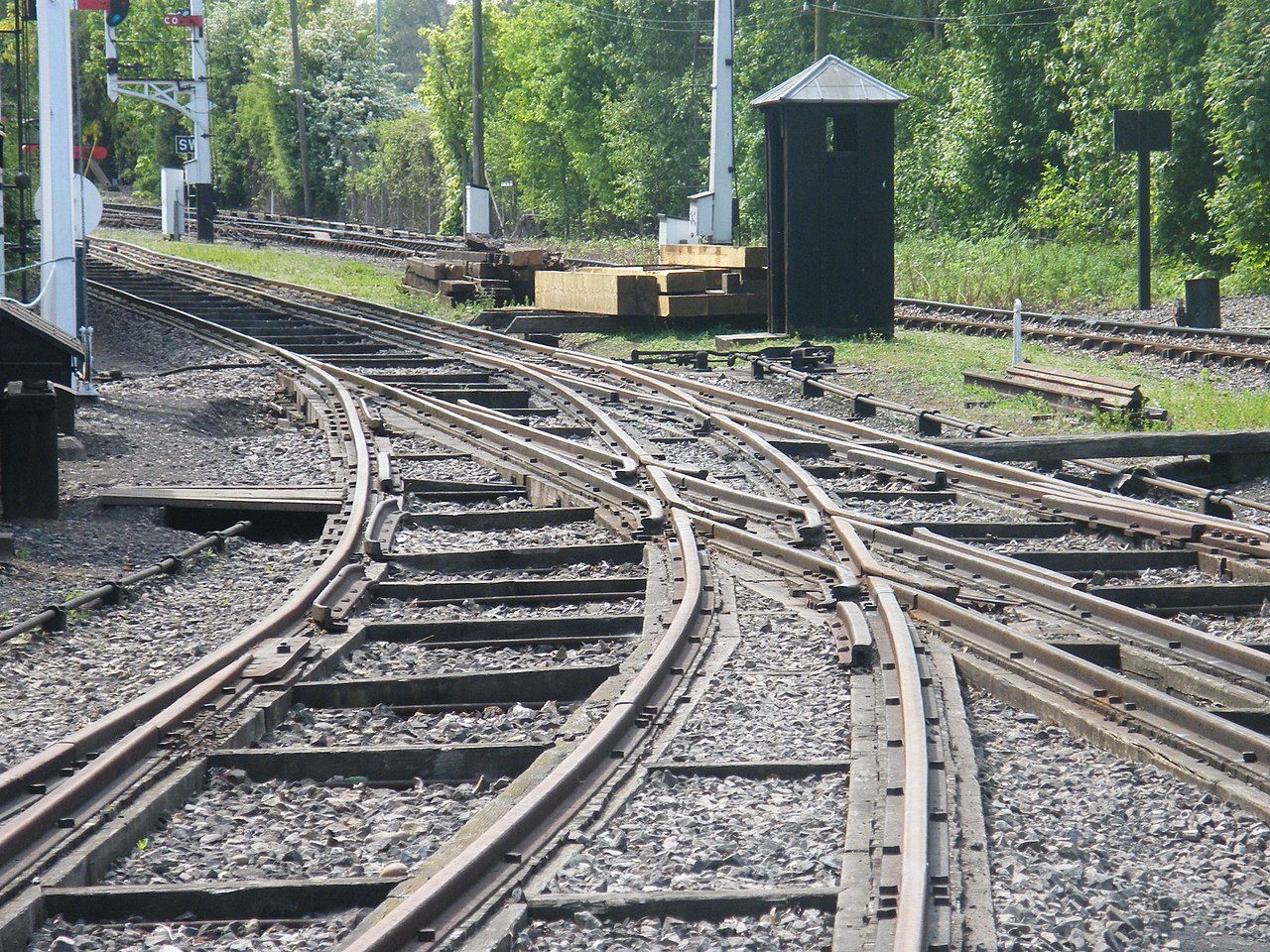
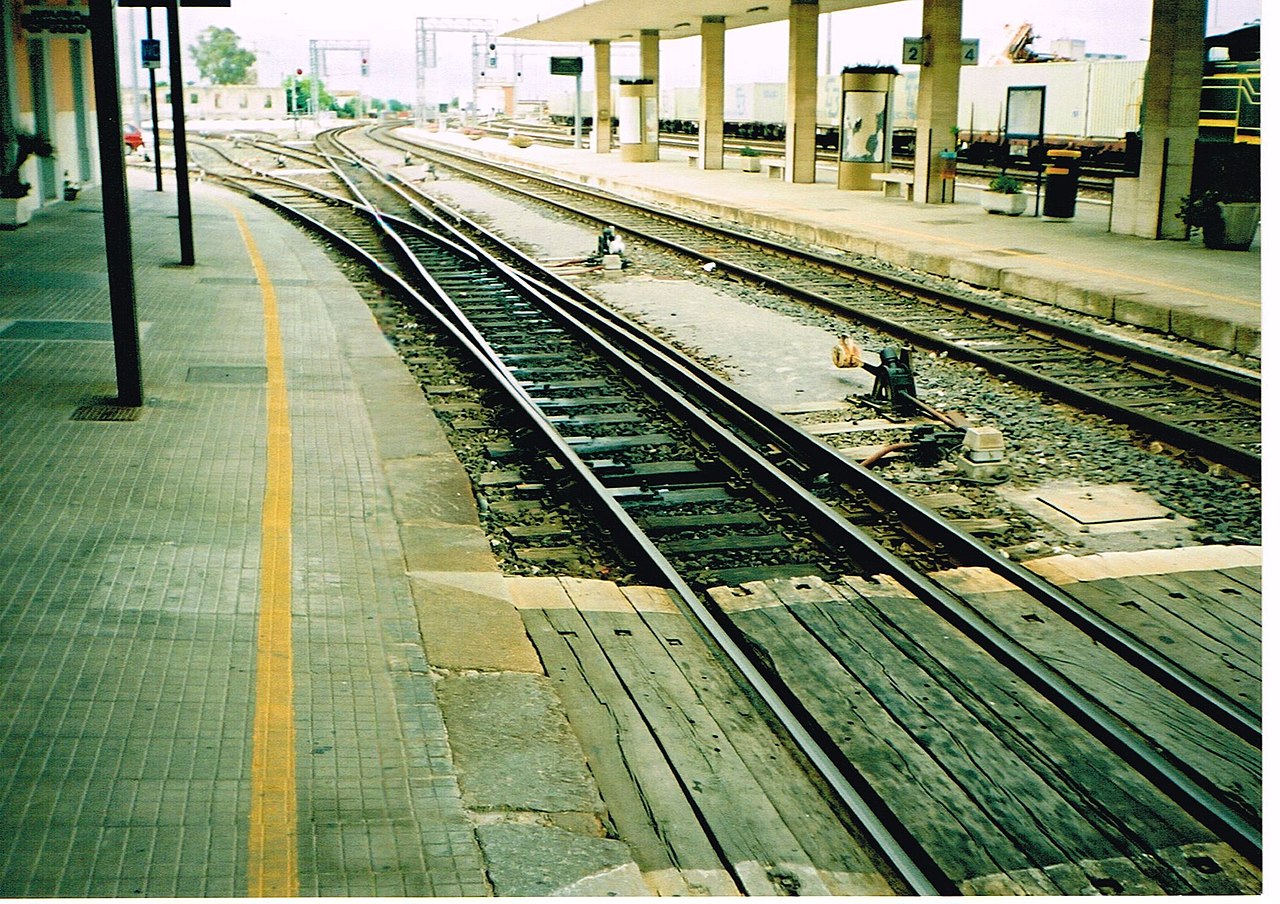
Where networks of differing gauges meet there is a break of gauge. Breaks of gauge complicate through movements of freight and passengers and increase handling costs. Common operational responses include transshipment of goods, use of containers to simplify transfers, bogie exchange where wheelsets are swapped, and variable-gauge axle systems that adjust wheel spacing while rolling. Infrastructure solutions include dual-gauge track with three or four rails to allow trains of two gauges to share a corridor, and long-term gauge conversion projects to unify networks.
Gauge affects permitted axle load, vehicle stability, allowable curve radius and the size of rolling stock. Broad gauges generally allow larger cross-sections and potentially higher stability at speed, while narrow gauges reduce construction cost and can negotiate tighter curves in difficult terrain. Choice of gauge is therefore a trade-off among construction cost, operational needs and interoperability.
Current trends and notes
New high-speed and international lines often favour standard gauge for compatibility, while many legacy systems continue to operate on historical gauges. Advances in containerization, vehicle technology and adaptable wheelsets mitigate some disadvantages of mixed gauges, but differences in gauge remain an important factor in railway planning, engineering and cross-border transport policy.
Key point: gauge is a simple measurement with wide-ranging consequences for vehicle design, infrastructure, operations and international connectivity.
Related articles
Author
AlegsaOnline.com Rail gauge: definition, types, history and operational impacts Leandro Alegsa
URL: https://en.alegsaonline.com/art/80868