
Permafrost: frozen ground, processes, distribution, and consequences
Permafrost is ground that remains at or below 0 °C for at least two years. This article explains its definition, structure, global distribution, environmental roles, and effects of thawing.
Permafrost is ground—rock, sediment, or soil—that remains at or below 0 °C (32 °F) for two or more consecutive years. In geological usage the term distinguishes permanently frozen ground from seasonally frozen soil. It is sometimes referred to as cryotic soil. For a technical reference on the broader geological context see geology, and for basic ground-material concepts see soil.
Image gallery
10 Images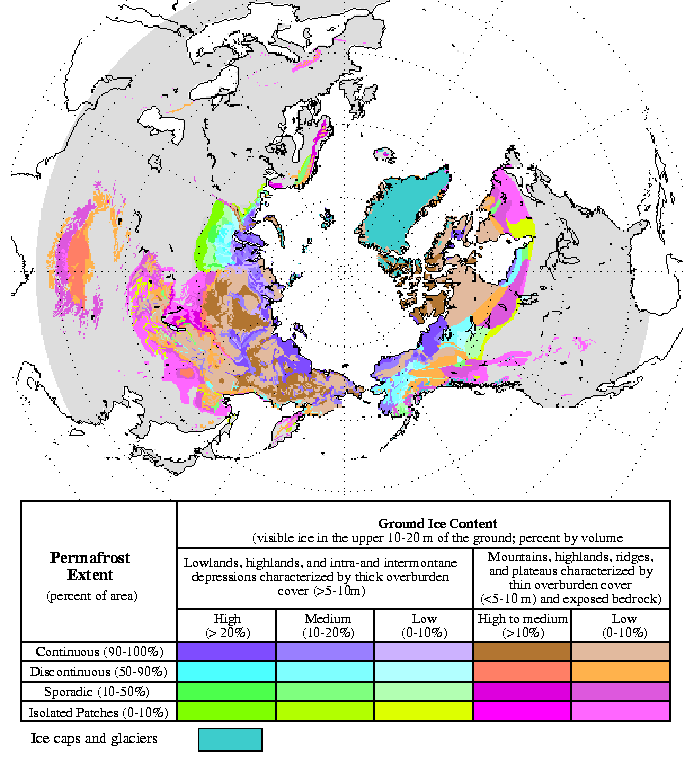





Characteristics and structure
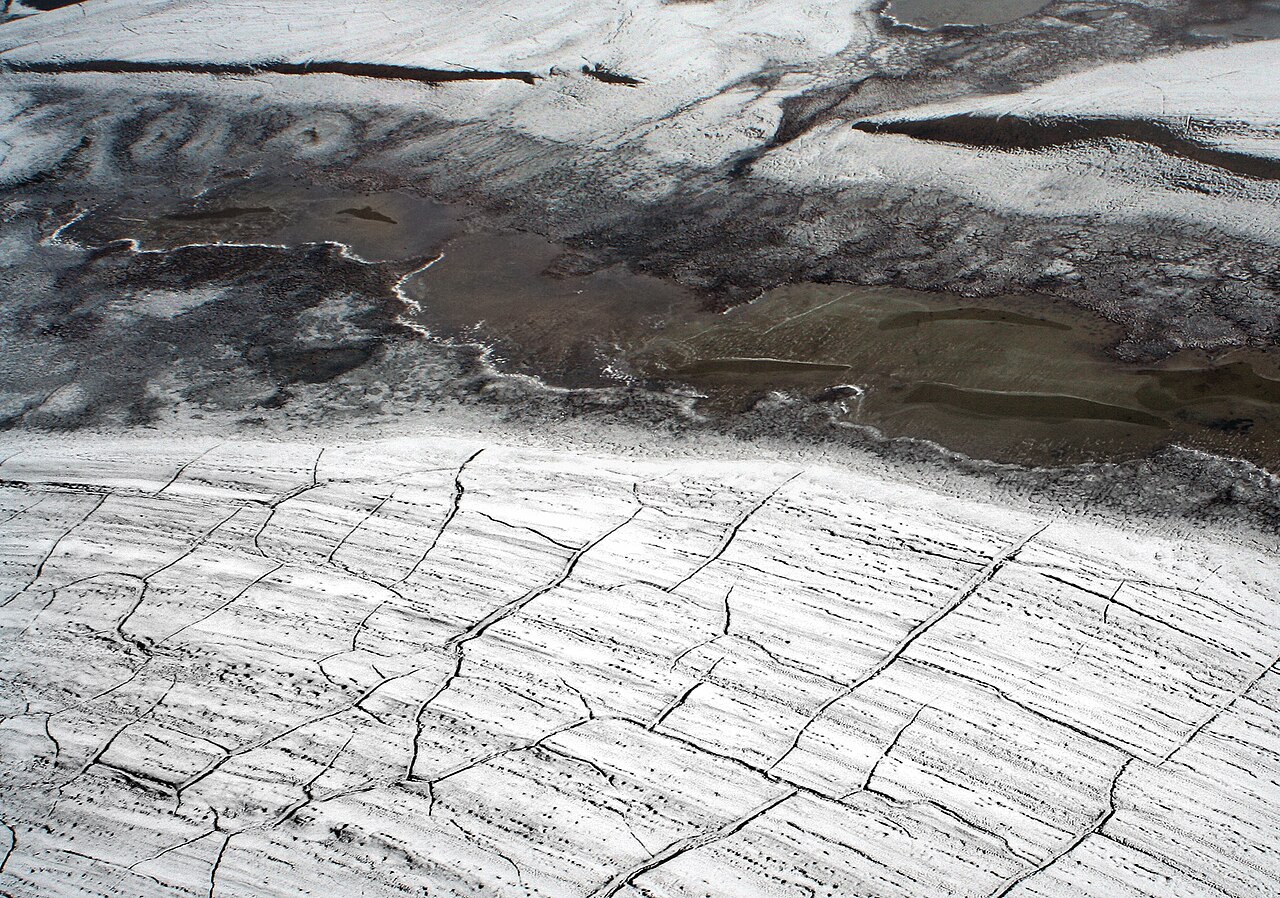
Permafrost is defined by temperature and persistence rather than by a single composition. A top layer called the active layer thaws each summer and refreezes in winter, while the permafrost beneath stays frozen year-round. Frozen ground commonly contains ground ice in forms such as ice lenses, wedges and segregated ice. The depth and continuity of permafrost vary locally and control surface hydrology, vegetation, and stability.
- Active layer: seasonally thawed surface layer.
- Permafrost table: upper boundary of permanently frozen ground.
- Ground ice: influences volume changes on thaw.
- Continuity: continuous, discontinuous or sporadic across regions.
Permafrost occurs across large portions of the polar regions and at high elevations. Extensive zones exist in the Northern Hemisphere near the North Pole and across Arctic lands; smaller, colder permafrost areas are present in the high plateau and mountain regions of many continents and in parts of Antarctica near the South Pole.
Origins, types, and development
Permafrost forms where mean annual ground temperatures remain at or below freezing long enough for the subsurface to remain frozen through years and centuries. Some modern permafrost is a relic from past cold climates, while other areas have formed more recently under current climatic conditions. Regions are commonly classified as continuous (widespread frozen ground), discontinuous (interspersed frozen and unfrozen ground) or sporadic (isolated patches).
Permafrost is important for ecosystems, infrastructure and the global climate. Frozen soils store large amounts of organic carbon and, when thawed, microbial decomposition can release greenhouse gases such as carbon dioxide and methane. Thawing also changes drainage, causes ground subsidence, damages buildings, roads and pipelines, and alters habitat for plants and animals.
Current change, monitoring, and responses
Many regions show measurable warming of permafrost and deepening of the active layer. Scientists monitor ground temperature, thaw settlement and greenhouse-gas fluxes to assess impacts. Adaptation and mitigation responses include engineering designs raised on piles, improved building foundations, controlled drainage, and strategies to limit further warming. Research and long-term observation continue to refine understanding and guide policy and local adaptation efforts.
- Key research and monitoring networks track temperature and gas emissions.
- Engineering approaches reduce damage to infrastructure in thawing zones.
- Ecological studies examine changes to vegetation and wetlands as permafrost shifts.
Related articles
Author
AlegsaOnline.com Permafrost: frozen ground, processes, distribution, and consequences Leandro Alegsa
URL: https://en.alegsaonline.com/art/75863