
Lhasa: Cultural and Administrative Center on the Tibetan Plateau
Lhasa is a high-altitude city on the Tibetan Plateau, known as the religious heart of Tibetan Buddhism and home to landmarks such as the Potala Palace, Jokhang Temple and Norbulingka.
Overview
Lhasa is a city on the Tibetan Plateau that serves as the administrative center of the Tibet Autonomous Region. Perched at high elevation, it is renowned for its long association with Tibetan Buddhism and for a skyline dominated by historic monasteries and palaces. The city's Chinese name is 拉萨, and it lies within the broader region commonly called Tibet.
Image gallery
10 Images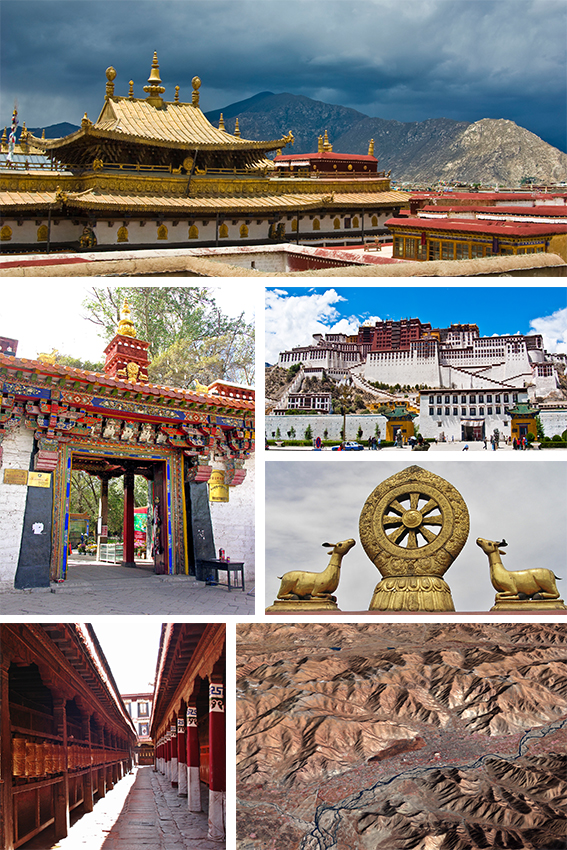




Geography and character
Lhasa stands at high altitude on a river valley of the plateau, giving it a cool, dry climate with strong sunlight and thin air. The built environment mixes traditional Tibetan architecture — whitewashed walls, flat roofs and ornamented windows — with modern government and service buildings. Local life blends religious practice, government administration and tourism-driven commerce.
Major sites
- Potala Palace — a monumental former residence of the Dalai Lama and an iconic symbol of Lhasa.
- Jokhang Temple — a central place of pilgrimage and worship for Tibetan Buddhists.
- Norbulingka — a former summer palace and garden complex.
- Other important places include Sera Monastery, Barkhor Street and several smaller temples and chapels.
History and cultural importance
Lhasa developed over many centuries as a religious and political center. It became closely associated with the institution of the Dalai Lama from the 17th century onward and attracted pilgrims and monastic communities. Its temples, ritual calendar and festivals have long shaped Tibetan cultural life.
Transport, economy and visitors
The city is served by airport and rail links that connect the plateau with other parts of China, and it depends economically on administration, services, pilgrimage and tourism. Visitors come to see the major religious sites and to experience Tibetan culture and festivals. Tourist information and site descriptions are widely available online; for official or detailed travel guidance consult sources such as Buddhist sites and travel resources.
Notable facts and distinctions
Lhasa is often described as one of the highest cities in the world and is distinctive for its concentration of historic Buddhist monuments and living monastic traditions. Its combination of religious significance, highland environment and unique architecture make it a focal point for study and for visitors interested in Tibetan culture.
Related articles
Author
AlegsaOnline.com Lhasa: Cultural and Administrative Center on the Tibetan Plateau Leandro Alegsa
URL: https://en.alegsaonline.com/art/57661
Sources
- gov.cn : "Lhasa City Master Plan"