
Puzzle video game
A genre of video games centered on solving puzzles using logic, pattern recognition, spatial reasoning, or strategy; includes many subgenres and has broad casual and educational appeal.
Overview
A puzzle video game emphasizes problem solving as its central gameplay mechanic. Players confront discrete challenges—ranging from abstract pattern recognition to physics-based obstacles—that must be solved to progress. Unlike action-heavy genres, puzzle games reward deliberation, planning, and creative thinking rather than fast reflexes. For a general introduction see this overview.
Image gallery
2 Images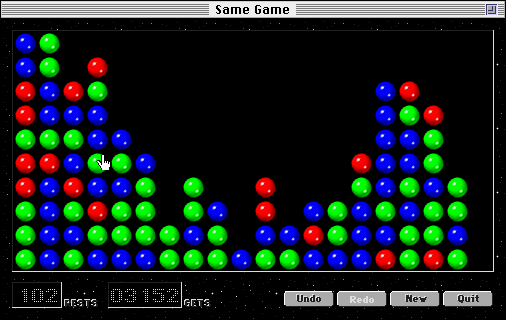

Typical characteristics and mechanics
Common features include clear objectives, limited resources or moves, and an increasing difficulty curve. Mechanics vary widely: matching tiles, arranging objects, deducing hidden information, or manipulating physics. Designers often combine simple rules with complex emergent possibilities so a few elements can yield many distinct problems. Learn more about mechanics at mechanics reference and puzzle design at design notes.
Subgenres and examples
- Tile-matching (match-3) and falling-block puzzles—simple to learn, easy to scale.
- Logic puzzles—pure deduction tasks similar to pen-and-paper puzzles.
- Physics puzzles—use simulated forces and collisions to reach goals.
- Puzzle-platformers and adventure hybrids—blend exploration with puzzle solving.
Well-known instances include Tetris, Minesweeper and popular casual titles; for an example profile see Minesweeper.
History and development
Puzzle games have roots in traditional puzzles and early computer titles. They gained mass popularity through iconic releases that demonstrated how simple rules could create addictive gameplay. Over time the genre expanded onto handheld devices and smartphones, where short-session play and touch controls suited casual audiences.
Uses, appeal, and distinctions
Players enjoy puzzle games for mental challenge, low-stress pacing, and creative problem solving. Educators and therapists sometimes use puzzle tasks to train spatial reasoning, pattern recognition, or concentration, though effects vary by context. Puzzle games differ from strategy or action genres by focusing on specific solvable problems rather than open-ended goals; see contrasts at genre comparison and further reading resources.
Related articles
Author
AlegsaOnline.com Puzzle video game Leandro Alegsa
URL: https://en.alegsaonline.com/art/80208