
Prime Minister of Nepal
Head of Nepal’s federal government who chairs the Council of Ministers, leads the cabinet, is appointed according to parliamentary majority, and resides in Baluwatar with the seat at Singha Darbar.
The prime minister of Nepal is the head of the federal executive and the principal minister of the Council of Ministers. In Nepali the office is known as नेपालको प्रधानमन्त्री. The prime minister directs government policy, represents the administration at home and abroad, and leads the federal cabinet in a parliamentary system where the officeholder must retain the confidence of the House of Representatives. The post combines political leadership with day-to-day executive responsibilities within a constitutionally defined framework.
Image gallery
1 Image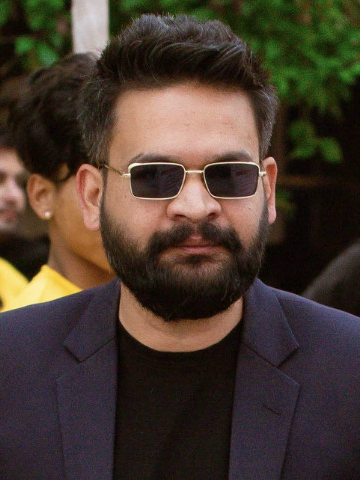
Role and responsibilities
The prime minister chairs cabinet meetings and coordinates work across ministries, setting priorities for legislation and public administration. Typical duties include forming and supervising the Council of Ministers, developing government programs, advising the President on appointments, and shaping foreign and security policy in consultation with the cabinet. Although the President is the formal head of state, executive power is exercised by the prime minister and the Council of Ministers under the constitution of the Federal Republic of Nepal.
Appointment, tenure and remuneration
By convention and constitutional practice, the prime minister is the leader who can command a majority in the House of Representatives. The President appoints the prime minister on that basis and the office continues as long as parliamentary confidence is maintained. There is no constitutional limit on the number of terms a person may serve as prime minister. The basic monthly salary for the office has been reported as approximately NPR 77,280, though allowances and official benefits supplement this figure; further details are set by law and administrative rules (terms and pay).
Official seat and residence
The official seat of the prime minister is at Singha Darbar, a historic central government complex that has housed Nepalese ministries since the Rana period; its role as an administrative centre dates to the early 20th century (Singha Darbar). The customary official residence is in Baluwatar, Kathmandu, which serves as the working home for the incumbent and the venue for many formal meetings (Baluwatar). Ministries and agencies operate from the central secretariat located in the same governmental precincts, linking the prime minister’s office with the broader federal administration (federal government).
History and development
The office of prime minister in Nepal has evolved through monarchic, oligarchic and democratic phases. Under the old monarchy the prime minister often derived power from royal appointment; after the end of the monarchy and the promulgation of republican constitutions, the role became firmly embedded in parliamentary democracy. Reforms in recent decades, including the federal reorganisation of the state, have changed the institutional context in which the prime minister operates, increasing emphasis on coalition-building and negotiated governance at the federal level.
Notable facts and conventions
- The prime minister is usually the leader of the largest party or coalition in the House of Representatives and must maintain its confidence to remain in office.
- There is no fixed term limit; an individual may serve multiple non-consecutive or consecutive terms subject to parliamentary support.
- The office combines political leadership with administrative oversight; many routine powers are exercised collectively through the Council of Ministers.
- As of July 2021 the office was held by Sher Bahadur Deuba, who assumed the premiership on 13 July 2021. Readers should check current sources for any subsequent changes in officeholders.
Related articles
Author
AlegsaOnline.com Prime Minister of Nepal Leandro Alegsa
URL: https://en.alegsaonline.com/art/79087
Sources
- thehimalayantimes.com : "PM Deuba shifts to official residence in Baluwatar"
- thehimalayantimes.com : "How much are VIPs, including President and PM, paid monthly?"
- thehimalayantimes.com : "Baluwatar vacated - The Himalayan Times"
- ecs.com.np : "PM's Office - Heritage Tale - ECSNEPAL - The Nepali Way"
- thehimalayantimes.com : "Left alliance urges President to appoint UML Chair Oli as prime minister"