
Prime Minister of Papua New Guinea
The Prime Minister is the head of government of Papua New Guinea, chosen from the National Parliament. This article explains the office, selection, duties, history and notable features.
Overview
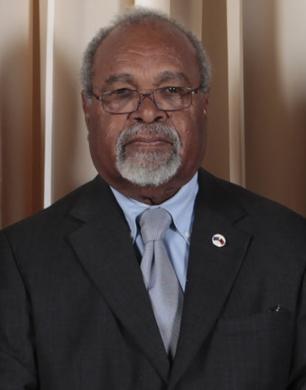
The Prime Minister of Papua New Guinea is the country's head of government and the central figure in its executive branch. The office arises from the Westminster-style parliamentary system adopted at independence. The Prime Minister is normally the leader of the party or coalition that commands a majority in the National Parliament and is formally appointed by the Governor-General acting on behalf of the monarch. The role combines political leadership with responsibility for directing government policy and coordinating ministers.
Image gallery
7 Images



Selection and tenure
A candidate becomes Prime Minister by securing majority support among members of the unicameral National Parliament. That support is often secured through party leadership or through coalition agreements among parties and independent members. The Prime Minister remains in office as long as they retain the confidence of Parliament; they can be removed by a parliamentary vote of no confidence or by losing the support of their own party or coalition.
Responsibilities and powers
- Leading the Cabinet and setting the government's legislative and policy agenda.
- Coordinating national administration and ministerial portfolios.
- Representing the country internationally and advising the Governor-General on appointments and constitutional matters.
- Overseeing national security and development priorities, especially in a country with diverse regions and communities.
History and development
The office was established when Papua New Guinea gained independence in 1975 and adopted many conventions of parliamentary government from the United Kingdom and other Commonwealth countries. The country's first Prime Minister played a prominent role in the independence movement and in shaping early institutions. Over time the office has had to adapt to the country's geographic challenges, cultural diversity and the realities of coalition politics.
Significance and notable features
In practice, Papua New Guinea's Prime Ministers often govern in the context of fragile coalitions and shifting parliamentary alliances, which can lead to frequent changes in leadership. The distinction between the Prime Minister and the head of state—who is the monarch represented domestically by the Governor-General—is an important constitutional feature. The seat of government is in Port Moresby, where the Prime Minister leads the Cabinet from the Parliament House and meets foreign leaders and delegations.
For further context on the nation's political system and executive roles, consult official descriptions of the country's government and constitutional arrangements that explain how parliamentary support, the Governor-General's appointment, and Cabinet responsibility work together to define the Prime Minister's authority. See also general references on parliamentary democracies and Commonwealth constitutional practice for comparative background. More on the head of government.
Related articles
Author
AlegsaOnline.com Prime Minister of Papua New Guinea Leandro Alegsa
URL: https://en.alegsaonline.com/art/79092
Sources
- 2009-2017.state.gov : "Background Note: Papua New Guinea"
- state.gov : US State Department