
Possession Island, Queensland
Small Torres Strait island off Cape York, known to the Kaurareg as Bedanug; site of James Cook's 1770 claim of eastern Australia and now a protected national park with recognized native title.
Overview
Possession Island lies in the central Torres Strait, close to the northern tip of the Australian mainland at Cape York. It is one of a string of low-lying islands in the Torres Strait region and falls within the state of Queensland, Australia. The island is small in area and is notable for both its natural features and its layered human history. The local Indigenous people, the Kaurareg, refer to the island by traditional names such as Bedanug or Bedhan Lag, reflecting its continuing cultural importance.
Image gallery
3 Images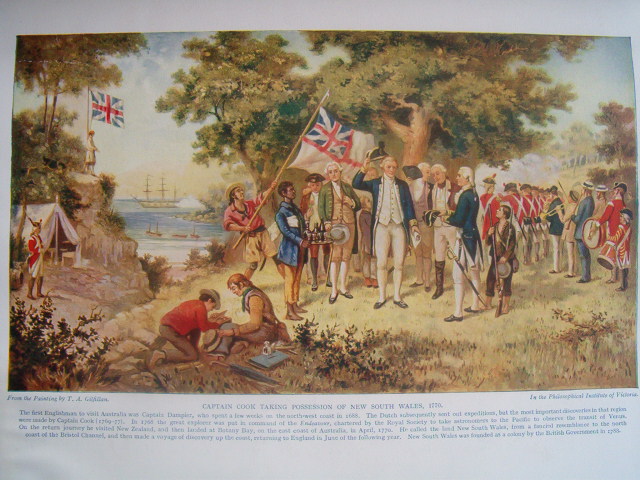


Historical significance
Possession Island gained prominence in European historical accounts when the British navigator James Cook landed there on 22 August 1770 during his first voyage up the east coast. Cook performed a formal act of possession for King George III, a declaration that came after his earlier stop at Botany Bay. That single moment became a symbolically important episode in the British claim over the east coast of Australia; it has since been the subject of discussion and reassessment, particularly in relation to Indigenous sovereignty and perspectives.
Indigenous connection and native title
The Kaurareg people have long-standing cultural and spiritual connections to Possession Island. In modern times those connections were recognised through native title processes: in 2001 the Kaurareg were successful in a claim that acknowledged their traditional rights over the island and neighboring islands. The native title recognition underscored the island's continuing role in Kaurareg law, ceremony and identity, and it reframed the historical narrative around Cook's landing.
Environment and conservation
Possession Island sits within Possession Island National Park, a protected area declared in 1977 and covering about 5.10 km². The park comprises coastal habitats typical of small Torres Strait islands: sandy beaches and dune systems around the perimeter, patches of shrubby woodland and coastal vegetation, and sheltered intertidal or mangrove fringes in some bays. These habitats support seabirds, shorebirds and a variety of marine life; because of its protected status the island is managed to conserve these natural values and to maintain culturally significant sites.
Management, access and uses
The Queensland Parks and Wildlife Service administers the national park and works in association with Kaurareg representatives to manage cultural heritage and conservation. Access to the island is generally by boat from the mainland or nearby islands and may be subject to permit conditions and seasonal restrictions to protect wildlife or cultural sites. Visitors should respect park regulations and Kaurareg cultural protocols.
Notable facts and context
- Traditional names: the island is known locally as Bedanug or Bedhan Lag by the Kaurareg people.
- Historic event: Cook's 1770 landing is frequently cited in accounts of early European exploration of the Australian coast.
- Conservation status: Possession Island National Park was established in 1977 and covers approximately 5.10 km².
- Native title: the Kaurareg people's native title over the island was recognised in 2001.
Possession Island thus combines ecological importance with cultural and historical layers: a small landscape where Indigenous heritage, colonial history and contemporary conservation intersect. For further regional context see sources on the Torres Strait, Cape York and the work of early navigators such as James Cook.
Related articles
Author
AlegsaOnline.com Possession Island, Queensland Leandro Alegsa
URL: https://en.alegsaonline.com/art/78350
Sources
- torres.qld.gov.au : Local history page
- austlii.edu.au : Kaurareg People v State of Queensland (2001)
- tools.wmflabs.org : 10°43′36″S 142°23′49″E / 10.72667°S 142.39694°E / -10.72667; 142.39694