
Potsdamer Platz: Berlin's central square and modern redevelopment
Potsdamer Platz is a major public square and transport hub in central Berlin, known for its historic rise, Cold War division, and large-scale post‑reunification redevelopment into offices, culture and retail.
Overview
Potsdamer Platz is a prominent public square and urban junction in Berlin, lying where the historic eastern center meets the modern west. The site spans parts of the Mitte and Tiergarten districts and connects directly with the adjacent Leipziger Platz to the west. Today it functions as a mixed-use area with office towers, cinemas, shops and open public spaces.
Image gallery
10 Images



History and development
In the 19th and early 20th centuries Potsdamer Platz was one of Europe’s busiest traffic and commercial intersections. Wartime bombing and later the division of Berlin left the area devastated; during the Cold War part of the square lay in the no‑man’s land next to the Berlin Wall. After 1989, the reunification of Berlin set the stage for a large-scale reconstruction that transformed the blank zone into a planned urban quarter.
Architecture and layout
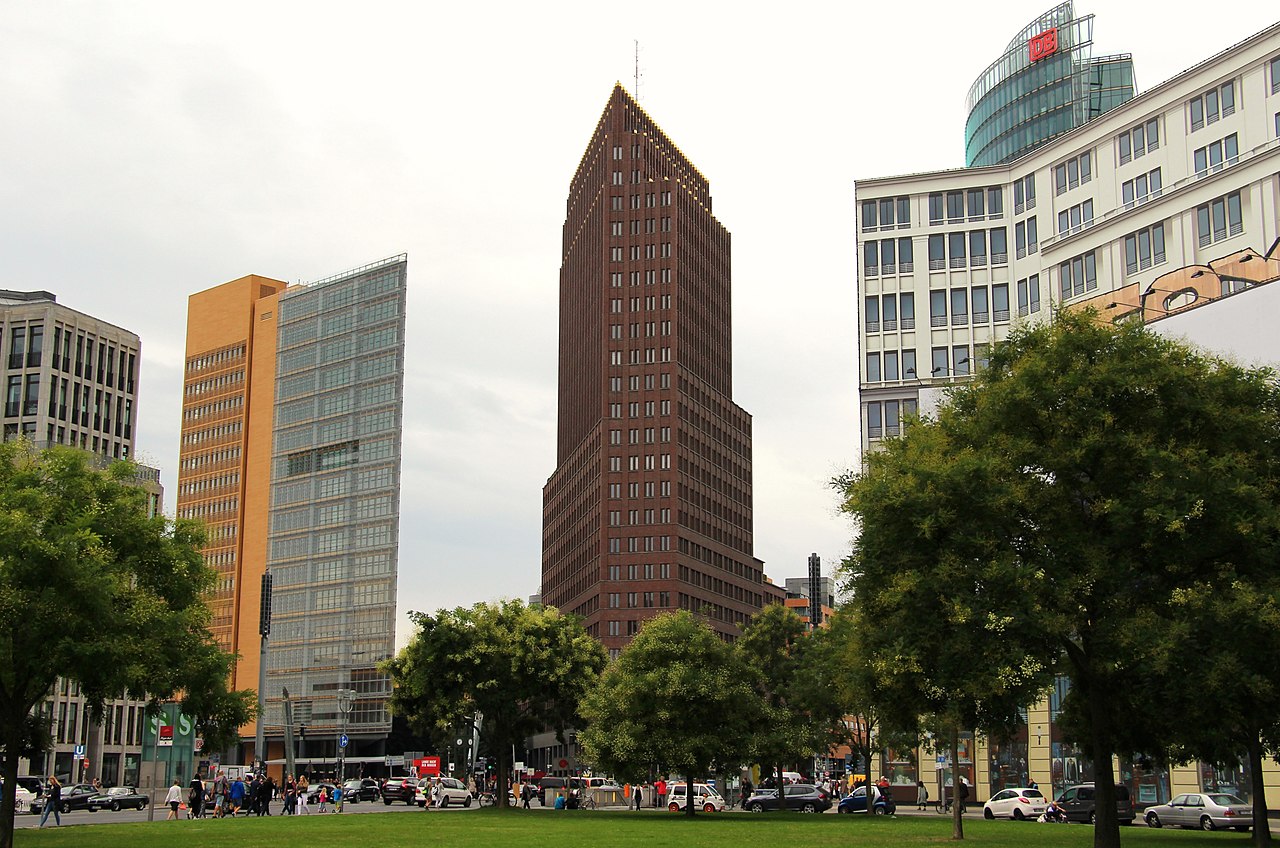
Redevelopment introduced a mix of contemporary architecture and broad pedestrian zones. The site contains high-rise office buildings, multi-level shopping arcades and the glazed Sony Center with its distinctive canopy. Designers aimed to reintegrate the square into Berlin’s street grid while providing public plazas, rooftop terraces and underground transport access.
Uses and cultural importance
Potsdamer Platz is both a business address and cultural focal point. It hosts cinemas and entertainment venues, including festival screenings during the Berlin International Film Festival, restaurants and year-round events. The area is a case study in post‑industrial urban renewal and attracts visitors for architecture, shopping and public programs.
Transport and economy
The square is a major transport node with regional rail, S‑Bahn and U‑Bahn links and extensive tram and bus connections nearby. Its redevelopment created office space for national and international companies, retail employment and tourism revenue, contributing to central Berlin’s economic recovery after reunification.
Notable facts
- Historically a key junction before WWII, then a symbol of division during the Cold War.
- Site of a high-profile post‑1989 urban regeneration project combining public and private investment.
- Adjacent Leipziger Platz forms a paired open space that together frames part of central Berlin’s civic landscape.
Related articles
Author
AlegsaOnline.com Potsdamer Platz: Berlin's central square and modern redevelopment Leandro Alegsa
URL: https://en.alegsaonline.com/art/78454