
Platform shoe
Footwear with a thick, raised sole across the entire length of the foot, used for height, protection, fashion and performance from antiquity to the present.
A platform shoe is a style of footwear characterized by a sole that is substantially thicker than typical shoes across the whole foot sole rather than only at the heel. Platforms can add several centimeters or inches of height while retaining a flat or nearly flat stepping surface, and they have been used for practical protection, theatrical effect and fashion statements in many cultures and eras.

Image gallery
10 Images


Characteristics and common materials
Unlike high heels, which raise the heel relative to the toe, platform shoes increase overall height by adding mass under the entire foot. Platform construction may be simple—layers glued together—or engineered with hollow cavities, wedges or composite inserts to reduce weight. Typical materials include cork and wood for vintage or artisan styles, synthetic resins and plastics for modern, lightweight versions, and rubber or foam for casual or comfort-oriented designs.
- Traditional and natural: cork, wood, leather;
- Contemporary: molded plastics and resins (plastic), synthetic foams and polyurethane;
- Utility and weather-resistant: rubber and dense elastomers (rubber).
Design choices—height, slope, tread pattern and upper materials—affect stability, flexibility and comfort. Many platform designs incorporate ankle support, straps or thicker toe boxes to compensate for the raised sole. "Comfort platforms" emerged in the late 20th century to combine elevated profile with cushioning and orthotic-inspired footbeds.
Historical development
Raised-sole footwear has very old roots. In several ancient societies, elevated shoes served practical and ceremonial purposes: to protect from mud or to signal social rank. In post-medieval Europe, chopines and similar raised shoes were worn for status and to keep garments off dirty streets. Platform silhouettes returned repeatedly in the 20th century as designers and subcultures adapted them for new aesthetic goals.
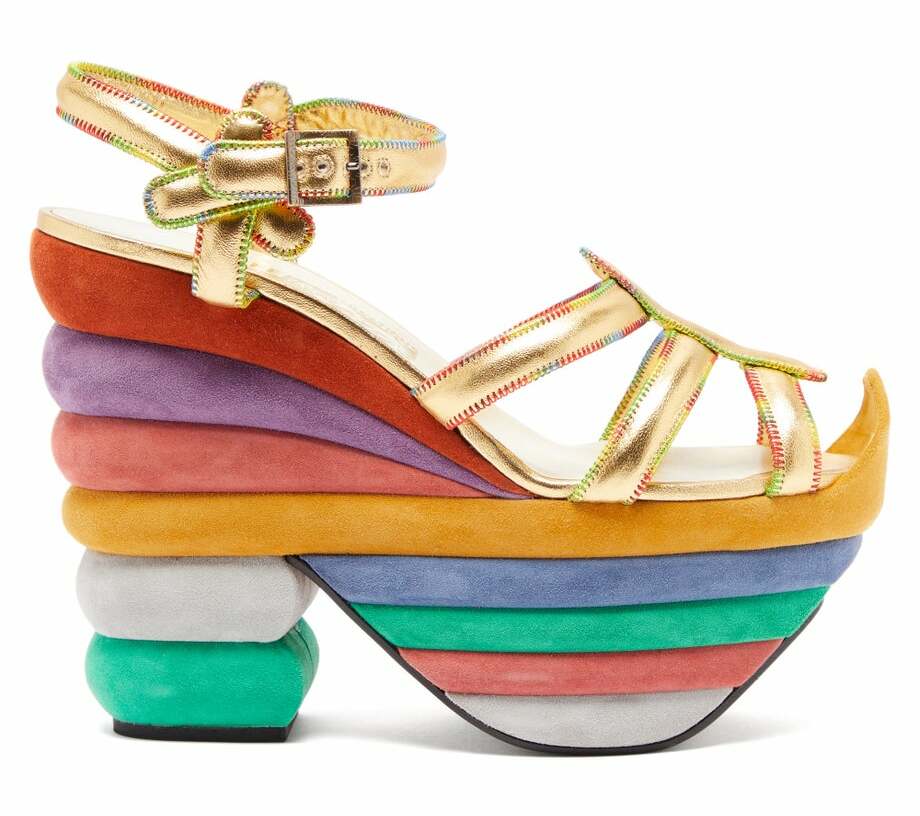
During the 1930s and again after World War II, designers experimented with cork and wood platforms for both cinema and haute couture. In the 1960s and 1970s, platforms became strongly associated with youth fashion, pop and glam rock; performers and nightlife culture embraced exaggerated soles for stage presence. Salvatore Ferragamo and later avant-garde designers explored platform construction as a vehicle for novelty and glamour. The 1970s disco era gave rise to thicker, more wearable platforms designed for dance and nightclub wear, and the style spread across the United States, Europe and the United Kingdom.
In the early 1990s platforms briefly retreated from mainstream runways, though they persisted in subcultural fashions and occasional designer revivals. A notable public moment that drew attention to platform heels was a widely reported runway fall by a supermodel wearing very tall platforms; such incidents highlighted the balance and stability challenges that extreme platforms can present. Renewed interest in retro styles, especially 1970s revivals in the 2000s and early 2010s, kept platforms circulating within seasonal fashion cycles.
Styles, uses and cultural significance
Platform shoes appear in many forms: sandals, boots, pumps, trainers and theatrical or costume footwear. Variants include flat platforms (minimal heel incline), wedge platforms that merge sole and heel into a single mass, and high-heeled platforms that combine a platform with an elevated heel. Designers and wearers select platform height and rigidity depending on intended use—higher and stiffer for visual drama, lower and cushioned for everyday wear.
- Fashion and glamour: to elongate the silhouette and create striking silhouettes;
- Performance and stagewear: used by musicians, actors and dancers for visibility and persona;
- Practical protection: raised soles protect the foot and garments from mud and street grime;
- Subcultural identity: adopted by goth, punk, rave and other style communities as a visual signifier.
In contemporary streetwear and online subcultures, platforms—especially chunky boots—have been reinterpreted for gender-neutral styling and alternative fashion. Rapid manufacturing and synthetic materials have also led to novelty designs such as clear platforms or styles that incorporate decorative items within transparent soles.
Manufacture, comfort and safety considerations
Manufacturers balance height, weight and flexibility. Solid wood or dense cork platforms are durable but heavy; molded foams and cellular plastics reduce weight but may compress over time. Foot health and safety depend on sole stiffness, tread grip and how the foot is supported: overly tall or unstable platforms can increase risk of ankle sprain or falls, while properly designed comfort platforms can distribute pressure and provide cushioning for prolonged wear.
Consumers looking for practical elevated footwear should consider sole material, heel-to-toe slope, ankle support and traction. Industry sources and retailers often label products by intended use—fashion, dance, outdoor—so buyers can choose designs appropriate to their needs. For historical context and design examples, see discussions of platform trends in musical subcultures and fashion retrospectives connected with the disco era (disco), and designers who revisited platform silhouettes in late 20th-century collections.
Notable distinctions
Platform shoes differ from high heels in that the elevation is under the whole foot rather than concentrated at the heel. They also differ from wedges in construction and profile: wedges provide a continuous incline while some platforms preserve a flat deck despite high lift. Because platform footwear recurs periodically in mainstream and alternative fashion, it is best understood as a versatile archetype rather than a single, fixed trend.
For further reading on materials, construction techniques and cultural moments tied to platform footwear, consult fashion history references and footwear manufacturing guides, and follow contemporary coverage of designer collections and subcultural fashions.
Additional resources: materials overview, rubber and synthetic soles, U.S. fashion history, European influences, British styles, disco and nightlife culture.
Related articles
Author
AlegsaOnline.com Platform shoe Leandro Alegsa
URL: https://en.alegsaonline.com/art/77348