
Prêt-à-Porter (film)
1994 ensemble comedy-drama directed by Robert Altman, satirizing the fashion industry during Paris Fashion Week; released in the U.S. as Ready to Wear and notable for a large celebrity ensemble.
Overview
Prêt-à-Porter, released in some territories as Ready to Wear, is a 1994 ensemble comedy-drama directed by Robert Altman. Set against the backdrop of Paris Fashion Week, the film presents intersecting storylines that lampoon and observe the business, glamour and pretensions of the fashion world. Altman assembled a large cast and combined scripted scenes with moments of improvisation, creating a mosaic-like portrait rather than a single linear narrative. The film was released in December 1994.
Image gallery
1 Image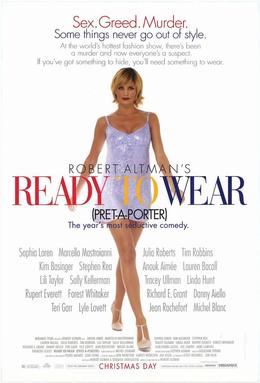
Production and style
Altman’s approach emphasizes overlapping dialogue, multiple principal characters and a documentary-like eye for atmosphere. The production made use of real runway shows, fashion industry settings and an ensemble of performers to convey the hectic, show-centered environment of a fashion season. The director’s trademark method—allowing actors freedom within scenes—contributed to a loose, freewheeling tone that blends satire with moments of genuine observation.
Cast and cameo appearances
The picture stars a mix of established film actors and personalities associated with fashion. Principal credited performers include:
- Julia Roberts — one of several high-profile actors in the ensemble
- Sophia Loren — a veteran film star appearing in an ensemble role
- Lauren Bacall — another prominent name among the cast
In addition, the film features numerous cameo appearances by designers, models, journalists and celebrities drawn from the fashion and media worlds. These brief appearances reinforce the film’s documentary feel and its commentary on fame and publicity; for more on the cast and credits see the film entry: Prêt-à-Porter (film). For an overview of the many incidental appearances, consult a cast listing or media coverage: film cameos and appearances.
Themes, reception and legacy
Thematically the film examines commercialism, image-making and the collision of art and commerce within fashion. Altman’s satirical eye targets both the superficial trappings of style and the underlying anxieties of creative and commercial decision-making. Critics and audiences had mixed reactions: some appreciated the film’s ambitious ensemble structure and comic moments, while others found its tone diffuse and uneven compared with Altman’s best-known works. Over time, the movie has been discussed as an ambitious, if imperfect, cinematic snapshot of an era in fashion and media culture.
Notable facts
- The film was directed by Robert Altman, known for ensemble films and overlapping dialogue techniques.
- It uses real fashion events and numerous industry figures to enhance authenticity.
- Its alternative U.S. title is Ready to Wear, which appears on some releases and promotional materials.
For readers interested in the intersection of cinema and fashion, Prêt-à-Porter remains a recognizable example of a major filmmaker attempting to capture a cultural moment through a large, star-studded ensemble.
Related articles
Author
AlegsaOnline.com Prêt-à-Porter (film) Leandro Alegsa
URL: https://en.alegsaonline.com/art/78961