
Perception (psychology and cognitive science)
Perception is the active process by which organisms interpret sensory input to form meaningful representations of their environment, studied across psychology, neuroscience, philosophy, and related fields.
Perception refers to the set of processes by which organisms detect, organize, and interpret sensory input to build an understanding of the surrounding world. It begins with stimulation of sense organs and proceeds through neural processing to produce a structured representation of objects, events, and spatial relations. In contemporary study this topic spans experimental psychology, the cognitive sciences, and neuroscience, and it draws on work in the philosophy of mind to clarify conceptual issues.
Image gallery
4 Images

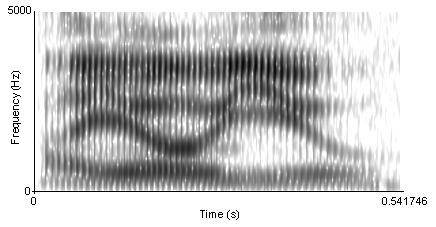
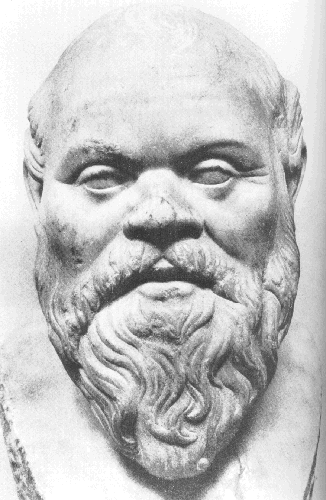
Core features and stages
Perception is often described in stages: sensation (reception of raw data by receptors), transduction (conversion to neural signals), perceptual organization (grouping and segmentation of input), and interpretation (assigning meaning and making decisions). These stages illustrate why perception is not a passive snapshot: the brain actively integrates context, prior knowledge, attention, and expectations to resolve ambiguous stimuli. Common concepts include figure–ground segregation, depth and motion cues, pattern recognition, and multisensory integration.
Modalities and examples
- Vision: light on the retina is transformed into neural signals and combined with memory to recognize shapes and scenes.
- Hearing: sound waves are encoded and decoded to identify pitch, location, and speech.
- Touch, taste, and smell: bodily receptors convey texture, chemical qualities, and odors that contribute to object and food recognition.
- Cross-modal effects: information from one sense can alter perception in another (e.g., the McGurk effect).
These mechanisms are studied through behavioral experiments, computational models, and physiological measures. Researchers may take a biological or physiological approach to examine neural circuits, or a psychological approach to probe subjective reports and performance under controlled conditions. The term sensory information is used to denote the data arriving at the nervous system and the processed information that emerges.
Historical and philosophical background
Interest in perception extends back to early modern philosophy. Thinkers such as David Hume, John Locke, and George Berkeley debated how sensations relate to external objects and whether perception reveals an independent world or a mind-dependent representation. Later empirical traditions developed experimental methods to test theories, while 20th-century cognitive science introduced models that combine symbolic and probabilistic processing.
Importance and distinctions
Perception underlies nearly all behavior: it constrains action, supports learning, and shapes social interaction. Distinct from sensation and cognition, perception occupies a middle ground—rooted in sensory input but shaped by higher-level processes like attention, memory, and inference. Disorders of perception, such as agnosia or certain hallucinations, illustrate how alterations in processing can profoundly change experience.
For further reading on methods and contemporary debates, see introductory texts and reviews in psychology and the cognitive sciences, and consult work on neural mechanisms at resources indicated by brain-focused literature. Historical treatments are available through accounts of early philosophers and their theories of perception.
Related topics include attention, consciousness, and perceptual learning. Foundational concepts and experimental paradigms continue to evolve as new imaging, computational, and cross-disciplinary methods are developed.
Sensory systems, information processing, and interdisciplinary study remain central to understanding how organisms perceive their world.
See also entries on perception in neuroscience, developmental studies, and applied domains such as human factors and artificial perception systems: psychology, cognitive science, and specialized databases indexed by brain research repositories.
Historical references and classical discussions can be explored via introductions to the work of Hume, Locke, and Berkeley.
Related articles
Author
AlegsaOnline.com Perception (psychology and cognitive science) Leandro Alegsa
URL: https://en.alegsaonline.com/art/75747
Sources
- simple.wiktionary.org : simple.wiktionary.org/wiki/Special:Search/Perception
- commons.wikimedia.org : commons.wikimedia.org/wiki/Special:Search/Perception
- en.wikinews.org : en.wikinews.org/wiki/Special:Search/Perception
- en.wikiquote.org : en.wikiquote.org/wiki/Special:Search/Perception
- en.wikisource.org : en.wikisource.org/wiki/Special:Search/Perception
- en.wikibooks.org : en.wikibooks.org/wiki/Special:Search/Perception
- en.wikiversity.org : en.wikiversity.org/wiki/Special:Search/Perception
- brain.phgy.queensu.ca : Neurobiology: Feeling bumps and holes