
David Hume: Scottish philosopher, historian, and Enlightenment thinker
Concise overview of David Hume (1711–1776): major works, key ideas in epistemology and moral philosophy, role as a historian, and his influence on later thought.
Overview
David Hume (7 May 1711 – 25 August 1776) was a Scottish philosopher and historian who became one of the central figures of the Enlightenment. Born and educated in Scotland, Hume wrote on human nature, knowledge, ethics, religion and history. Although he was often best known in his lifetime for his historical works, his philosophical writings gradually became the main reason for his lasting reputation.
Image gallery
10 Images


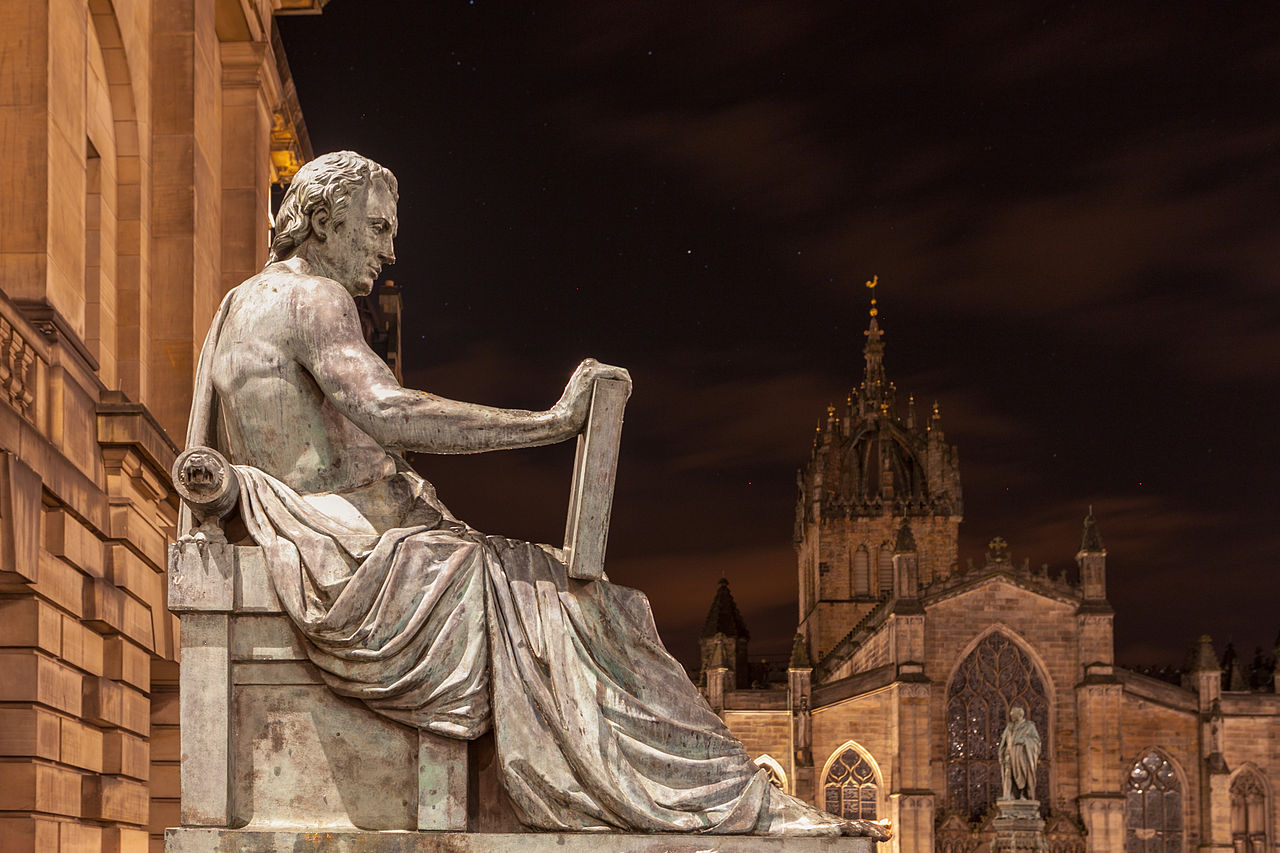


Main works and themes
Hume produced several major works that remain widely read and discussed. Prominent among them are:
- A Treatise of Human Nature — an ambitious attempt to apply empirical methods to psychology and philosophy.
- An Enquiry Concerning Human Understanding — a clearer restatement of his epistemological concerns.
- Essays, Moral and Political — accessible discussions of civic and practical topics.
- The History of England — a multi-volume narrative that made his contemporary reputation as a historian.
Epistemology and philosophy of mind
Hume is commonly associated with empiricism and a careful analysis of the contents of thought. He distinguished vivid sensory "impressions" from fainter "ideas," and argued that all ideas ultimately derive from experience. His analysis of causation and habit — often labeled the problem of induction — questioned the rational justification for inferring necessary connections from repeated observation. Hume combined a skeptical challenge about the limits of reason with a pragmatic view that ordinary life rests on natural beliefs and customs.
Moral philosophy and religion
In ethics Hume emphasized sentiments rather than rational deduction: moral judgments, he argued, stem from feelings of approval and disapproval. He is also credited with articulating the difficulty of deriving an "ought" from an "is," a distinction that has influenced subsequent debates. Hume was critical of organized religion and offered psychological explanations for religious belief, contributing to broader discussions about faith and skepticism.
Influence, legacy and notable facts
Hume was a leading figure in the Scottish Enlightenment and helped shape later philosophy, economics and historiography. His skeptical inquiries influenced contemporaries and later thinkers; for example, his work is widely acknowledged to have provoked a strong response from Immanuel Kant. Though controversial in his day, Hume's clear prose, careful argumentation and wide-ranging interests secured him a lasting place in intellectual history.
Quick distinctions and context
- Known in life primarily as a historian; posthumously celebrated for philosophy.
- Combined empirical methods with a moderate skepticism about metaphysical claims.
- Writings span technical philosophy, accessible essays and large-scale history.
Questions and answers
Q: Who was David Hume?
A: David Hume was a philosopher and historian from Scotland who lived from 7 May 1711 to 25 August 1776.
Q: What did people think of him when he was alive?
A: When he was alive, people thought of him as a historian.
Q: What did Hume write?
A: He wrote a series of large books called The History of England.
Q: How is Hume viewed today?
A: Today, people think of Hume as an important philosopher.
Related articles
Author
AlegsaOnline.com David Hume: Scottish philosopher, historian, and Enlightenment thinker Leandro Alegsa
URL: https://en.alegsaonline.com/art/25775