
Personal space (proxemics): boundaries, history, and social effects
Personal space is the invisible area people keep around themselves. This article describes its types, origins, cultural differences, causes of invasion, and practical applications.
Overview
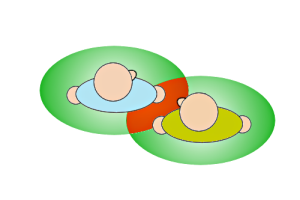
Personal space refers to the invisible, preferred distance that people maintain between themselves and others to feel comfortable. Often described as a "bubble" or buffer zone, it regulates how close others may approach during conversation, greetings, or shared activities. The study of these distance preferences falls under proxemics, a field that links bodily spacing to social behavior and cultural norms; see sociology for broader context.
Image gallery
6 Images



Key characteristics and typical zones
Personal space is not a fixed measurement but a set of zones that tend to differ by relationship, culture, and situation. A common scheme distinguishes four broad distances: intimate (reserved for close family and partners), personal (friends and acquaintances), social (formal or unfamiliar interactions), and public (addressing groups). Exact ranges vary by source and culture, and they contract or expand depending on whether people feel threatened, crowded, or close to one another.
Origins and theoretical development
The modern concept was popularized by anthropologist Edward T. Hall in the 1960s as part of his work on proxemics. Hall drew on earlier biological and psychological studies of space and territoriality, including zoo-animal research by Heini Hediger in the 1950s. The basic idea considers two interacting persons as actors in space—how close they stand reveals information about their relationship and intentions; see actors for a related perspective.
Territory, habitat, and related distinctions
Personal space differs from territory. Territory or habitat denotes the physical area an individual claims for living, working, or nesting; it can be marked or defended and tends to be larger and more permanent. Writers and researchers sometimes use terms like territory (territory) or habitat (habitat) to describe these broader spatial claims. Personal space, by contrast, is an immediate interpersonal buffer that people continually adjust.
Factors that affect personal space
- Relationship and intimacy: closer relationships allow smaller distances.
- Culture: some societies accept closer contact, others prefer greater distance.
- Age and gender: norms differ across demographic groups.
- Context and activity: crowded public transport, medical exams, or courtship situations change expectations—consider effects of human growth and social stages.
- Biological and social motives: mating, protection, and signaling during courtship or conflict.
Signs of invasion and practical implications
When someone enters another's personal space without consent, the typical reactions include stepping back, increased heart rate, avoidance, or verbal protest. Understanding these reactions has practical applications in architecture and urban design, clinical settings, law enforcement, customer service, and human-computer interaction: designers and practitioners use spacing principles to reduce discomfort and improve communication.
Notable distinctions and final notes
It is important to distinguish personal space from crowding, which describes objective density and subjective discomfort in groups. While proxemics emphasizes interpersonal distances, related disciplines examine territorial marking, social signaling, and legal property boundaries. Personal space remains a flexible, culturally shaped aspect of social life that people continuously negotiate through posture, eye contact, and movement.
For further reading on social spacing and related concepts, consult resources in anthropology and psychology or follow introductory materials about proxemics and territorial behavior. Academic overviews and field studies often use the four-zone model as a starting point while emphasizing variability across contexts.
sociology | actors | territory | habitat | growth | courtship
Related articles
Author
AlegsaOnline.com Personal space (proxemics): boundaries, history, and social effects Leandro Alegsa
URL: https://en.alegsaonline.com/art/75970