
Pennacook (Pawtucket): Indigenous people of the Merrimack River region
Overview of the Pennacook (also called Pawtucket): territory, language, culture, colonial displacement, and their legacy among New England Indigenous communities.
Overview
The Pennacook, frequently recorded by English colonists as the Pawtucket, were an Indigenous people of northeastern North America who lived along the Merrimack River and adjacent lands. Historically their communities occupied areas of what is now southern New Hampshire and northeastern Massachusetts. The name appears in colonial records and in later histories of Native New England.
Image gallery
2 Images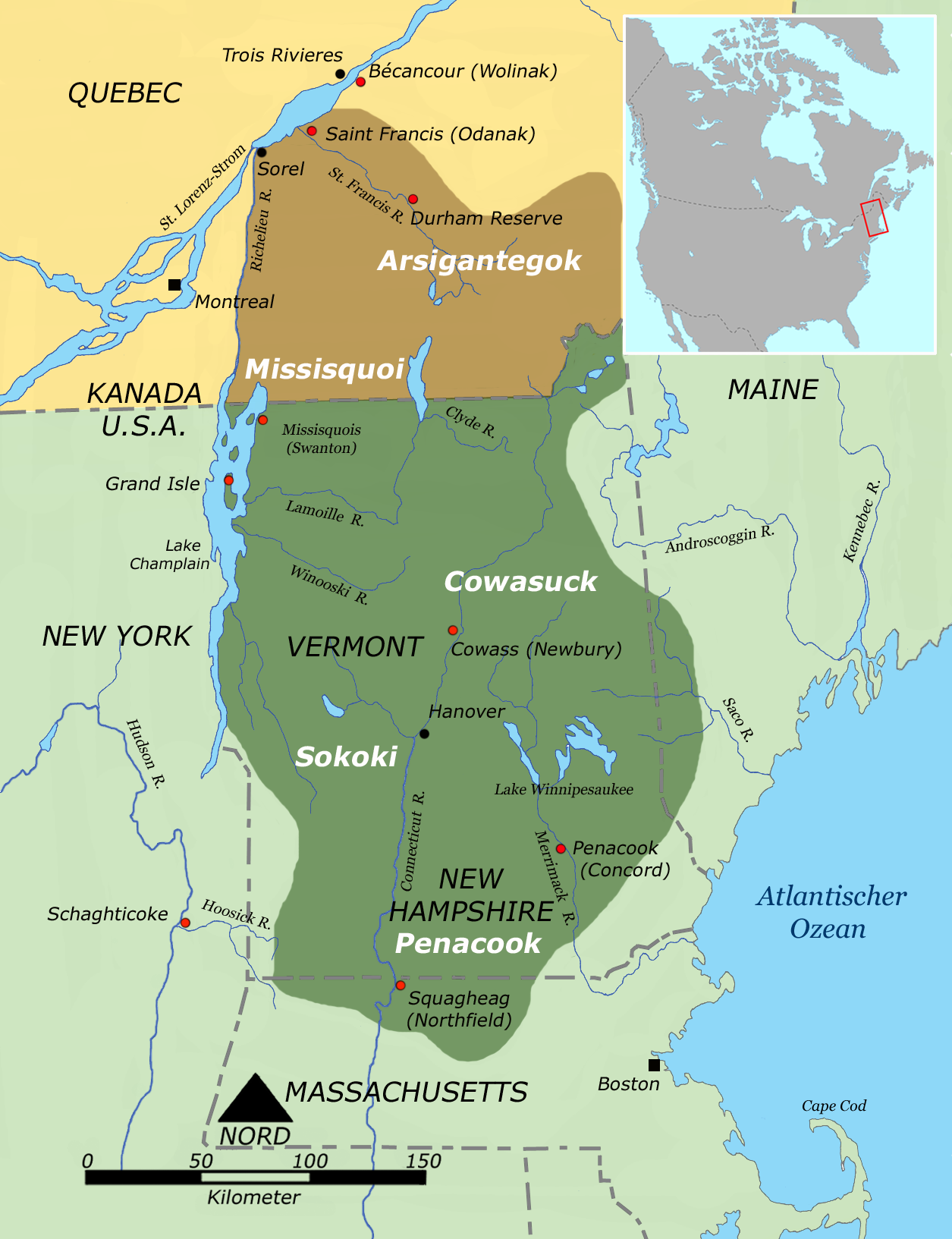

Territory and settlements
Pennacook villages clustered on floodplains and river terraces where fishing, gardening and travel were easiest. The Merrimack River valley provided seasonal resources and transportation routes. Many settlements were semi-permanent: families moved seasonally between inland hunting areas and riverside gardens and fishing camps.
Language and cultural traits
The Pennacook spoke a language of the Eastern Algonquian group, related to other coastal Algonquian languages. Their lifeways combined horticulture—cultivation of corn, beans and squash—with hunting, trapping and river fisheries. Social organization centered on kinship and local leaders (often called sachems in colonial accounts). Material culture included bark and wooden housing, woven baskets and distinctive canoe designs suited for rivers.
Subsistence and seasonal patterns
Seasonal cycles structured Pennacook life: spring and summer focused on planting and river fishing, fall on harvest and nuts, and winter on inland hunting and gatherings. Exchange and travel linked them with neighboring groups for trade, marriage and diplomacy. These patterns were common among riverine Algonquian communities in North America.
Contact, conflict and displacement
With the arrival of English colonists in the 17th century, Pennacook communities experienced disease, dispossession and violence. Some groups moved northward and joined Abenaki and other allied peoples, while others sought refuge westward. Colonial-era sources describe raids, forced removals and high mortality; many Pennacook people were dispersed or absorbed into other Indigenous communities. Colonial references to this people appear under variant names, including Pennacook and Pawtucket, and records note their presence in areas of New Hampshire and Massachusetts.
Legacy and recognition
Descendants of Pennacook communities survive within larger Abenaki and other Eastern Algonquian populations, and some families retain cultural memory of Pennacook identity. The language is no longer widely spoken, but local history projects, tribal organizations and scholars work to document traditions, place names and genealogies. For broader linguistic and cultural context see resources on Algonquian languages and regional histories that discuss interactions with neighboring tribes.
- Key aspects: riverine settlements, Eastern Algonquian language, seasonal subsistence.
- Historical course: colonial contact, population decline, northward and westward dispersal.
Related articles
Author
AlegsaOnline.com Pennacook (Pawtucket): Indigenous people of the Merrimack River region Leandro Alegsa
URL: https://en.alegsaonline.com/art/75571