
Peoria people (Peouaroua)
The Peoria are an Indigenous people originally of the Illinois country, now federally recognized as the Peoria Tribe of Indians of Oklahoma; historically part of the Illinois Confederation and speakers of a Miami-Illinois dialect.
The Peoria, historically called Peouaroua in some records, are an Indigenous people of the Eastern Woodlands who were long associated with the Illinois country of the upper Mississippi and Great Lakes region. Today they are organized as the federally recognized Peoria Tribe of Indians of Oklahoma. Historically the Peoria were one of the component groups of the Illinois Confederation, a network of closely related Algonquian-speaking communities.
Image gallery
4 Images


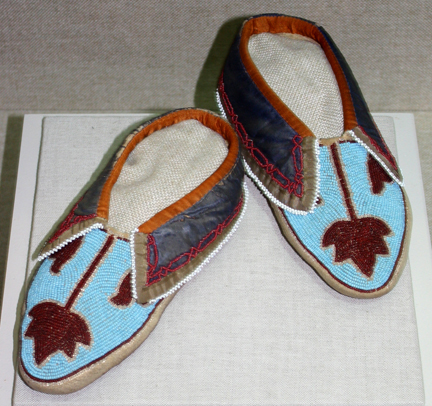
Language and name
Traditionally the Peoria spoke a dialect of the Miami-Illinois language, an Algonquian language once spoken across much of the central Midwest. Their own name for themselves appears in Illinois-language sources as peewaareewa (recorded in various spellings), a term that has been rendered in English as Peoria and has been interpreted to mean something like "comes carrying a pack on his back." The Peoria dialect, like other varieties of Miami-Illinois, has no living native speakers today, though linguists and community members have worked to document and study the language. For further linguistic overview see language information.
History and movements
Before sustained European contact the Peoria lived in villages along rivers in what is now Illinois, practicing a mixed economy of agriculture, hunting and fishing. Contact with French explorers and traders in the 17th and 18th centuries brought new trade relationships, as well as disease and shifting alliances. Like many tribes in the region, the Peoria experienced pressures from colonial expansion and U.S. policies during the 18th and 19th centuries that resulted in migration and consolidation. Over time groups from the Illinois Confederation were relocated west of the Mississippi and many communities were combined under U.S. federal administration.
Traditional lifeways and culture
Traditional Peoria lifeways reflected the resources of the fertile river valleys they inhabited. Staples included cultivated maize, beans and squash, supplemented by wild rice, nuts, and hunted game. Villages were typically located near waterways and moved seasonally to take advantage of fishing, planting and gathering cycles. Social and ceremonial life shared traits with other Illinois peoples, including clan networks, seasonal ceremonies and material culture adapted to woodland environments.
Contemporary tribe and significance
Today the Peoria Tribe of Indians of Oklahoma maintains government institutions, community services and cultural programs for enrolled members. The tribe participates in preserving and teaching aspects of Peoria history and heritage while navigating the economic and legal realities of modern tribal sovereignty. The Peoria name has also entered broader American geography: several places, most notably the city of Peoria in Illinois, derive their names from the people.
Key points and distinctions
- The Peoria were part of the Illinois Confederation, a grouping of related Algonquian-speaking peoples.
- Their traditional speech was a dialect of Miami-Illinois; no fluent native speakers remain.
- The tribal identity endures through the federally recognized Peoria Tribe of Indians of Oklahoma, which works to preserve culture and history.
Understanding the Peoria involves recognizing both the deep historical connections to the Illinois River landscapes and the later experiences of displacement and cultural change. Public awareness of Peoria heritage is often visible in place names and regional histories, but the living community continues its efforts to sustain traditions and language knowledge into the future.
Related articles
Author
AlegsaOnline.com Peoria people (Peouaroua) Leandro Alegsa
URL: https://en.alegsaonline.com/art/75692
Sources
- ok.gov : 2011 Oklahoma Indian Nations Pocket Pictorial Directory.
- accessgenealogy.com : Peoria Indian Tribal History
- ahalenia.com : "Status of Indian Languages in Oklahoma"