
Piltdown Man (Eoanthropus dawsoni): discovery, hoax, and scientific legacy
Piltdown Man was a famous paleoanthropological forgery—fragments presented in 1912 as a human-ape intermediate and exposed as a deliberate hoax in 1953. Its story shaped modern methods and safeguards in human origins research.
Overview
Piltdown Man is the informal name given to fossil fragments announced in 1912 and described under the scientific name Eoanthropus dawsoni. The finds combined a modern-looking human cranium with an ape-like jaw and were presented as evidence of a long-sought intermediate between man and ape. For decades the material influenced views of human evolution before being shown to be a forgery.
Image gallery
7 Images




Composition and claimed features
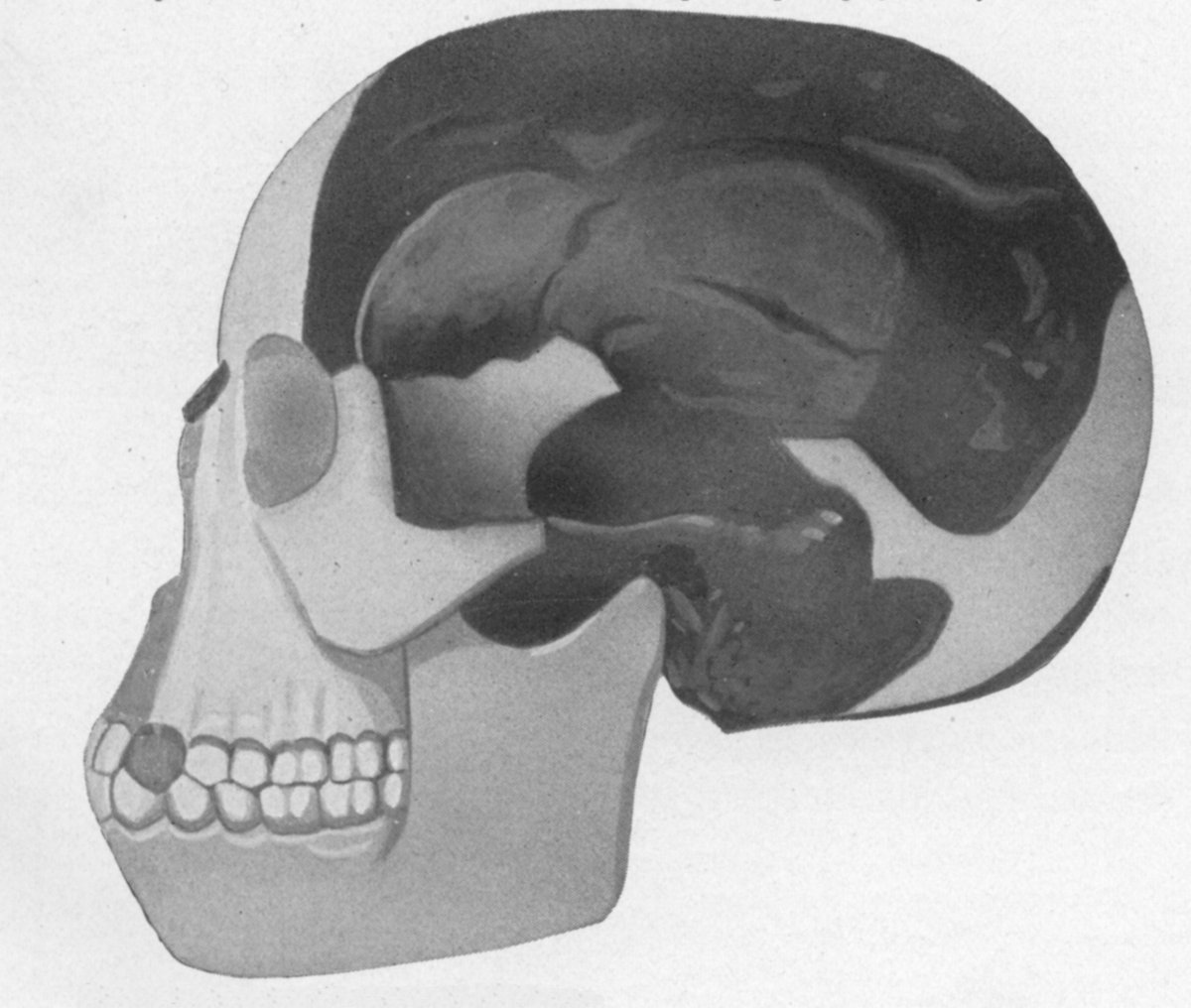
The assembled remains consisted mainly of a partial skull, a jawbone, and a few teeth. Early commentators highlighted what they saw as a large braincase paired with primitive jaws and dental features, which seemed to fit contemporary expectations for an evolutionary "missing link." The discoverers gave the specimens the name Eoanthropus dawsoni, honoring Charles Dawson, who first reported the finds.
Discovery, reception, and controversy
The initial announcement in 1912 generated intense interest. Leading British scientists of the time supported the interpretation, and more than 500 papers discussed Piltdown material over the next forty years. Support was not unanimous, however; some researchers questioned the anatomy and provenance from the start.
Exposure as a hoax
Careful re-examination using improved chemical and dating techniques culminated in a 1953 study that showed the components were not the same antiquity. Fluorine testing and microscopic analysis revealed that the skull fragments were from a relatively recent human, while the jaw belonged to an orangutan, with the teeth deliberately filed and stained. The fraud was thus exposed in 1953.
Suspects and motives
Charles Dawson, an amateur collector who reported the finds, is widely regarded as the prime suspect, though conclusive proof implicating a single individual remains lacking. Motives suggested by historians include a desire for fame, national pride in producing a British human ancestor, or a long-running practical joke; none are definitively proven.
Importance and lessons
Piltdown Man had a lasting impact on paleoanthropology. It delayed acceptance of genuine hominin fossils found elsewhere, exposed human biases in interpreting fragmentary evidence, and spurred the adoption of more rigorous dating, provenance documentation, and sceptical peer review. Today the Piltdown episode is taught as a cautionary tale about scientific verification and the dangers of wishful interpretation.
Notable facts
- Scientific name: Eoanthropus dawsoni.
- Announced: 1912; discredited: 1953.
- Key analytic techniques in the exposure: fluorine dating, microscopy, and chemical staining tests.
- The case influenced museum practices and standards for fossil authentication.
Related articles
Author
AlegsaOnline.com Piltdown Man (Eoanthropus dawsoni): discovery, hoax, and scientific legacy Leandro Alegsa
URL: https://en.alegsaonline.com/art/76928