
Pembroke College, Cambridge: history, architecture, and academic life
Pembroke College is a constituent college of the University of Cambridge, founded in 1347 by Marie de St Pol. The college combines medieval and later architecture and supports teaching, research and a diverse student community.
Overview
Pembroke College is one of the constituent colleges of the University of Cambridge and is located in England. Founded in the mid-14th century, the college occupies a site on Trumpington Street close to the city centre and main university thoroughfares. It admits undergraduate and graduate students across a broad range of subjects and contributes to the university’s teaching, research and cultural life.
Image gallery
10 Images






History and foundation
The college was established in 1347 when Marie de St Pol, the widow of the Earl of Pembroke, obtained permission to found a house for scholars. For much of its early existence it was known by the medieval name Hall of Valence Mary; the modern name Pembroke College became widely used in the 19th century and was formally adopted in 1856. Over seven centuries the college has evolved in membership, purpose and architecture while remaining part of the collegiate structure of Cambridge.
Buildings and architectural features
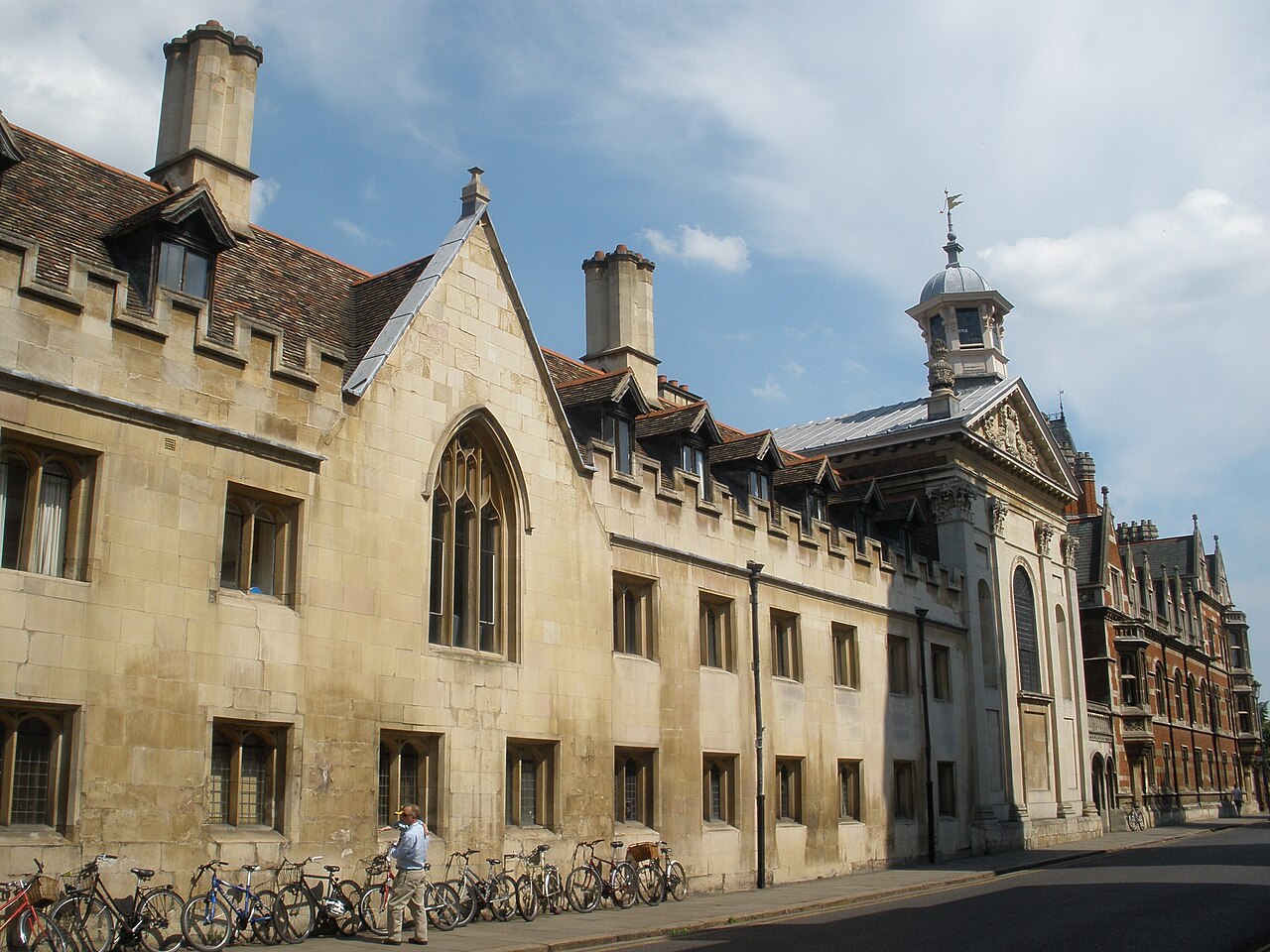
Pembroke contains buildings from several periods, reflecting continuous use and adaptation. Some chapels and court walls date from the 14th century, while a prominent dining hall and other college rooms were added or rebuilt in the 19th century. Mid-20th century development provided much of the student accommodation seen today. The blend of medieval masonry, Victorian Gothic and modern blocks gives the college a layered character typical of long-established Cambridge colleges.
Academic life and community
The college supports a community of students and Fellows engaged in undergraduate teaching, graduate supervision and research. Formal dinners, seminars and tutorial-style supervision are part of college life alongside extracurricular clubs and societies. Pembroke provides pastoral support, libraries and common rooms for its members and participates in university examinations and governance through its academic officers and Fellows.
Notable alumni and influence
- John Sulston — molecular biologist and Nobel laureate (Physiology or Medicine, 2002), is among the college’s distinguished former students.
- Edmund Spenser — the Elizabethan poet, best known for The Faerie Queene, also studied at Pembroke in the 16th century.
Distinctive aspects and public role
As one of the older colleges at Cambridge, Pembroke combines historical continuity with contemporary scholarship. Its location on Trumpington Street situates it close to central university buildings and to King's Parade, the city’s principal academic avenue. The college is noted for its mixture of historic fabric and later additions, for its role in educating a wide range of scholars, and for maintaining traditions common to Cambridge colleges while adapting facilities for modern study and research.
Related articles
Author
AlegsaOnline.com Pembroke College, Cambridge: history, architecture, and academic life Leandro Alegsa
URL: https://en.alegsaonline.com/art/75517