
Pennsylvania State University (Penn State)
Public land-grant research university system founded in 1855, headquartered at University Park; known for extensive campuses, online World Campus, research, large alumni network and Big Ten athletics.
Overview
Pennsylvania State University, commonly known as Penn State, is a public, land‑grant, research university system in the U.S. state of Pennsylvania. The institution’s principal campus is at University Park near the borough of State College, and the system maintains a network of commonwealth campuses and statewide programs. Penn State serves undergraduate, graduate, professional and continuing‑education students through residential instruction and an expansive online program known as the World Campus.
Image gallery
10 Images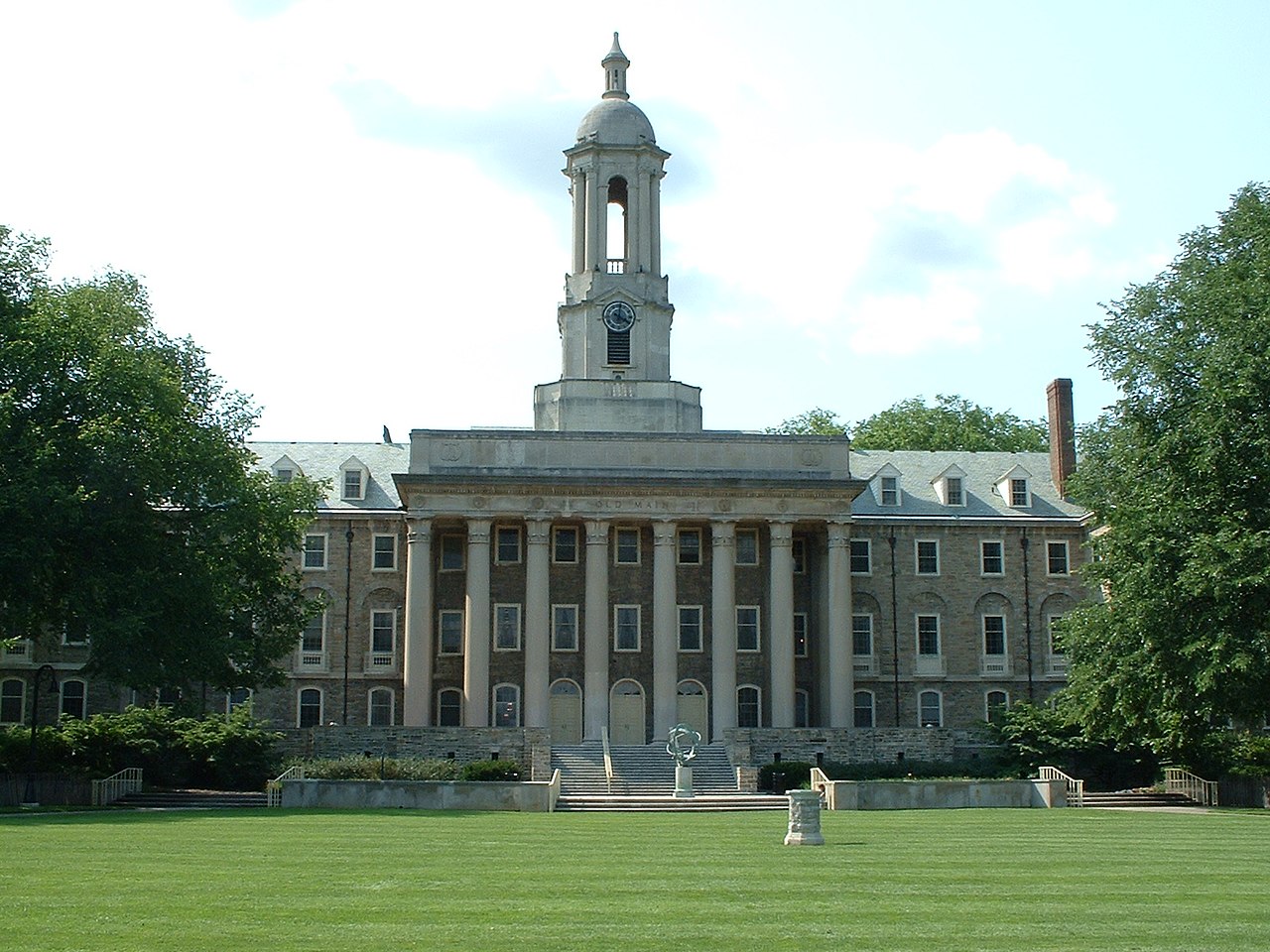


History and mission
Founded in 1855 as an agricultural college, the school was designated in 1863 by the Pennsylvania legislature as the state’s land‑grant institution under the Morrill Act. Over time it broadened from applied agriculture and technical subjects into a comprehensive research university whose core missions are teaching, research and public service. The land‑grant tradition continues to inform extension, outreach and community partnerships across the state.
Campuses and enrollment
Penn State is organized as a multi‑campus system that includes the University Park campus, more than two dozen commonwealth campuses and the online World Campus. University Park is one of the largest single‑campus enrollments in the United States, while systemwide totals — counting on‑campus and online students — make Penn State one of the largest universities nationally by enrollment. The system offers a broad range of majors, certificates and professional programs spanning the arts, sciences, engineering, business and health fields.
Academics and research
Penn State is classified among R1 research universities and supports extensive scholarly activity across many disciplines. The university houses research centers and institutes, develops partnerships with industry and government, and attracts external funding for basic and applied research. Organizations such as the National Science Foundation have recognized Penn State among U.S. institutions with notable research income. Academic programs emphasize both disciplinary study and experiential learning, including internships and cooperative education.
Outreach, extension and public service
As a land‑grant institution, Penn State maintains a long history of extension work that connects university resources to communities, agriculture and local economies. Extension educators, continuing education programs and applied research initiatives help translate scholarship into practical solutions for residents, businesses and public agencies across the state and beyond.
Student life, athletics and traditions
Student life at Penn State combines residential communities, student organizations, arts and cultural activities, and a highly visible athletics culture. The university is widely known for its college football program, which competes at the NCAA Division I level, and for its membership in the Big Ten Conference. Home football weekends, marches, student traditions and extensive alumni participation contribute to a strong campus identity.
Governance, finance and resources
Penn State is governed by a board of trustees and led by a president and provost structure responsible for academic, administrative and fiscal oversight. The university’s operations are supported by tuition and fees, state and federal grants, research contracts, private philanthropy and an alumni base that provides volunteer and financial support. Endowment, sponsored research and other revenues are used to support scholarships, faculty recruitment, facilities and public programs.
Reputation and impact
Penn State is recognized for comprehensive academic offerings, significant research activity and statewide outreach. Its alumni network is among the largest of any American university and plays an active role in professional, civic and philanthropic activities. Graduates work in diverse fields at local, national and international levels, and the university’s research and extension work contribute to technological, economic and community developments.
Further information
For details about specific degree programs, admissions, campus locations, research centers and public engagement activities, consult official university resources and campus pages. The university’s main site and campus portals provide current information on academic calendars, application procedures, financial aid and contact points for prospective students and partners.
Questions and answers
Q: Where is Pennsylvania State University located?
A: Pennsylvania State University is located in the state of Pennsylvania, with the main campus being in the city of State College, Pennsylvania.
Q: When was Pennsylvania State University founded?
A: Pennsylvania State University was founded in 1855.
Q: Why did the Pennsylvania state legislature choose the school to be the state's only land grant college?
A: The Pennsylvania state legislature chose the school to be the state's only land grant college in 1863 in order to establish a purpose of teaching, research, and public service.
Q: How many majors does Penn State offer?
A: Penn State offers more than 160 majors among all its campuses.
Q: What is the size of Penn State University's endowment?
A: Penn State University's endowment is US$1.52 billion (as of April 30, 2010).
Q: What is the annual enrollment at Penn State's main campus?
A: The annual enrollment at Penn State's main campus totals more than 44,000 graduate and undergraduate students, making it one of the largest universities in the United States.
Q: What is Penn State known for?
A: Penn State is known for its football team, and is a member of the Big Ten Conference.
Related articles
Author
AlegsaOnline.com Pennsylvania State University (Penn State) Leandro Alegsa
URL: https://en.alegsaonline.com/art/75592
Sources
- nacubo.org : "U.S. and Canadian Institutions Listed by Fiscal Year (FY) 2015 Endowment Market Value and Change* in Endowment Market Value from FY2014 to FY2015"
- colleges.usnews.rankingsandreviews.com : "Pennsylvania State University--University Park - Profile, Rankings and Data - US News Best Colleges"
- nacubo.org : "U.S. and Canadian Institutions Listed by Fiscal Year 2016 Endowment Market Value and Change* in Endowment Market Value from FY2015 to FY2016"
- president.psu.edu : "Office of the President"
- psu.edu : Office of the Executive Vice President and Provost
- budget.psu.edu : "Penn State Factbook – Faculty & Staff"
- budget.psu.edu : "Undergraduate and Graduate/First Professional Fall Enrollment 2016 and 2015"
- visualidentity.psu.edu : "PSU Visual Identity Standards"
- focus.nps.gov : "Asset Detail"
- focus.nps.gov : focus.nps.gov/AssetDetail/NRIS/81000538
- portal.state.pa.us : "PHMC Historical Markers Search"
- psu.edu : "Penn State University– Campuses and Colleges"
- psu.edu : "Penn State - Pennsylvania's Land-Grant University"
- psu.edu : "Penn State's Mission and Public Character"
- colleges.usnews.rankingsandreviews.com : "Top Public Schools– Rankings– Top National Universities"