
Cambridge (England): city, university, and technology hub
Profile of Cambridge, England: its history, the University of Cambridge and colleges, landmarks along the River Cam, scientific and economic importance, culture, and transport links.
Overview
Cambridge is a historic city in England, situated roughly 80 kilometres (50 miles) north of London. The name Cambridge derives from the crossing — literally a "bridge over the Cam" — that gave the settlement its identity. The city combines an international academic reputation with a compact urban centre, numerous parks and riverside open spaces. Recent figures indicate a population in the low hundreds of thousands, with a significant proportion registered as students.
Image gallery
10 Images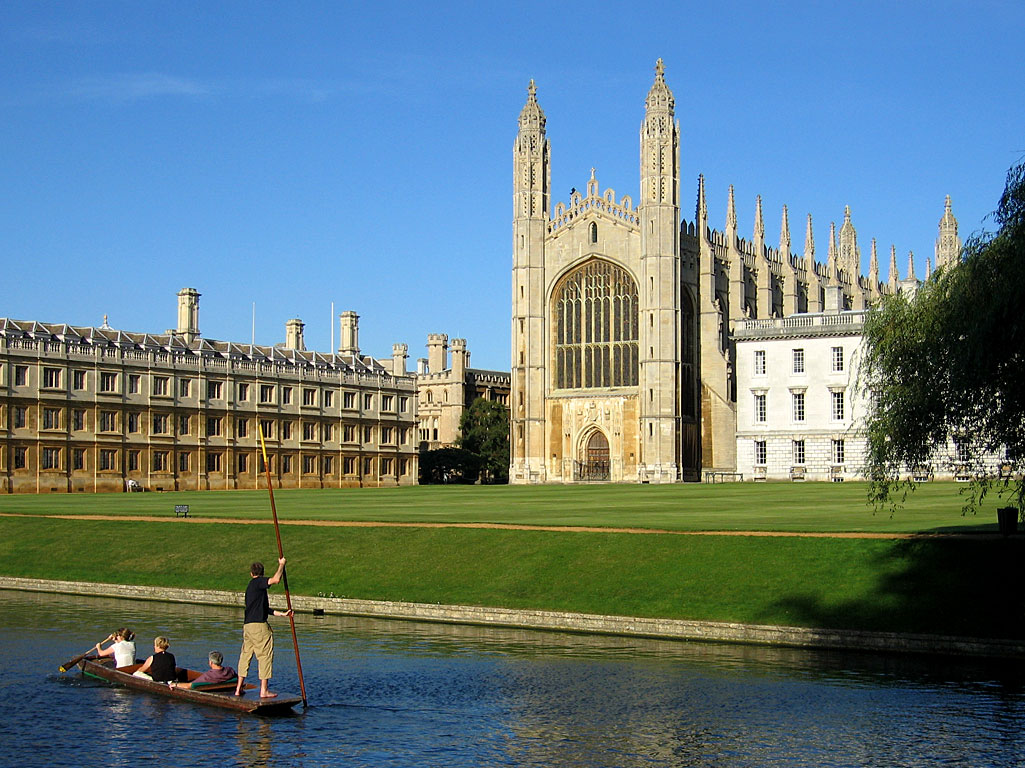



University and major institutions
The University of Cambridge is the dominant institution in the city and has shaped its buildings, culture and economy since its foundation by scholars in the early 13th century. The university is organised into autonomous colleges and central faculties and is associated with several world‑class facilities: the Cavendish Laboratory for physical sciences, the visually striking King's College Chapel, and the Cambridge University Library. The city also hosts teaching and medical facilities such as Addenbrooke's Hospital and a modern Central Library in the Grand Arcade.
Landmarks, culture and landscape
Much of Cambridge's tourist appeal lies in its historic architecture and riverside scenery. The Backs — the stretch of river behind several colleges — offers well‑known views of college gardens and bridges. Punting on the River Cam is a common leisure activity for visitors and students alike. Other cultural attractions include museums, concert halls and markets that reflect both local life and the global reach of the university community.
Notable sites and visitor highlights
- King's College Chapel and its choir
- The Cavendish Laboratory and university museums
- Cambridge University Library and college libraries
- Historic market square, shops and the Grand Arcade
- Riverside walks, botanical gardens and public parks
History and development
Cambridge has medieval origins and developed as a market town on the route between the east coast and the Midlands. The arrival of the university in the 13th century established the city as an intellectual centre. Over subsequent centuries, colleges, chapels and lecture rooms were added, and Cambridge evolved from a market and cathedral town into a centre for education and research.
Science, industry and economy
In the 20th and 21st centuries Cambridge became an important research and technology cluster, sometimes called "Silicon Fen", where university research has led to spin‑off companies and high‑tech employment. The city's institutions have been associated with major scientific advances; the university and its laboratories have attracted scientists, entrepreneurs and international investment. The local economy blends education, health services, technology firms and tourism.
Transport, population and practical notes
Cambridge is connected by road and rail to London and other regional centres, making it both a destination and a commuter base. Cycling is a widespread mode of transport within the city, supported by extensive cycle routes and a compact street plan. The surrounding county contains numerous villages and smaller towns that form part of Cambridge's wider economic and social area.
Distinctive facts: The collegiate system gives Cambridge a fragmented but intimate urban fabric; its riverside features and green spaces are integral to city life, and its combination of historic buildings with cutting‑edge research distinguishes it among British cities.
For further local details and visitor information see official and specialist resources: city pages, university pages at the University of Cambridge, and local health services at Addenbrooke's. Additional transport and regional context are available on pages linked from London travel guides and general information on England.
Related articles
Author
AlegsaOnline.com Cambridge (England): city, university, and technology hub Leandro Alegsa
URL: https://en.alegsaonline.com/art/16272
Sources
- ec.europa.eu : "Population on 1 January by age groups and sex - functional urban areas"
- cambridgeshire.gov.uk : "Central Library, Cambridge"