
Pashayi languages
Pashayi (Pashai) are a set of Dardic Indo-Aryan languages of northeastern Afghanistan, spoken in several distinct varieties with low literacy and strong Pashto influence.
Overview
The Pashayi languages, often called Pashai, form a small cluster within the Dardic branch of the Indo-Aryan family. They are spoken by the Pashai people in isolated valleys of northeastern Afghanistan and are distinct enough that some varieties are mutually unintelligible. Estimates report roughly 216,842 speakers, most of whom practice Islam and many of whom are bilingual in Pashto.
Image gallery
2 Images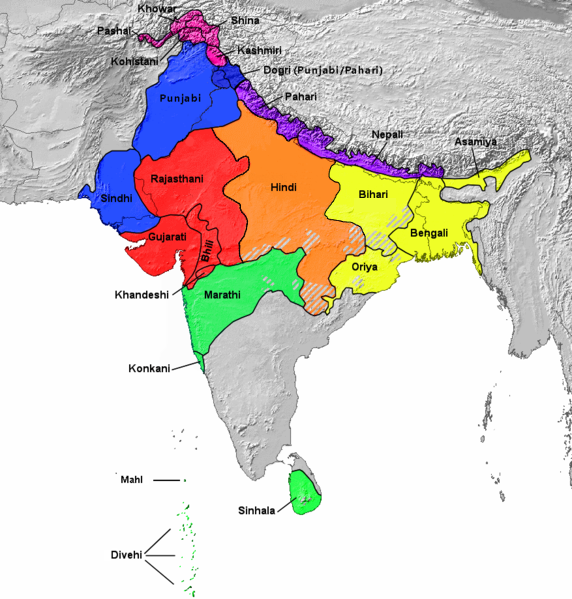
Distribution and dialects
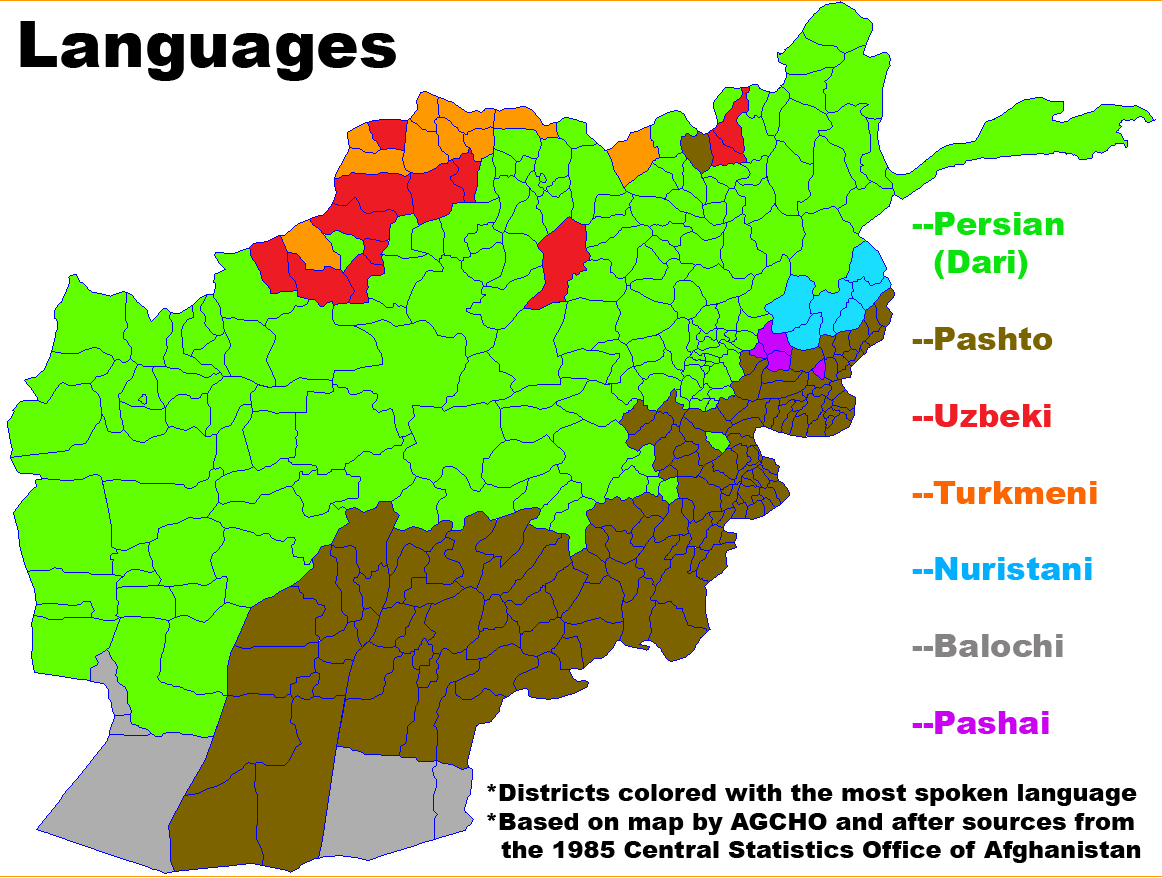
Pashayi is concentrated in a patchwork of provinces and districts rather than a single contiguous area. Key provinces with Pashayi-speaking communities include Laghman, Kunar, and Afghanistan more broadly, as well as parts of Kapisa and Nuristan. Linguists commonly divide Pashayi into four main varieties, sometimes listed as major dialect groups:
- Northeastern
- Northwestern
- Southeastern
- Southwestern
Linguistic characteristics
Pashayi varieties share features typical of many Indo-Aryan languages: subject–object–verb (SOV) word order, a rich consonant inventory including retroflex and aspirated sounds, and a system of nominal cases and verb inflections. However, each variety has retained different archaic elements and developed local innovations, which contributes to their divergence.
Writing, literacy and status
Traditionally unwritten, Pashayi remained largely oral until the early 21st century; sources note it was not written prior to 2003. Since then, scholars and community groups have proposed orthographies—often based on the Perso-Arabic script used locally—to support literacy and education. Overall literacy among speakers has been reported at about 25% and limited schooling, displacement, and dominance of Pashto and Dari challenge language maintenance.
History, research and preservation
The classification of Pashayi within the Dardic group has attracted scholarly attention because Dardic itself is a debated subgroup of Indo-Aryan; research has focused on documenting phonology, grammar, and vocabulary across dialects. Fieldwork by linguists and development organizations aims to produce grammars, dictionaries, and teaching materials to support revitalization efforts.
Notable facts and distinctions
Pashayi speakers live in mountainous, often remote communities where multilingualism is common and cultural ties are strong. The combination of low literacy, recent orthographic development, and pressure from dominant regional languages makes Pashayi an important subject for linguistic documentation and community-based language planning. For broader context see studies of Dardic languages.
Further reading and resources are available through linguistic surveys and local education initiatives seeking to record and teach Pashayi varieties.
Related articles
Author
AlegsaOnline.com Pashayi languages Leandro Alegsa
URL: https://en.alegsaonline.com/art/74901
Sources
- ethnologue.org : Pashayi language
- sil.org : sil.org