
Kunar Province
Kunar is a mountainous province in northeastern Afghanistan with its capital at Asadabad. It has a predominantly Pashtun population, deep river valleys, and a strategic border with Pakistan.
Kunar (in Pashto: کونړ) is one of the 34 provinces of Afghanistan. Located in the country's northeastern highlands, Kunar is defined by steep mountain ranges and narrow river valleys. Its administrative centre and largest town is Asadabad, which serves as the provincial hub for government services and trade.
Image gallery
10 Images
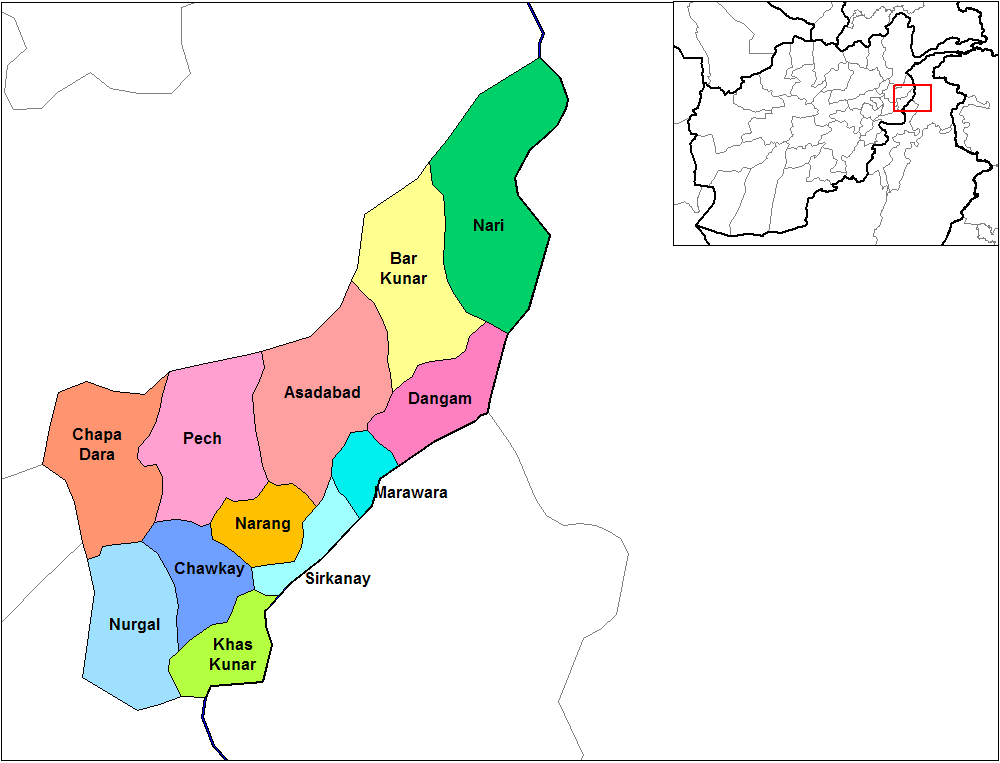


Geography and administration
The province is dominated by rugged terrain carved by the Kunar River and its tributaries. Valleys along the river support most settlements and the limited road network. Kunar shares an international border with Pakistan to the east and is adjacent to other Afghan provinces to the north and west. Administratively it is divided into multiple districts centered on valley towns and village clusters.
People and society
Residents are primarily ethnic Pashtuns, with other smaller communities present. Pashto is widely spoken, alongside Dari in some areas. The society is largely rural and organized around tribal and kinship ties, with local customs and traditional governance shaping daily life. Population estimates vary; roughly speaking the province is home to around four hundred thousand people, though figures change with time and displacement.
History and strategic importance
Kunar's location and terrain have given it strategic significance historically and in modern times. The steep valleys and borderlands have been routes for trade, seasonal migration and, during periods of conflict, cross-border movement of fighters. The province saw sustained fighting during the Soviet intervention and later during the international military presence and internal Afghan conflicts. Its geography has both sheltered local communities and complicated development and security efforts.
Economy and local life
Economic activity is concentrated in valley agriculture, small-scale orchards, timber in limited areas, animal husbandry and local commerce in market towns. Infrastructure and services are constrained by the terrain and by insecurity in some districts, which affects access to education, health care and markets. Humanitarian and development organizations have been active at times to address these needs.
Notable features
- Provincial capital: Asadabad.
- Major physical feature: the Kunar River and its deep valleys.
- Border dynamics: close links across the Pakistan frontier affect culture and movement.
- Ethnic composition: predominantly Pashtun, with other groups present.
For readers seeking further detail about administration, security, development or local culture, official provincial reports and reputable regional studies provide updated, place-specific information and should be consulted.
Related articles
Author
AlegsaOnline.com Kunar Province Leandro Alegsa
URL: https://en.alegsaonline.com/art/54596
Sources
- replay.waybackmachine.org : "Kunar Provincial profile"
- aims.org.af : "Afghanistan Administrative Divisions"
- fao.org : Afghanistan Geographic & Thematic Layers