
Paint (coating): composition, types, uses and history
An overview of paint as a pigmented coating: composition, major types, application methods, historical development, uses in art and industry, and environmental and safety considerations.
Overview
Paint is a liquid or paste that, when applied to a surface, leaves a pigmented film that adds color, protection, texture or other functional properties. As a word, paint refers both to the material and the action of applying it; the act is commonly called painting, and a person who applies paint is a painter. Paints are used across many fields—fine art, architecture, industrial manufacturing and vehicle finishing—because they combine visual effect with surface protection.
Image gallery
10 Images







Basic composition and characteristics
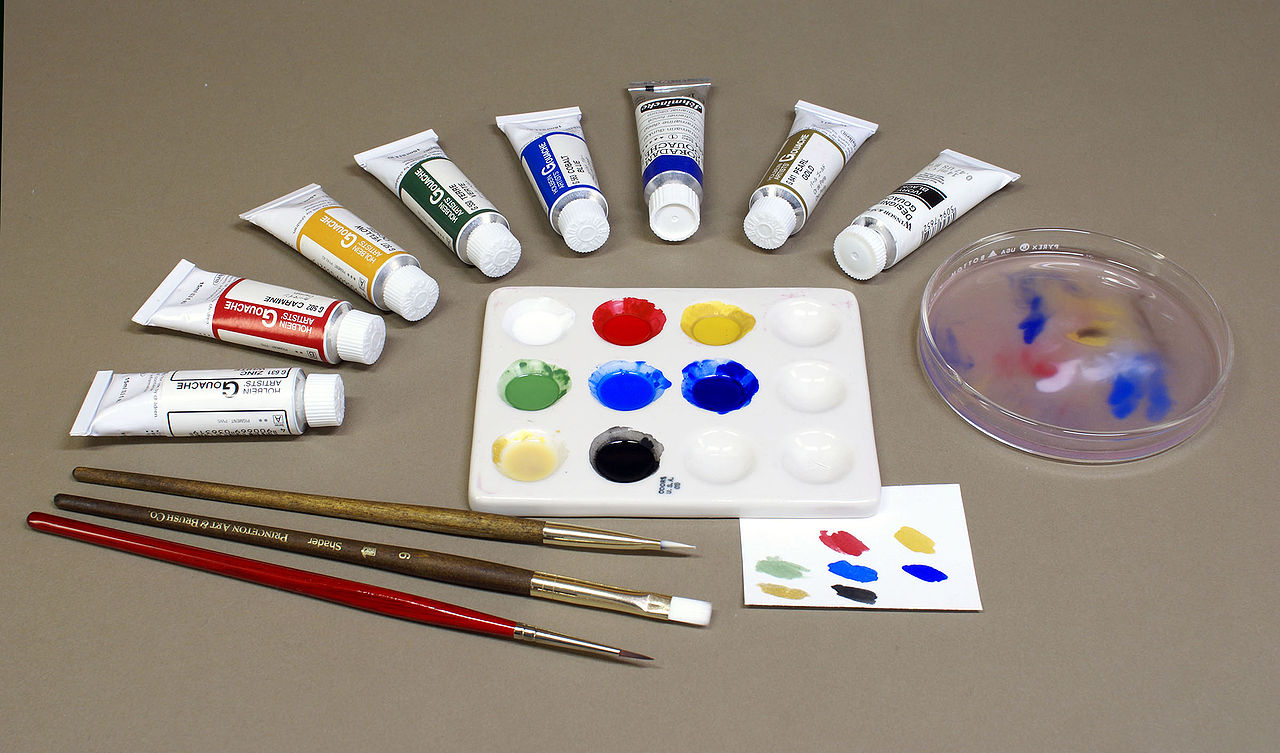
A typical paint contains three principal components: pigment, binder and vehicle (or solvent), plus various additives. The pigment provides color and opacity; pigments can be mineral, synthetic or organic. Historically pigments came from natural materials such as clays and minerals, and many modern artists still use finely ground pigment powders. The binder (also called the medium or film-former) holds pigment particles together and bonds them to the surface. Common binders include drying oils (linseed), alkyd resins, acrylic polymers and epoxy resins. The vehicle or solvent controls viscosity for application and evaporates or reacts away after the paint is applied; water-based paints use water as the vehicle, while solvent-borne systems use organic solvents or reactive components.
Major types of paint
- Water-based (latex, acrylic): Use water as the vehicle and an emulsion binder; they dry quickly, have lower volatile organic compounds (VOCs) and are common for interior walls and craft paints.
- Oil-based: Use drying oils or alkyds; prized in fine art for blending and glossy finishes, but generally slower to dry and higher in VOCs.
- Acrylic: Synthetic polymers that form durable films; available for artists and industrial coatings and noted for fast drying and weather resistance.
- Enamels and lacquers: Hard, high-gloss finishes used on furniture, metalwork and instruments; formulations vary from solvent-borne to waterborne.
- Spray and aerosol paints: Packaged in pressurized cans for rapid, even coverage; widely used for touch-ups, automotive work and street art.
- Powder coatings and specialty coatings: Applied as dry powder and cured by heat; common in appliance and metal finishing for durability.
Application methods and preparation
Paint can be applied by brush, roller, spray gun, dipping or electrostatic techniques. Artists typically use brushes, knives or airbrushes; house painters and manufacturers use rollers, large spray booths or automated equipment. Successful painting relies on careful surface preparation: cleaning, sanding and priming. Primers and undercoats improve adhesion, seal porous substrates and can provide corrosion resistance for metal surfaces. Many finishes are built with multiple thin coats rather than a single thick coat to reduce defects such as sagging or cracking.
Drying, curing and longevity
Different systems dry by evaporation (water or solvent loss), chemical reaction (oxidation of oils or cross-linking of resins) or by polymerization initiated by heat. For example, watercolour paints dry rapidly as water evaporates from a thin film, whereas traditional artists’ oil paints can oxidize and harden over days or weeks. Industrial coatings often require controlled curing to achieve full hardness and chemical resistance. The durability of a paint depends on its formulation, the substrate, environmental exposure and maintenance.
History and cultural roles
Use of pigments and simple binders dates back to prehistoric cave art and was refined by ancient civilizations, including the Egyptians and Greeks, who combined pigments with binders for murals and objects. Over centuries, technological advances—such as the development of boiled linseed oil, synthetic pigments and polymer chemistry in the 20th century—expanded the palette, improved stability, and enabled mass production. Paint has been central to artistic expression (from tempera and oil painting to modern acrylics) as well as to functional uses like protecting ships, bridges and buildings.
Uses, distinctions and notable facts
- Uses range from aesthetic decoration and fine art to corrosion protection, thermal insulation, and anti-graffiti systems.
- Related materials include stains, varnishes and lacquers: stains penetrate wood and emphasize grain, varnishes form a transparent protective film, and lacquers provide a rapid-drying clear or colored finish.
- Historically, heavy metals such as lead were used in pigments and primers; their health risks led to restrictions and safer alternatives in many countries.
- Environmental and health concerns focus on VOC emissions, flammability of solvents, and hazards from isocyanates or heavy-metal pigments; safer low-VOC and waterborne technologies have become widespread.
For computer graphics and simple raster image editing, the name "Paint" is also associated with basic software tools; see Microsoft Paint for one well-known example. For technical standards, safety data and application guidance, manufacturers and regulatory agencies publish product-specific information and best practices; for general background on liquids and coating science see introductory resources on liquids and color theory (colour) available from technical libraries and educational sites.
Questions and answers
Q: What is paint?
A: Paint is a liquid used to add colour to the surface of an object by covering it with a pigmented (coloured) coating.
Q: What is the pigment in paint made from?
A: The pigment in paint is usually a powder made from different chemicals, some of which come straight from natural things like clay.
Q: How is paint mixed?
A: Paint is mixed with something that will make it stick onto the surface and not come off easily, such as water for water-based paints or oils or chemicals for other types of paints. Most painters buy pre-mixed paint.
Q: How do painters apply paint?
A: Painters usually apply paint using a brush, but they may also use rollers or spray guns. Factory paint shops have machines which spray on the paint.
Q: How long does it take for different types of paints to dry?
A: Watercolour dries in a few minutes while artist's oil paints can take days or even weeks to dry. Most other types of paints fit between these two timescales.
Q: Is more than one layer of paint necessary for certain surfaces?
A: Yes, many types of paints are best if they are put on in several layers - first an undercoat or ground which sticks well and then coloured layers over the top. For example, house-painters using oil on wooden window frames might use three layers for weather protection whereas modern house paints only need one layer inside the house. Artists often use multiple layers to get just the right effect when using oil and tempera paints.
Related articles
Author
AlegsaOnline.com Paint (coating): composition, types, uses and history Leandro Alegsa
URL: https://en.alegsaonline.com/art/74033