
Ostafrikasaurus: Late Jurassic theropod known from a single tooth
Ostafrikasaurus is a genus named from a large fossil tooth found in southeastern Tanzania. Its shape suggests affinities with early spinosaurids, but the classification remains tentative due to fragmentary material.
Ostafrikasaurus is a genus erected for a single large theropod tooth discovered in the Late Jurassic deposits of southeastern Tanzania. The specimen attracted attention because its size and shape resemble teeth of spinosaurid dinosaurs—carnivorous theropods often interpreted as having semi-aquatic habits and a diet that included fish. Because the name and interpretation are based on very limited material, Ostafrikasaurus is best understood as a plausible but uncertain record of an early spinosaur-like animal.
Image gallery
10 Images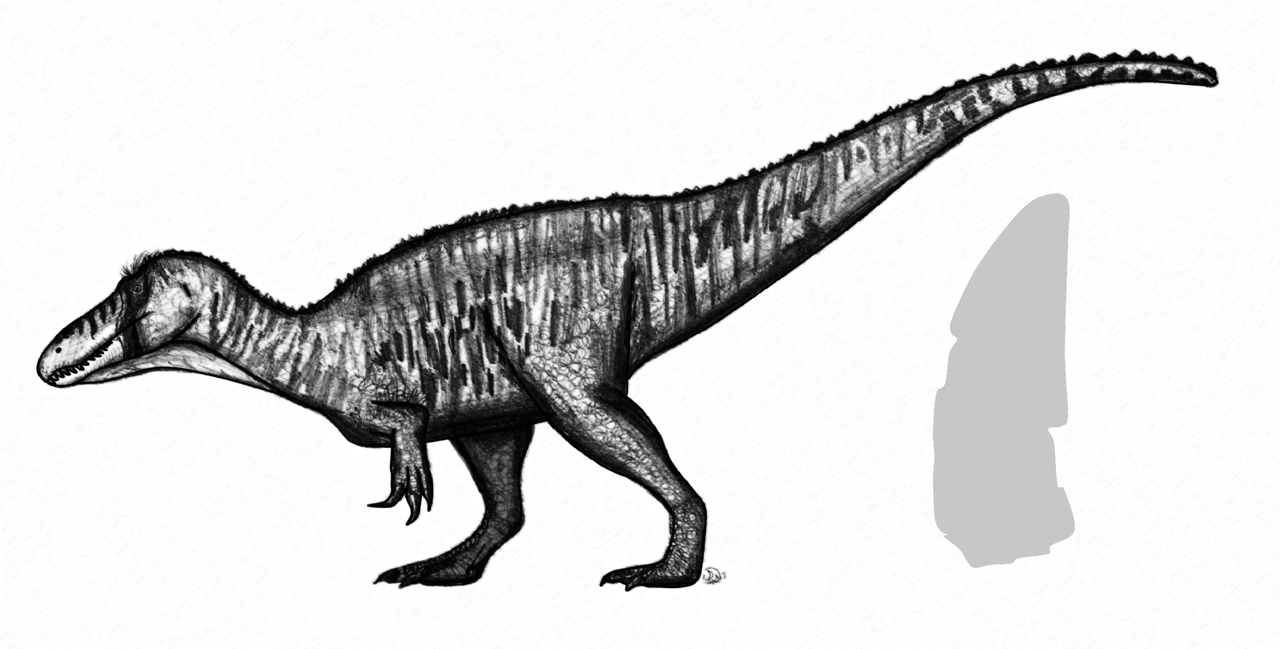


Discovery and fossil material
The fossil consists of a single isolated tooth about 49 mm long that was recovered from deposits dated to the Late Jurassic, roughly around 148 million years ago. The locality is in what is now southeastern Tanzania, an area that was part of Gondwana in the Mesozoic. Details of the discovery and curation have been discussed in paleontological literature, where the specimen has been compared with both typical theropod and spinosaurid teeth.
Classification and debate
Paleontologists have noted the tooth's conical, slightly recurved shape and lack of strongly serrated edges—features that resemble the teeth of spinosaurids. One influential researcher proposed that this specimen could represent the oldest known evidence of the Spinosauridae clade. However, assigning a new genus on the basis of a single tooth is controversial: isolated teeth can be misleading, and convergent tooth shapes occur in different groups of carnivorous reptiles. The name and placement of Ostafrikasaurus therefore remain provisional and subject to reassessment as new material is found.
Characteristics and paleoecology
- Tooth morphology: conical and robust, about 49 mm in preserved length.
- Possible diet: a mix of fish and small vertebrates is often suggested for spinosaur-like theropods.
- Environment: Late Jurassic coastal and riverine habitats in Gondwana that could support fish-rich ecosystems.
If the spinosaurid affinity is accurate, Ostafrikasaurus would indicate that spinosaur-like theropods were present in eastern Africa by the Late Jurassic. That timing would push back the known occurrence of these specialized predators, which are otherwise better documented from later Cretaceous rocks.
Importance and limitations
Ostafrikasaurus highlights both the potential and the limits of tooth-based taxonomy. Isolated dental remains can provide important biogeographic and temporal clues, but they rarely capture the full anatomy needed for confident classification. Pending discovery of associated bones, the specimen is most useful as a tentative record suggesting early spinosaur-like diversity in Gondwana rather than a secure, fully diagnosed genus.
For more context and comparisons, readers can consult general resources on theropods and spinosaurids: theropod overview, dinosaur dentition, Tanzania fossil sites, fossil collection records, tooth morphology studies, spinosaurid research, crocodile-like comparisons, fish-eating dinosaur ecology.
Related articles
Author
AlegsaOnline.com Ostafrikasaurus: Late Jurassic theropod known from a single tooth Leandro Alegsa
URL: https://en.alegsaonline.com/art/73414
Sources
- doi.org : 10.1111/j.1475-4983.2011.01084.x