
Oni (Japanese folklore): appearance, history, and cultural roles
Oni are supernatural beings from Japanese folklore, often portrayed as large horned creatures. This article outlines their appearance, origins, cultural functions, and modern representations.
Oni (鬼) are a class of supernatural beings in Japanese tradition, commonly translated as ogres, demons, or fiends. They appear throughout myths, folktales, theater and visual art, and their image has evolved over centuries. While often depicted as large, fearsome humanoids with horns and brightly colored skin, Oni occupy a range of roles—from villains in cautionary tales to ritual figures that ward off misfortune. For background on the broader tradition that produced Oni, see Japanese folklore.
Image gallery
10 Images



Typical characteristics
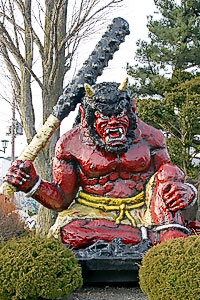
- Physique: Oni are typically shown as muscular, hulking humanoids much larger than ordinary humans.
- Head and face: Common motifs include one or more horns, sharp teeth, and exaggerated facial features.
- Clothing and attributes: They are often shown wearing a tiger-skin loincloth or striped rags and carrying a heavy iron club (kanabō), symbols of brute force.
- Coloration: Artistic traditions use vivid skin tones—red, blue, or green—to emphasize otherworldliness rather than realistic flesh tones.
- Behavior: Stories portray Oni as violent or capricious, though some traditions also allow for protective or liminal roles.
Origins and historical development
The idea of Oni draws on native Japanese beliefs about spirits and impurities as well as continental influences introduced through Buddhism and Chinese demonology. Early literary references and pictorial representations date back many centuries, with the figure crystallizing in medieval and early-modern art and theater. Over time, Oni became standardized in popular imagination: their club and striped garment became iconic shorthand for a monstrous being. Scholarly discussions often situate Oni alongside other supernatural categories such as yōkai and gods; see comparative treatments of large mythic monsters and demons for context: large monsters and ogres and trolls.
Roles, rituals, and modern presence
Oni appear in many cultural settings. In folk ritual they can personify danger or impurity to be driven away: the bean-scattering custom of Setsubun symbolically expels Oni from households. In folktales and religious stories they serve as antagonists, explanations for misfortune, or tests for heroes. In contemporary culture Oni show up in literature, manga, film, anime and video games, often reinterpreted more sympathetically or stylized for entertainment. Their image is widely used as a metaphor for overwhelming force or moral otherness.
Variations and notable facts
Not all Oni are male or purely evil. Some regional customs feature female Oni or masked figures that perform community-preserving functions, such as scare-away rituals. The term "oni" also appears in compound expressions and place names, reflecting long-standing cultural resonance. For concise comparative discussion of Oni as demons across cultures, see demonic figures.
Because Oni occupy both narrative and ritual spaces, they are a flexible symbol: frightening and comic, punitive and protective. Their persistence in Japan’s cultural vocabulary reflects the adaptability of folk imagery to changing social and artistic needs.
Related articles
Author
AlegsaOnline.com Oni (Japanese folklore): appearance, history, and cultural roles Leandro Alegsa
URL: https://en.alegsaonline.com/art/72636