
Orion (mythology)
Orion is a large and variable figure in Greek myth: a famed hunter, a constellation, and a local hero whose stories survive in fragmentary, contradictory forms.
Orion is a prominent figure of ancient Greek myth and art, remembered both as a formidable hunter and as the pattern for the bright constellation that bears his name. Stories about him are inconsistent: different authors give competing accounts of his birth, deeds, companions, loves, and death. Despite the lack of a single canonical life, Orion recurs in poetry, vase-painting, and local cults, and he served several functions in Greek cultural imagination.
Character and iconography. In mythic descriptions Orion appears as a giant, a masterful hunter who is often shown with hunting dogs and weapons. He is associated with two dog-stars, Sirius and Procyon, which ancient observers linked to his canine companions. Iconography typically renders him with a belt and sword or club, sometimes pursuing wild beasts or the Pleiades. Writers emphasize his size and prowess more than a coherent sequence of adventures, and many versions preserve only isolated episodes or motives.
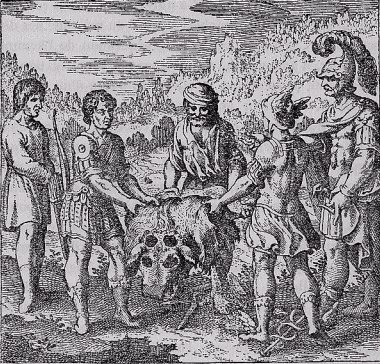
Origins and varying parentage. Accounts of Orion’s origins differ widely. Some traditions make him the son of the sea-god Poseidon and a mortal or semi-divine mother, which partly explains a legendary power to stride over the waves. Other tales present a miraculous conception involving multiple gods: fragments name Zeus and Poseidon among potential fathers and sometimes include Hermes or Ares in versions in which divine seed is mixed in a hide. These competing genealogies reflect the porous, local character of myth, where different communities favored different connections to the divine.
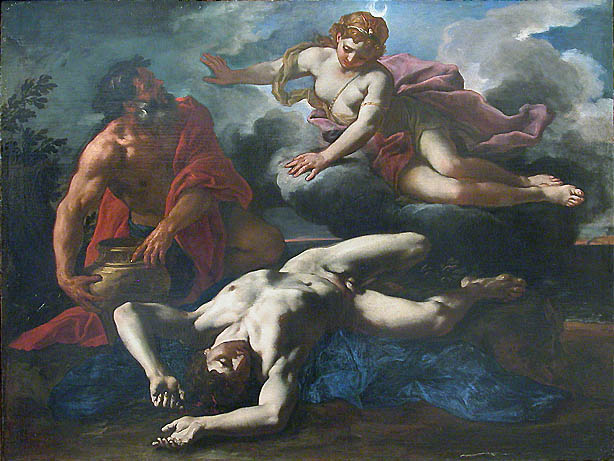
Mythic episodes and literary presence. Orion turns up in a variety of scattered episodes rather than in a continuous epic. He appears briefly in the Odyssey as a shade in the underworld, and later Hellenistic and Roman mythographers collected further tales: the pursuit of the Pleiades, conflict with a scorpion that leads to his death, and stories in which he angers a goddess and is cast down. Ovid and other poets adapt particular versions; none of these accounts became universally accepted, so traditions about lovers, victims, and the cause of his death remain multiple and often contradictory.
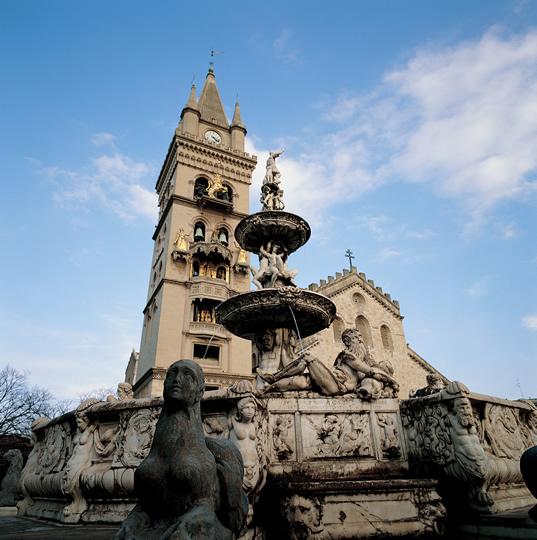
Constellation, cult, and cultural role. Beyond narrative, Orion functions as a celestial figure: the constellation preserves him among the stars and interacts with neighboring constellations in many etiologies (for example, the opposition between Orion and Scorpius explains seasonal appearance and disappearance). In parts of mainland Greece, such as Boeotia, he was remembered and even venerated as a local hero in the Greek sense—an ancestor-like figure associated with particular places. Some local stories credit him with shaping geographic features, and other brief legends treat his companions and family—such as a wife whom a jealous goddess punishes—as etiologies for names and places.
Importance and modern reception. The survival of Orion’s myth in scattered references makes him attractive to scholars who reconstruct ancient narrative patterns and cultural memory. His dual life as both a mythic hunter and a conspicuous constellation helped his story endure into Renaissance and modern literature and art. Today Orion is often introduced in surveys of Greek myth as an example of how fluid mythic traditions could be: a recognizable figure with many variant lives rather than a single authoritative tale.
Image gallery
7 Images


Selected links and related references
- Orion: general summaries and introductions
- Accounts describing Orion as a giant hunter
- The dog-stars: Sirius and Procyon in myth
- Local traditions placing Orion in Boeotia and Crete
- Traditions naming Poseidon as a parent
- Connections to gorgon figures in variant stories
- Versions involving Euryale and related figures
- Versions that include Zeus among Orion’s fathers
- Accounts that add Hermes to the genealogy
- Accounts that add Ares to the genealogy
- Stories in which Hera intervenes in Orion’s family
- Homeric references and early epic echoes
- The Odyssey and appearances of Orion’s shade
- Connections to Odyssean underworld episodes
- Comparative heroes such as Jason in epic tradition
- Hellenistic treatments and myth collectors
- Argonautica and related epic contexts
- Dramatic treatments and playwrights who retold myth
- Medea and contemporary myth cycles
- Ovid’s Fasti and Roman poetic versions
- Orion’s role in broader Greek cultural practice
- Personification of the constellation in ancient thought
- Astronomical and mythological treatments of the constellation
- Local etiologies, including tales about the Straits of Sicily

Related articles
Author
AlegsaOnline.com Orion (mythology) Leandro Alegsa
URL: https://en.alegsaonline.com/art/73159