
Oligochaete — segmented worms of the class Clitellata
Oligochaetes are a diverse group of segmented annelid worms (around 10,000 species) that include earthworms. They have few bristles, a clitellum, and play key roles in soil and freshwater ecosystems.
Overview
Oligochaetes are a group of segmented worms traditionally treated as a subclass within the phylum Annelida. They include familiar earthworms and many smaller aquatic and soil-dwelling species. Estimates put their diversity at around 10,000 species, though modern revisions and molecular studies continue to refine this number. Oligochaetes range from microscopic enchytraeids to 'giant' forms measuring several metres, and they are found in terrestrial, freshwater and a few marine habitats.
Image gallery
2 Images
Key characteristics
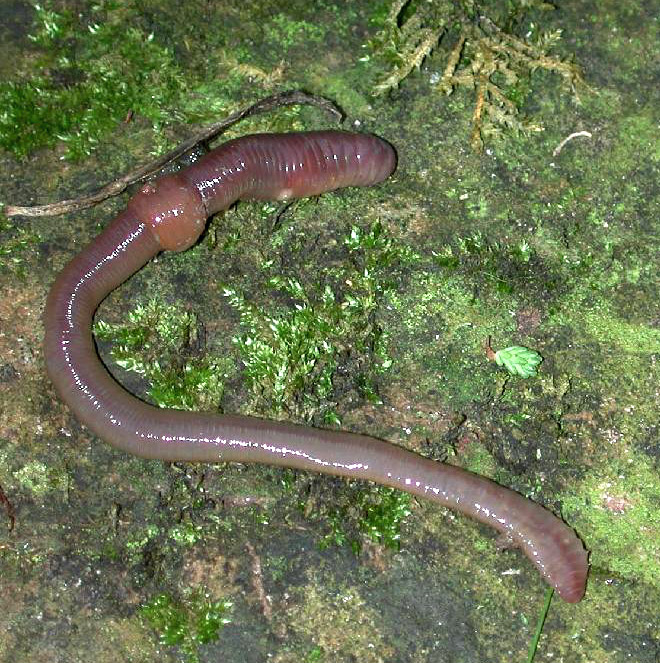
Oligochaetes are characterized by a segmented body plan with relatively few chaetae (bristles) per segment, lacking the paired parapodia found in polychaete worms. Adults of many species have a conspicuous clitellum — a glandular band that produces cocoons for eggs. Their internal anatomy typically includes:
- a spacious coelom that functions as a hydrostatic skeleton;
- a closed circulatory system (dorsal and ventral vessels, with muscular aortic arches or "hearts");
- metanephridia for excretion and osmoregulation;
- a muscular body wall with alternating circular and longitudinal layers used for peristaltic movement;
- a digestive tract often with a typhlosole or other adaptations to increase absorptive surface.
Reproduction and life cycle
Most oligochaetes are simultaneous hermaphrodites and reproduce by reciprocal copulation followed by deposition of eggs in cocoons produced by the clitellum. Development is typically direct: embryos develop inside the cocoon and hatch as juvenile worms without a distinct larval stage. Some species can reproduce asexually by fragmentation or parthenogenesis, a strategy more common among certain freshwater and soil taxa.
Ecology and importance
Oligochaetes are major consumers of detritus and play central roles in decomposition and nutrient cycling. Earthworms mix and aerate soil, improve water infiltration, and help form humus, making them ecosystem engineers in many terrestrial landscapes. In freshwater systems, enchytraeids and other small oligochaetes are important in sediment processing and as prey for invertebrates and fish. Their sensitivity to pollutants and soil disturbance also makes them useful bioindicators in environmental monitoring.
Taxonomy, history and notable examples
The name "Oligochaeta" derives from Greek roots meaning "few bristles." Historically it has been used as a formal subclass within Annelida. Modern molecular analyses have shown that traditional groupings are sometimes paraphyletic, and contemporary classifications place oligochaete lineages within the larger clade Clitellata alongside leeches (Hirudinea). Well-known examples include the common garden earthworm and larger species sometimes called giant earthworms; both the Giant Gippsland Earthworm and the Mekong worm (Amynthas species) illustrate the wide size range and ecological variety in the group.
Human interactions and conservation
Humans have long benefited from oligochaetes: vermiculture and composting exploit earthworms to recycle organic waste; anglers use some species as bait; researchers use them in soil science and ecotoxicology studies. At the same time, introductions of non-native species can disrupt native soils and forest floor communities, and some large or range-restricted species are vulnerable to habitat loss and pollution. Understanding oligochaete diversity and ecology remains important for agriculture, conservation and environmental management.
Related articles
Author
AlegsaOnline.com Oligochaete — segmented worms of the class Clitellata Leandro Alegsa
URL: https://en.alegsaonline.com/art/72376