
North–South divide: economic and development disparities between regions
Summary of the North–South divide: its meaning, typical indicators, historical roots, practical implications, and limitations of this global binary.
The term "North–South divide" describes a broad pattern of economic and social differences observed between more affluent, industrialized countries and poorer, less industrialized ones. It is a conceptual distinction rather than a precise map: scholars and policy makers use it to summarize persistent gaps in income, health, education and technology. The term intersects with fields such as geography, sociology and economics, and is often invoked when discussing development policy and global inequality.
Image gallery
5 Images


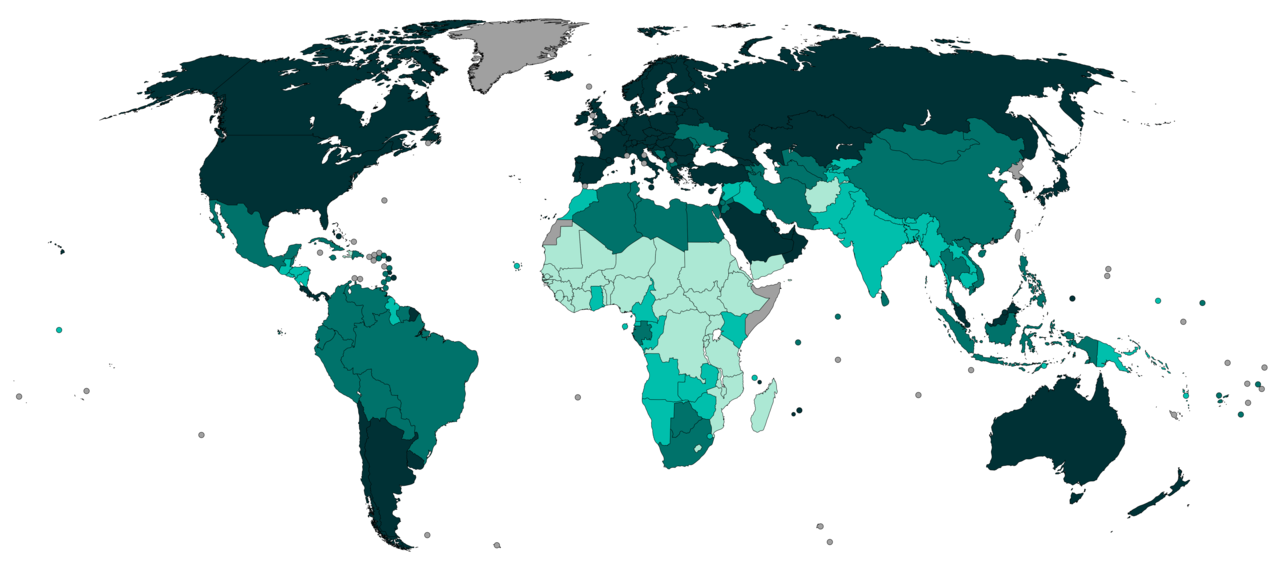

Typical characteristics and indicators
When analysts refer to the "North" they usually mean countries that have high per‑capita incomes, diversified industrial economies and extensive social services. These states are frequently found in the developed world and lie mainly in the Northern Hemisphere, including much of Europe and North America. The "South" commonly denotes lower‑income or middle‑income states with limited industrial bases and weaker public services, including many nations in developing regions. Observed differences are measured by indicators such as GDP per capita, Human Development Index scores, life expectancy, literacy and access to infrastructure.
Origins and development of the concept
The North–South framing gained prominence in the mid‑20th century as decolonization and Cold War geopolitics rearranged global relations. Historical forces such as colonialism, unequal trade relationships and asymmetric industrialization contributed to enduring disparities. Much of sub‑Saharan Africa, parts of Latin America and sections of Asia have been grouped within the "South" because of these structural legacies, while some states long categorized as undeveloped have followed different growth trajectories.
Uses, policy relevance and examples
Policymakers and international organizations refer to the divide when designing foreign aid, trade agreements and development assistance. The label helps draw attention to inequalities that affect global health, migration and security. At the same time, the global political landscape includes powerful institutions that were shaped by historically industrialized states; these dynamics influence negotiations among countries and multilateral forums such as the United Nations and other bodies often dominated by earlier industrial powers (security and governance institutions).
Criticisms and important qualifications
- The binary oversimplifies: there are large differences within the so‑called North and within the South, including wealthy cities and poor regions in both.
- Economic change has blurred boundaries: rising middle‑income states challenge simple labels and create a more complex map of development.
- Geography is not destiny: some countries in the Northern Hemisphere are categorized as part of the Global South, and some Southern Hemisphere countries have advanced economies.
Because it is a heuristic tool, the North–South divide remains useful for highlighting systemic inequalities while also demanding careful use. Analysts recommend complementing the term with specific indicators and regional studies to avoid stereotyping and to capture the changing realities of global development.
Further reading and resources: geography perspectives, sociological studies, economic analyses, development literature, developed country data, hemispheric statistics, European trends, North American trends, developing country reports, underdevelopment case studies, African development, Latin American development, Asian development, global governance.
Related articles
Author
AlegsaOnline.com North–South divide: economic and development disparities between regions Leandro Alegsa
URL: https://en.alegsaonline.com/art/70950