
Nitric oxide (NO): properties, roles, and applications
Nitric oxide (NO) is a small, reactive gaseous molecule and free radical with roles in chemistry, physiology, and the environment; used industrially and medically, and distinct from NO2 and N2O.
Overview: Nitric oxide, commonly written as NO and sometimes called nitrogen monoxide, is a simple diatomic molecule that acts as a gaseous signaling and reactive species in many contexts. It is often described with the structural dot notation ·N=O to emphasize its unpaired electron. Chemically, NO is categorized as a chemical compound containing the element nitrogen bonded to oxygen; the nitrogen atom in NO is commonly considered to be in the +2 oxidation state.
Image gallery
7 Images



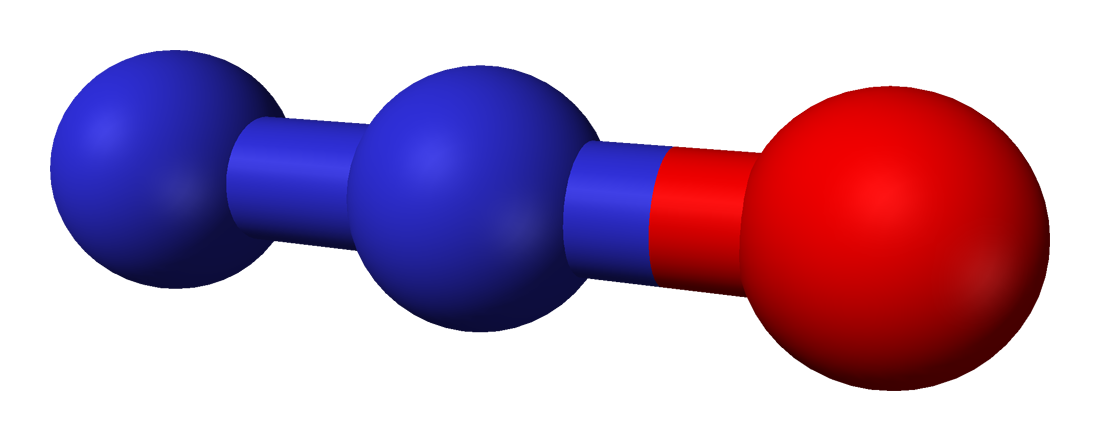


Physical and chemical characteristics
NO is a colorless gas at room temperature and is paramagnetic because it has an unpaired electron. It behaves as a free radical and reacts rapidly with oxygen, metals, and other radicals. In air it oxidizes to nitrogen dioxide (NO2), which is a distinct, reddish-brown gas with different properties. NO can coordinate to metal centers to form nitrosyl complexes and participate in nitrosation or S-nitrosylation reactions of biological molecules.
Biological roles and medical use
In animals, nitric oxide is an important signaling molecule produced enzymatically from the amino acid L-arginine by the family of nitric oxide synthase (NOS) enzymes. It mediates blood vessel dilation by activating soluble guanylate cyclase in smooth muscle cells, modulates neurotransmission, and contributes to immune defense by helping phagocytic cells kill pathogens. Clinically, inhaled NO is used in specific settings to dilate pulmonary vessels and improve oxygenation in infants and some adults with pulmonary hypertension.
Sources, production and industrial relevance
NO forms naturally during high-temperature combustion, lightning, and microbial processes in soil. Industrially, it appears as an intermediate in the manufacture of acids and other nitrogen-containing chemicals; oxidation of NO produces NO2, which can be absorbed to give nitric acid. Laboratory preparations and measurements often rely on controlled chemical reactions or gas cylinders for research and analytical work.
Environmental and health considerations
Nitric oxide contributes to atmospheric chemistry: its oxidation to NO2 participates in photochemical smog and acid deposition cycles. While NO itself is less directly toxic than some nitrogen oxides, it readily forms NO2 and other reactive species; high concentrations and related compounds can impair respiratory function. Occupational and environmental exposure are managed because of these secondary effects.
Notable distinctions and facts
- Oxide vs oxide ion: NO is a neutral molecule, not a salt made of discrete ions.
- Do not confuse nitric oxide (NO) with nitrogen dioxide (NO2) or nitrous oxide (N2O), which have different chemistry and impacts.
- Chemical formula: NO (often depicted as ·N=O) indicates a simple but reactive species important across disciplines.
Because NO bridges basic chemistry, physiology, and environmental science, it is studied across fields from cardiovascular medicine to atmospheric chemistry and industrial synthesis.
Related articles
Author
AlegsaOnline.com Nitric oxide (NO): properties, roles, and applications Leandro Alegsa
URL: https://en.alegsaonline.com/art/70370