
Nitrocellulose (cellulose nitrate, guncotton)
Nitrocellulose is a nitrate ester of cellulose known for rapid combustion and use as propellant, film base, lacquer and plastic; it has important historical uses and significant safety and preservation issues.
Overview
Nitrocellulose, also called cellulose nitrate or historically guncotton and "flash paper," is a family of materials produced by introducing nitrate ester groups into the cellulose polymer. The modification converts natural cellulose into a highly flammable, often soluble, organic material that has been used in propellants, explosives, lacquers, plastics and photographic film. Its behavior ranges from fast-burning paper to powerful low-order explosive fibers, depending on the degree of nitration and processing.
Image gallery
10 Images




Chemistry and physical properties
Manufacture involves treating cellulose with strong nitrating agents such as concentrated nitric acid (frequently with sulfuric acid to promote the reaction). The process replaces hydroxyl groups on the glucose units of cellulose with nitrate ester groups; the proportion and pattern of substitution determine solubility, sensitivity, and combustibility. Lowly nitrated material can be dissolved and formed into films or lacquers; highly nitrated product (often called guncotton) is fibrous and was developed as a smokeless propellant and low-order explosive. Nitrocellulose is typically combustible, can decompose exothermically, and requires controlled storage to limit heat and acid buildup.
History and development
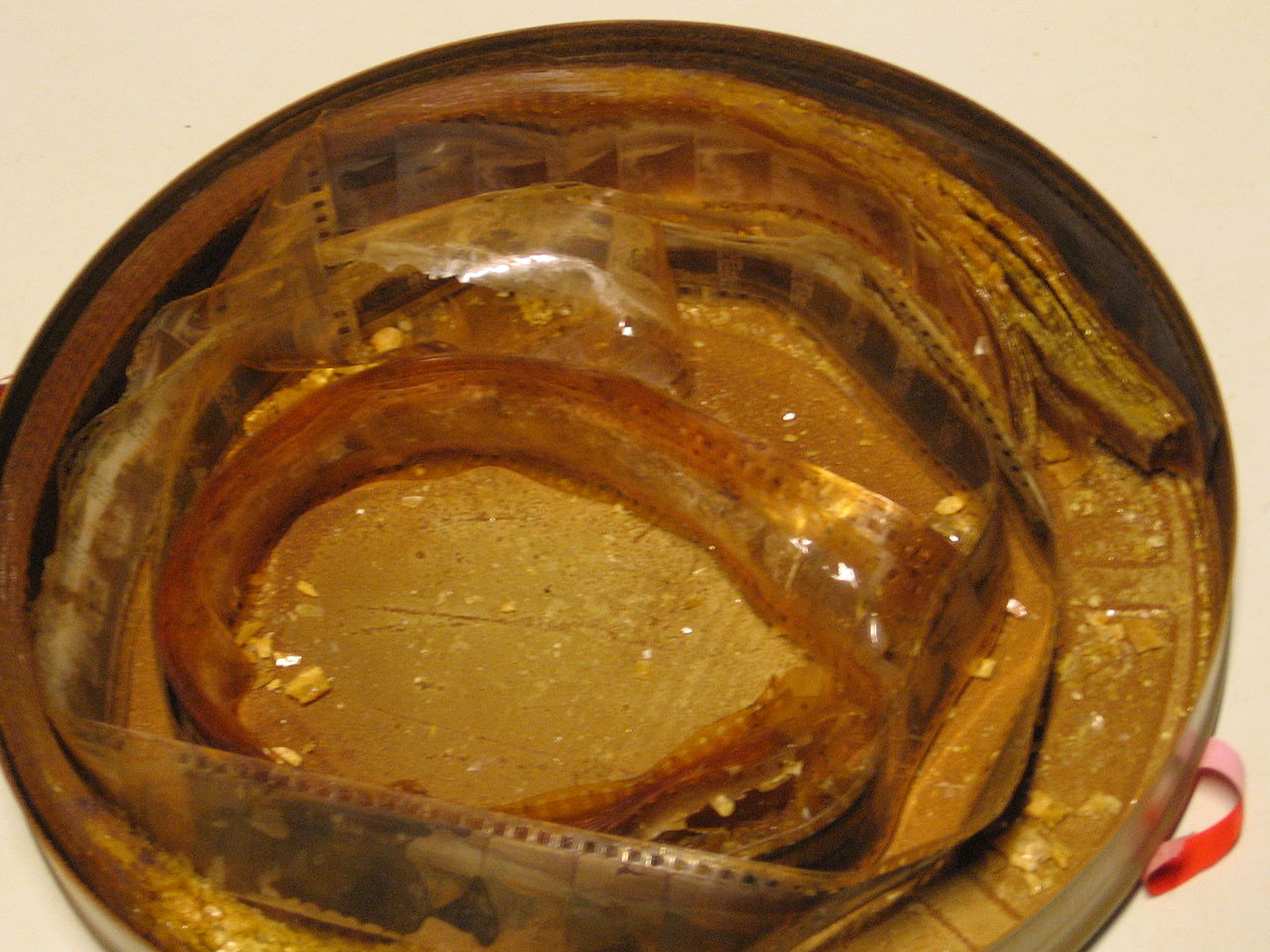
Discovered and developed in the 19th century, nitrocellulose was one of the first practical smokeless propellants and marked a major change from black powder in firearms and artillery. Its ability to form transparent, moldable sheets when plasticized led to early plastics such as celluloid. In photography and cinema, manufacturers including Kodak used plasticized nitrocellulose as a flexible film base; that product is commonly referred to as nitrate film. Over time, fires and spontaneous decomposition of stored nitrate film prompted transitions to safer film bases and new materials.
Uses and examples
- Propellants and explosives: high-nitrate varieties known as guncotton were used historically for ammunition and blasting.
- Plastics and molding: nitrocellulose combined with a plasticizer such as camphor produced early thermoplastics used in consumer goods and toys.
- Coatings and lacquers: soluble forms provide fast-drying varnishes, nail polish and printer inks.
- Photographic and motion picture film: early flexible film stocks—often called nitrate film—were made from nitrocellulose; its flammability led to later safety film replacements.
- Collodion and medical dressings: dilute solutions of nitrocellulose in ether–alcohol were used in nineteenth-century photography and dressings.
Safety, preservation and modern status
Nitrocellulose remains notable for its fire risk and for producing acids and gases as it ages. Archival collections and cinemas have long documented catastrophic fires started by nitrate film, which inspired industry-wide moves to ‘‘safety films’’ and careful archival protocols. Modern uses have narrowed to applications where its particular properties—fast drying, hardness, gloss—remain advantageous, and many former applications have been replaced by less hazardous polymers. Storage and disposal of legacy nitrocellulose items require industry-standard precautions to limit heat, humidity and chemical self-catalysis, and many institutions follow specialized guidelines when handling or transferring nitrate-based collections.
Notable distinctions
Although related to other nitrated organics, nitrocellulose is distinct because it is derived from a natural polymer (cellulose) rather than from petroleum-derived backbones. The same class of chemistry produces both benign coatings and highly energetic materials; that dual nature explains why nitrocellulose appears across industrial, artistic and military histories. For further technical and historical context see materials on nitration processes and propellant development (propellant) and historical accounts of early photographic materials (cellulose, nitric acid).
Questions and answers
Q: What is nitrocellulose?
A: Nitrocellulose is a flammable material that is formed by nitrating cellulose through exposure to nitric acid or another powerful nitrating agent.
Q: Why is nitrocellulose also known as guncotton?
A: Nitrocellulose is also known as guncotton when used as a propellant or low-order explosive.
Q: How can nitrocellulose be plasticized?
A: Nitrocellulose can be plasticized by camphor.
Q: How was nitrocellulose used in photography?
A: Kodak and other suppliers used placticized nitrocellulose as a film base in photography, X-ray films, and motion picture films.
Q: What is nitrate film?
A: Nitrate film is a term used to refer to films that are made with placticized nitrocellulose.
Q: Why did safety film start to be used in the motion picture industry from 1948?
A: Safety film started to be used in the motion picture industry from 1948 because numerous fires were caused by unstable nitrate films.
Q: What is safety film?
A: Safety film is a type of film that replaced nitrate films in the 1930s for X-ray stock and from 1948 for motion picture films. The material used to make safety film was much more stable and did not pose as much of a fire hazard as nitrate film did.
Related articles
Author
AlegsaOnline.com Nitrocellulose (cellulose nitrate, guncotton) Leandro Alegsa
URL: https://en.alegsaonline.com/art/70375
Sources
- wikidata.org : wikidata.org/wiki/Q143874
- catalog.archives.gov : 10643248