
Nirbhaya: 2012 Delhi gang-rape case and its social and legal impact
Nirbhaya (meaning 'fearless') was the alias for a 23-year-old student assaulted in Delhi in 2012. Her case sparked mass protests, legal reforms and a sustained public debate about women's safety in India.
Overview
"Nirbhaya" (Hindi for "fearless") was the public pseudonym given to a 23-year-old physiotherapy student after she was the victim of a violent gang rape on a private bus in Delhi, India, on December 16, 2012. Indian law restricts use of a sexual assault victim's name, so the media and public used this sobriquet while the case moved through investigation and trial. The attack and the young woman's injuries drew immediate national attention and international coverage.
Image gallery
2 Images
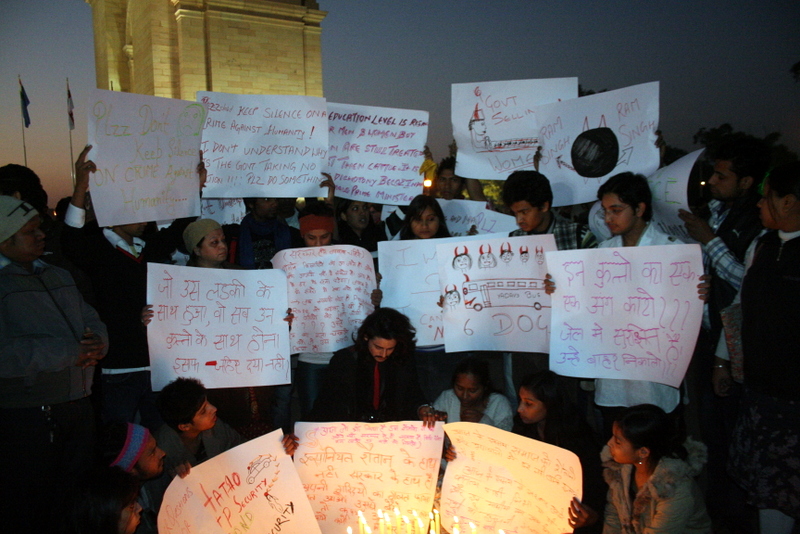
Incident and immediate aftermath
The assault involved multiple attackers and severe physical trauma that required intensive medical care. She was treated in Indian hospitals and subsequently transferred abroad for further treatment; she later died of her injuries, which intensified public outrage. Reports and commentary about the attack and its handling by authorities appeared widely in the press and on social media, prompting protests and discussion about law enforcement and urban safety for women media.
Legal proceedings and reforms
Police investigations led to arrests and a criminal trial. Several adult suspects were convicted; the case also raised questions about juvenile justice because one accused was a minor at the time and was dealt with under separate procedures. The severity of the crime and ensuing public pressure prompted the government to review existing rape laws and penalties, and to enact amendments and new measures intended to strengthen victim protections, expand definitions of sexual violence, and increase penalties in serious cases.
Social response and policy measures
The incident triggered widespread demonstrations across cities, sustained campaigning by activists, and policy initiatives aimed at improving safety in public transport, policing, and victim support. The central government and some state governments created dedicated funds and schemes intended to improve women's safety and to support survivors; civil society groups used the case to press for broader cultural and institutional change. International attention also led to recognition of the victim's symbolic role: she was posthumously honored with awards including the International Women of Courage Award from an overseas government entity (award).
Legacy and notable outcomes
The name "Nirbhaya" has become shorthand in public discourse for debates over gender-based violence, punishment, and reform. The case produced concrete outcomes and continuing controversies: convictions of several attackers, national legal reforms, the establishment of dedicated funds and policy initiatives, and ongoing civil-society activism. It also stimulated artistic and journalistic work examining urban safety, legal change, and survivors' rights.
- High-profile convictions and sentencing processes, including separate handling of juvenile involvement (victim anonymity).
- Legislative and administrative measures to address sexual violence and public safety (education and prevention).
- Persistent public debate and media scrutiny about policing, transport safety and gender norms (rape) and reporting (India).
The case remains a reference point in discussions of criminal justice, women's rights and public policy in India and beyond; it continues to shape advocacy and legal reforms while also serving as a solemn reminder of gaps in prevention and protection.
Further reading and primary reports can be found via contemporary news coverage and legal analyses that track the investigation, trial and policy changes that followed (background) and (local context).
Questions and answers
Q: What is the meaning of the name "Nirbhaya"?
A: Nirbhaya means "the fearless one" in Hindi.
Q: Who was Nirbhaya?
A: Nirbhaya was a 23-year-old physiotherapy student from India.
Q: When was Nirbhaya raped?
A: Nirbhaya was raped on December 16, 2012.
Q: Where was Nirbhaya raped?
A: Nirbhaya was raped on a bus in Delhi, India.
Q: Why was Nirbhaya known only by her pseudonym "Nirbhaya"?
A: Rape laws in India do not permit using a victim's name.
Q: What award did Nirbhaya receive in 2013?
A: Nirbhaya received the International Women of Courage Award from the U.S. Department of State, posthumously.
Q: Why was the award given to Nirbhaya given posthumously?
A: Nirbhaya had passed away before receiving the award.
Related articles
Author
AlegsaOnline.com Nirbhaya: 2012 Delhi gang-rape case and its social and legal impact Leandro Alegsa
URL: https://en.alegsaonline.com/art/70334
Sources
- cnn.com : "'Nirbhaya,' victim of India gang rape fought for justice"
- 2009-2017.state.gov : "2013 International Women of Courage Award Winners"
- humanrights.gov : "2013 International Women of Courage Award Winners - HumanRights.gov is the official United States Government website for international human rights related information"
- iwoccelebration.org : "2013 International Women of Courage Award Winners - International Women of Courage Celebration"
- zeenews.india.com : "IAP condoles death of Delhi gang-rape victim" · webcitation.org
- thehindu.com : "Rape survivor airlift was govt., not medical, decision"
- bbc.co.uk : "Delhi gang-rape victim dies in hospital in Singapore"
- telegraph.co.uk : "Delhi gang-rape victim to haunt attackers with 'dying declaration'"
- dawn.com : "Indian court orders hanging of Delhi gang-rape attackers"
- factly.in : "Rape Cases in India – Has anything changed after the Nirbhaya Incident? – Part 1"