
New Sweden (17th-century Swedish colony in North America)
New Sweden was a Swedish colony along the Delaware River from 1638 to 1655, centered at Fort Christina (now Wilmington). It shaped settlement patterns, trade, and some local cultural traditions in the Mid-Atlantic.
Overview
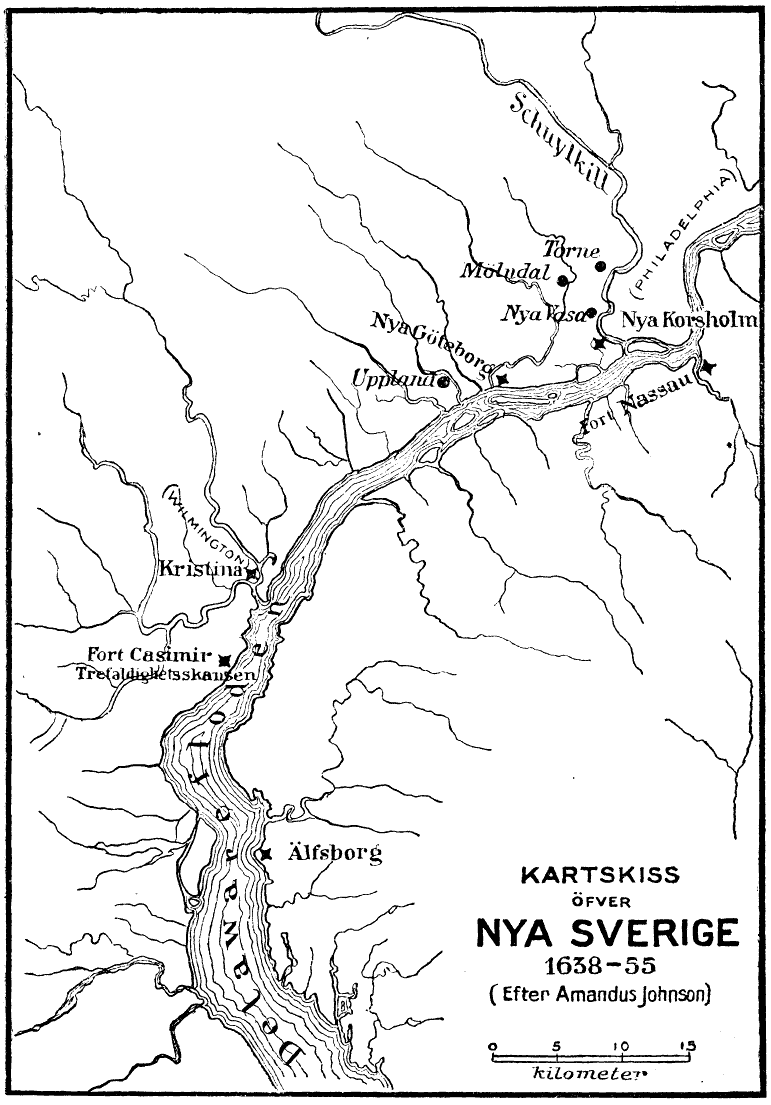
In Swedish the colony was known as Nya Sverige and in Finnish as Uusi-Ruotsi. It was a Swedish colony in North America that began with an expedition in 1638 and endured until 1655. The settlement occupied territory along the lower Delaware River and its tributaries, in areas that are now parts of Delaware, New Jersey and Pennsylvania. Its primary settlement and administrative center was Fort Christina at present-day Wilmington.
Image gallery
6 Images


History and development
New Sweden was established by a Swedish-sponsored company seeking trade, agricultural land and a foothold in the North American fur trade. Early leadership included figures recruited from the Baltic and the Netherlands, and the colony maintained ties to Sweden even as it drew settlers from both Sweden and Finland. Political pressure from neighboring European powers and competing claims in the region shaped its short existence.
Relations with Indigenous nations in the region, including the peoples known today as the Lenape and the Susquehannock, were a central feature of colonial life. Trade in furs and other goods, negotiated land agreements and periodic diplomatic contacts characterized Swedish interactions, which were often pragmatic and local in nature.
Conquest and later rule
In 1655 the Dutch authorities of nearby New Netherland moved to take control of the Swedish settlements; the military action brought New Sweden under the authority of the Dutch and folded it into New Netherland. Many Swedish and Finnish colonists remained in place afterward and lived under Dutch, and later English, governance when the English took control of New Netherland in 1664. Over time the separate Swedish administration dissolved but the community left cultural and material traces in the region.
Characteristics and legacy
New Sweden was relatively small compared with larger English colonies, focused on riverine trade, small-scale farming and local settlements. Its population included Swedish and Finnish settlers as well as servants and free laborers; religion was predominantly Lutheran but the colony did not develop the same institutional scale as older European colonies.
- Fort Christina served as the administrative heart and namesake of the earliest settlement.
- Settlers introduced or popularized construction techniques—most famously the log cabin—that became part of frontier building traditions in North America.
- Although the polity existed only from 1638 to 1655, its settlers and place names influenced subsequent local development in Delaware and neighboring colonies.
- The Swedish and Finnish historical presence is remembered today through museums, place names and genealogical ties to the region.
For further general reading and archival resources, see regional histories and collections that treat the colony's foundation, material culture and interactions with Indigenous nations. Contemporary interest in New Sweden highlights its role as a minority European colonial project that nonetheless contributed to the cultural mosaic of early North America.
Additional resources and primary documents can be located via research libraries and historical societies that specialize in colonial Mid-Atlantic history.
Related topics and entries: Swedish name, Finnish name, colonial enterprises, North American colonies, regional context, 1638, 1655, Delaware, New Jersey, Pennsylvania, Wilmington, Dutch, New Netherland.
Related articles
Author
AlegsaOnline.com New Sweden (17th-century Swedish colony in North America) Leandro Alegsa
URL: https://en.alegsaonline.com/art/69620
Sources
- worldstatesmen.org : "Delaware"